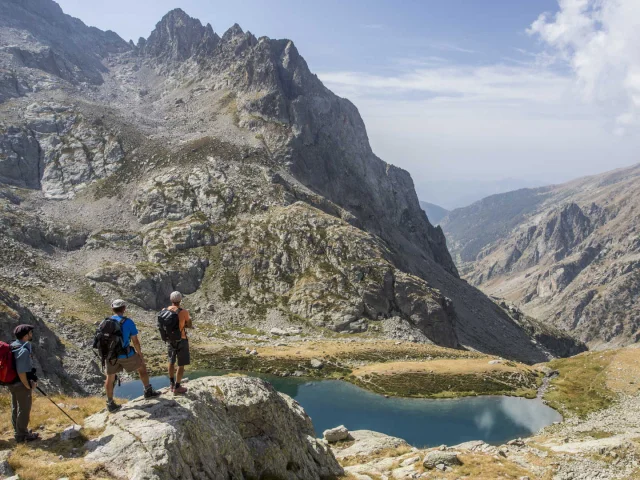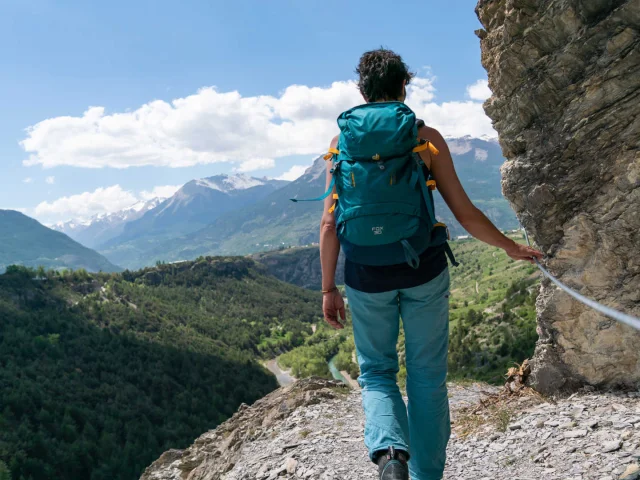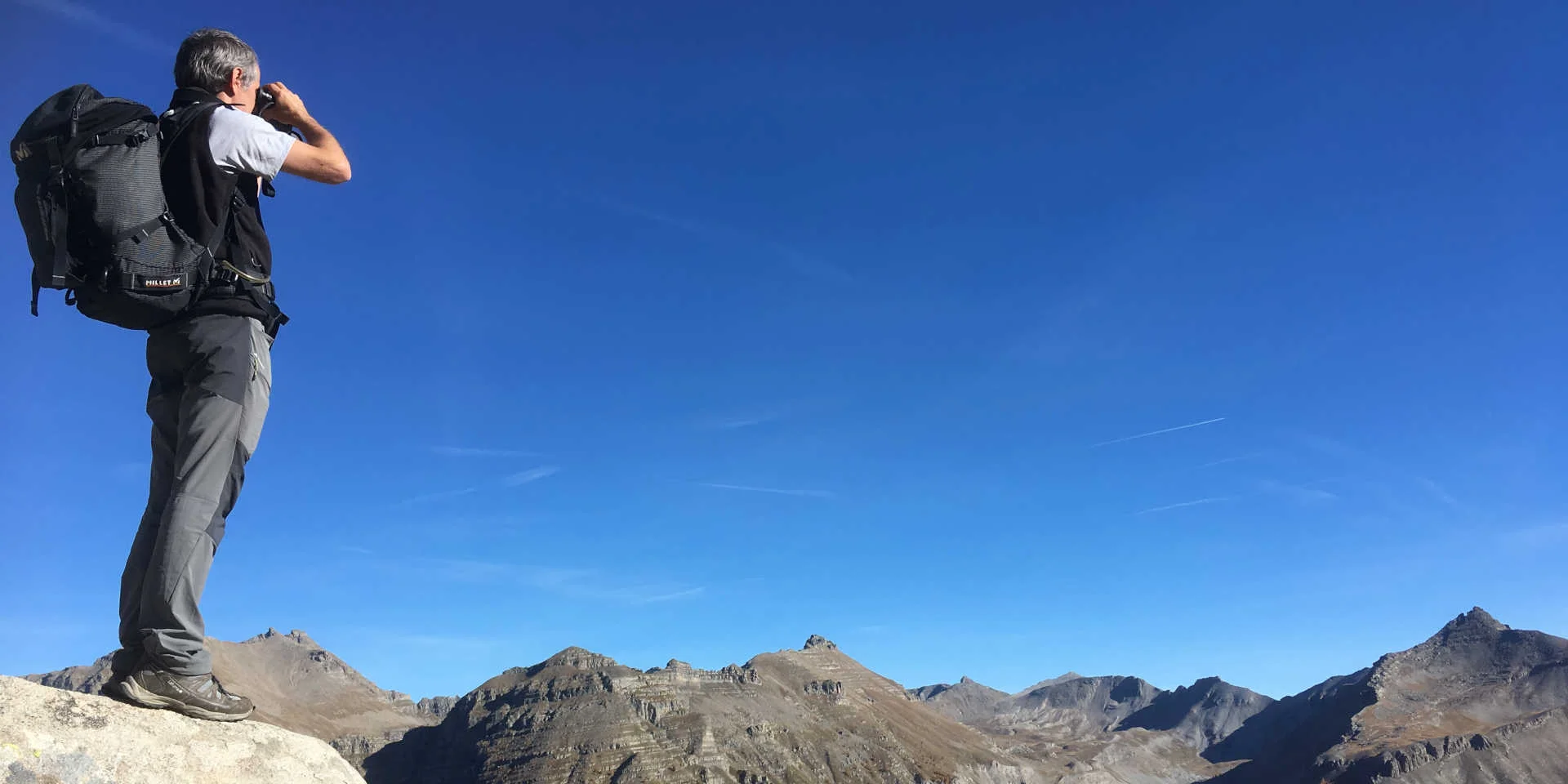
A hiker observing the Mercantour panorama through binocularsA hiker observes the Mercantour, Alpes-Maritimes
©A hiker observes the Mercantour, Alpes-Maritimes |Dragon.S

La Grande Traversée du Mercantour

Mountains and wonders

La Grande Traversée du Mercantour links the mountains to the Mediterranean through breathtaking landscapes, in an out-of-the-ordinary adventure. This demanding route, rich in biodiversity and heritage, promises a total immersion in one of the most beautiful territories of the Alps.

A long-distance route

Referenced as the GR®52, la Grande Traversée du Mercantour (GTM) is a demanding hiking itinerary for seasoned hikers which covers a total of 200 km and 12,000 metres of height difference. It starts in the municipality of Entraunes, in the Haute Vallée du Var, and runs south to the banks of the Mediterranean in Menton. The itinerary unfolds for a large part in the central area of the Mercantour National Park, known for the remarkable diversity of its wildlife, the originality of its geology, its fascinating historical heritage and the wealth of the architecture of the villages and hamlets it goes through. Nothing less. Even if it takes an average of 17 days to do the 200 km of the GTM, you can of course choose shorter sections like the crossing of the Boréon in Menton, which can be done in 5 days, or the crossing from Entraunes to Saint-Étienne-de-Tinée, which takes 6 days. There are many stage options and landscape variations, so it’s up to you to choose an itinerary that suits you!
Meet a remarkable natural environment

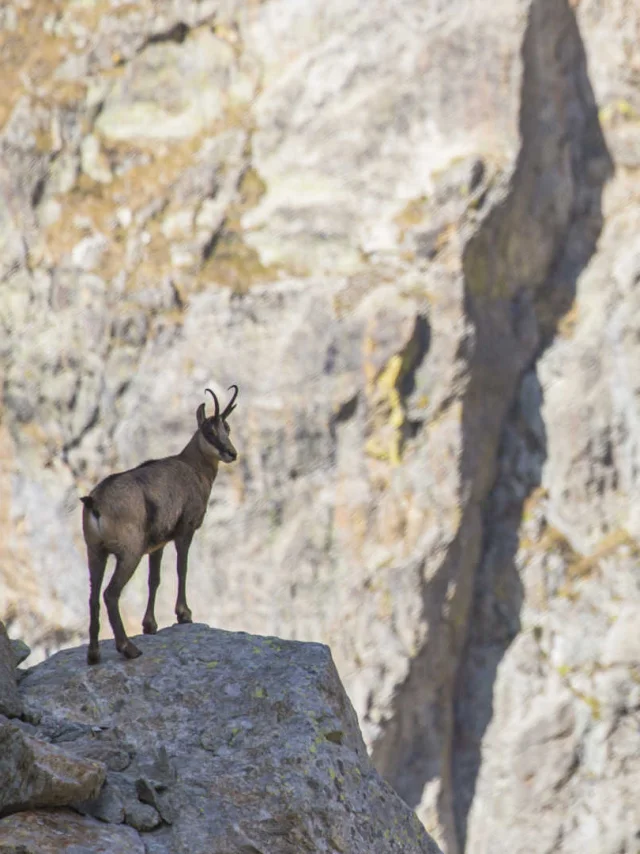
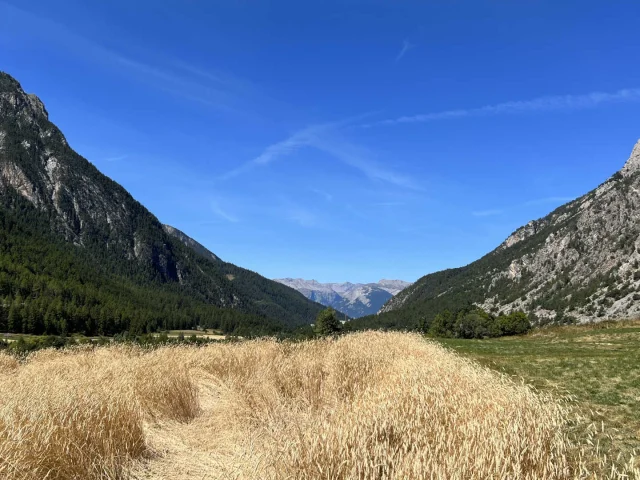
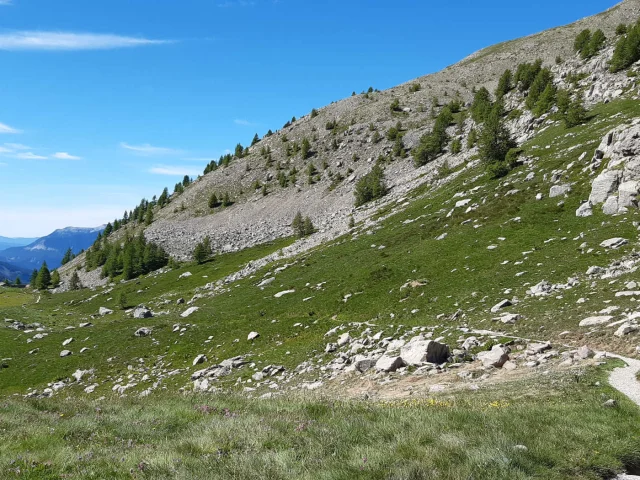
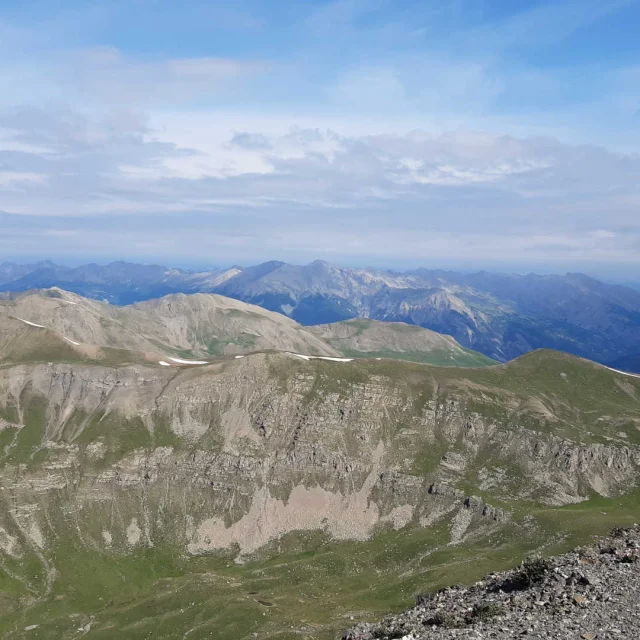
The Grande Traversée du Mercantour is a total immersion in protected nature. Chamois and ibex roam the steep mountains, while marmots watch over the surrounding area from their burrows. Golden eagles and bearded vultures circle in the sky. The rock ptarmigan and Gomphocerus sibiricus cricket, a witness to glacial eras, are more discreet and hide in the mineral landscapes. Between deep valleys to dizzying heights, the Grande Traversée goes through the contrasting landscapes of the Haut-Var, the Tinée, the Vésubie, the Roya and the Bévéra, not forgetting the mythical Vallée des Merveilles. The high-altitude lakes, true natural gems, are dotted along the way: the Lacs de l’Estrop with their crystal-clear water, Lac Niré in its mineral setting, the Lac Long Supérieur dominated by the peaks, and even the Lacs de Vens, where the mountains are reflected. The geology also tells a fascinating story where granite and gneiss rocks, such as the famous Cime de la Cougourde, and sandstone or limestone sculpted by erosion, make up a unique mineral palette of colours.

Discover a unique cultural and historical heritage

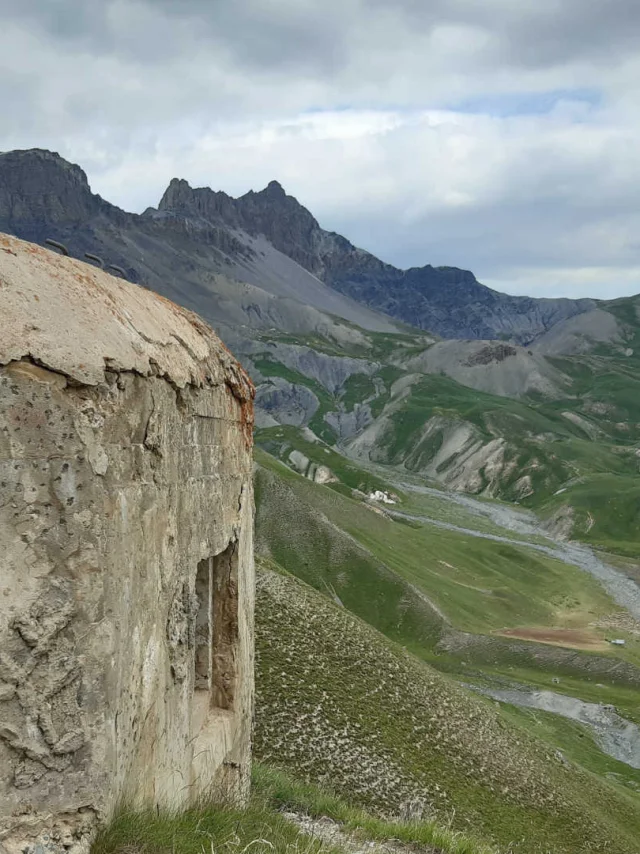
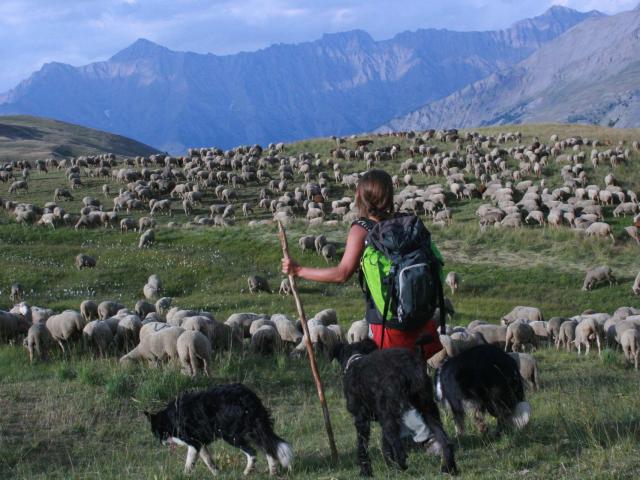
The Mercantour is also a land of history. The Mont Bego site in the Vallée des Merveilles, reveals over 40,000 mysterious rock engravings which bear witness to prehistoric cults. Another mark of human passage is the Haute Route du Sel (salt road), which linked the Mediterranean to the Alpine valleys from the 15th to 16th centuries. Today, the path leading to the Refuge de Nice is still one of the Salt Road secondary routes via the “Pas de Pagari”. In more recent times, military remains such as the blockhaus below the Col de Gialorgues, the Camp des Fourches fort, the Druos battery, and even the Massimo Long à barracks remind us of the strategic position of the Alps in times of war. L’Authion, with the de la Forca and Mille Fourches forts was also a battle place in 1945. Spirituality is also present in these mountains, as can be seen at the Sanctuary of la Madone de Fenestre, a peaceful stop on the former pilgrims’ way. Last of all, pastoralism perpetuates a centuries-old tradition: flocks of sheep in the Alpine pastures of L’Estrop, La Bonette and the Vésubie, cattle-breeding with the famous Tome de la Vésubie produced in the vacherie du Boréon… The Mercantour still has 1,000 hectares of hay meadows, including those of the Plateau d’Estenc, where the grass is cut by hand to feed the livestock. Caution, some sectors are protected by livestock guardian dogs. Find out where they are at the information offices or the Mercantour National Park offices for a safe hike!

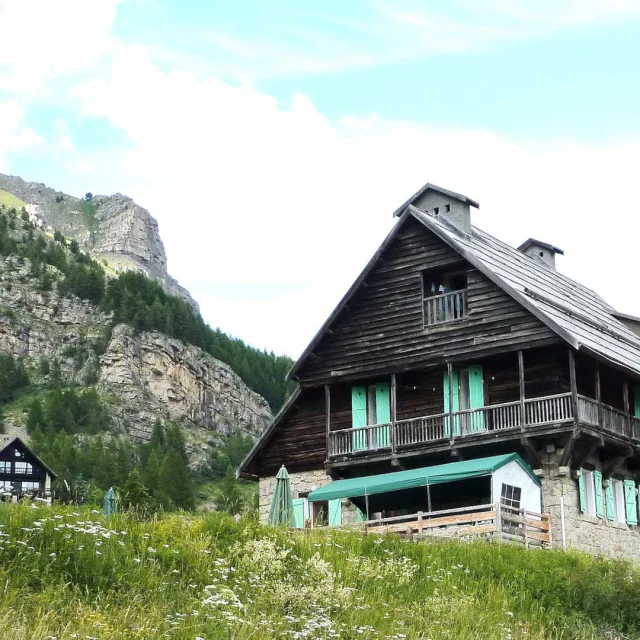
Authentic gites and mythical huts

  • Refuge de la Cantonnière: a former roadworkers’ house which has kept its authentic charm and offers a superb view of the Lac d’Estenc and the mountains.
  • Refuge CAF de Gialorgues: a small rustic dwelling right in the middle of the Alpine meadows of the Mercantour. The hut is unmanned, you must book the keys with the Club Alpin Français.
  • Refuge du Lac de Vens: a typical Alpine hut overlooking the majestic Lac de Vens.
  • Refuge de la Cougourde: In an exceptional setting of lakes and mountains, larch and Swiss stone pine forests.
  • Refuge de la Madone de Fenestre: the sanctuary is in the middle of a magnificent Alpine circus and offers an open view of the Gélas, the highest peak in the Alpes-Maritimes.
  • Gîte de Bousieyas: a warm and delicious break with local products and home cooking in a lovely mountain atmosphere.
  • The Italian huts: Refuge Laus Alexandri Foches, on the edge of a pine forest and near the Lake of San Bernolfo, and the hut of Questa, near the sanctuary of Sant’Anna Di Vinadio, the highest in Europe.