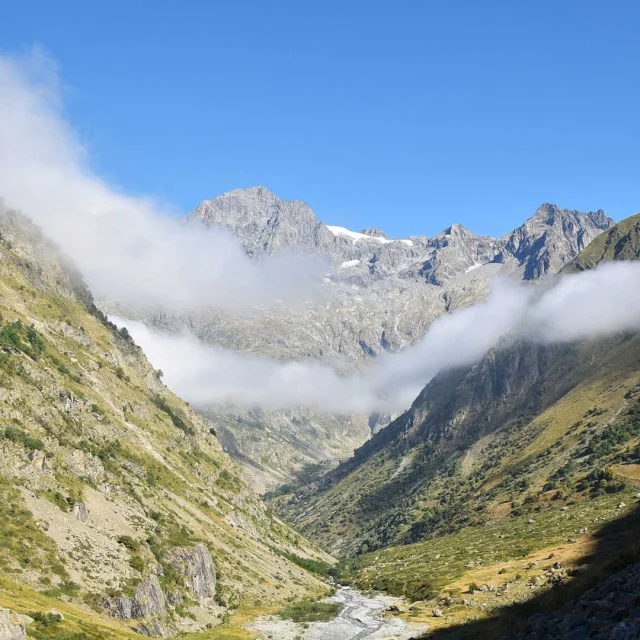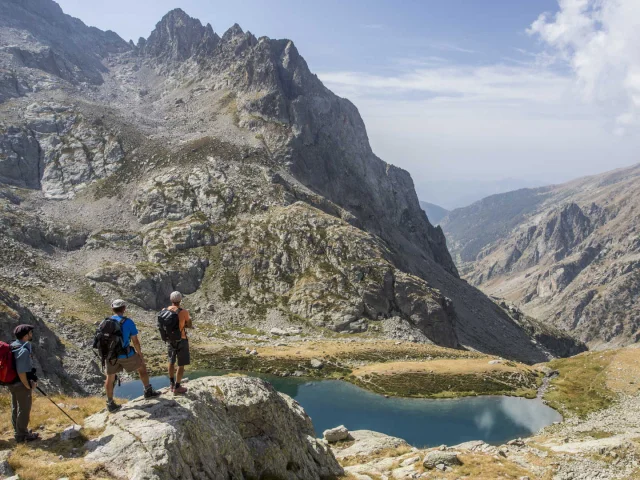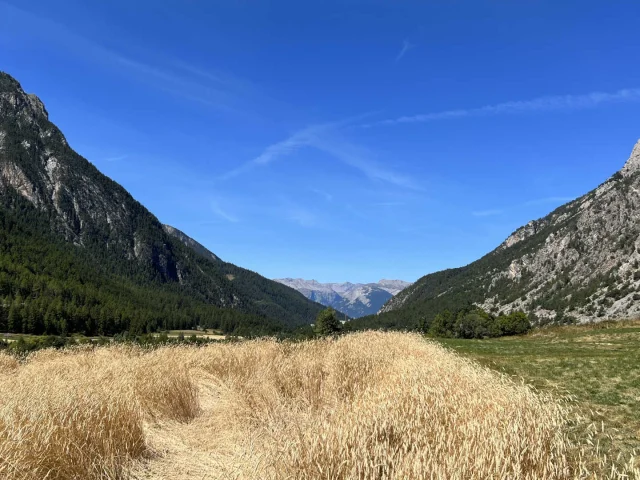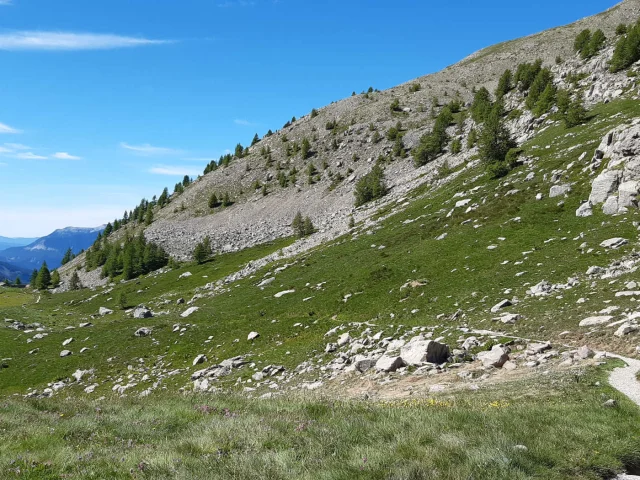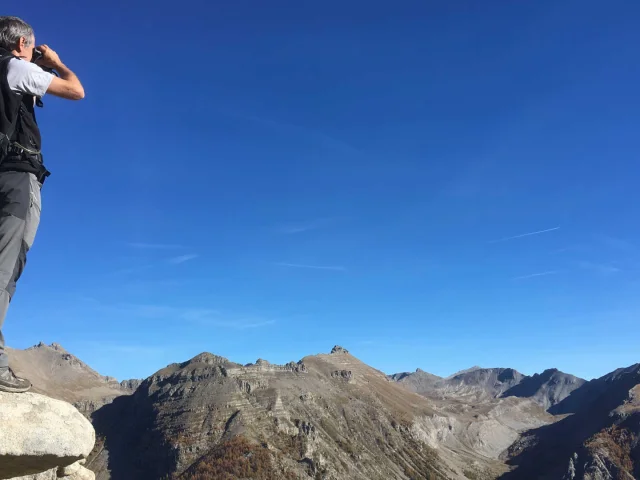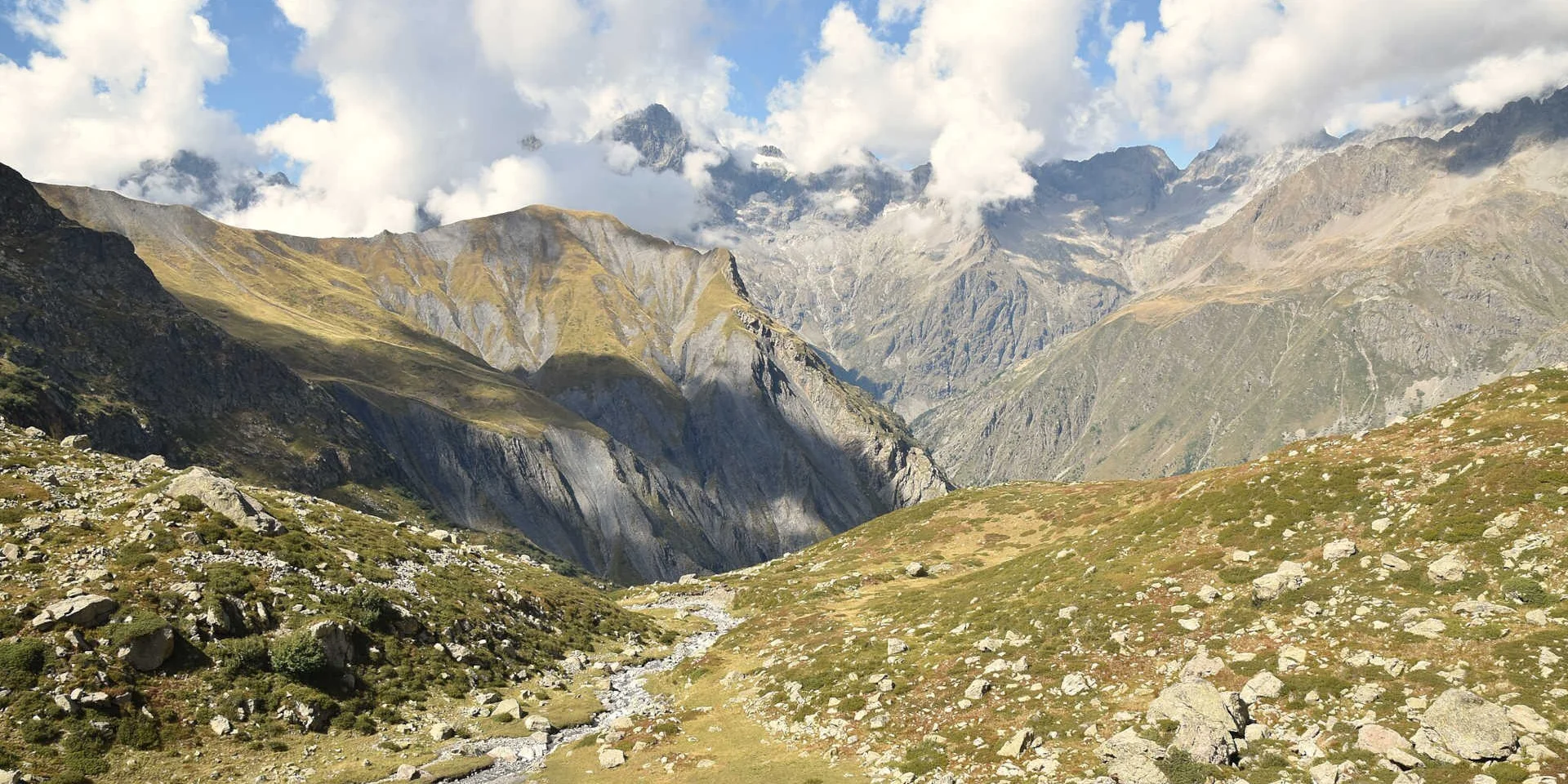
A tributary of the Vallonpierre torrent that meanders through the middle of the valley in the Alpine scenery of the Ecrins.The Vallonpierre torrent in the Ecrins, Hautes-Alpes
©The Vallonpierre torrent in the Ecrins, Hautes-Alpes|Pline

Le Tour de l'Oisans et des Écrins

The most mountinous in the French southern Alps

Well-known for its unique decor and also for its difficulty, le Tour de l’Oisans et des Écrins is a true immersion in the high mountains and an adventure filled with panoramas, natural encounters and geological curiosities.

A demanding mountain itinerary

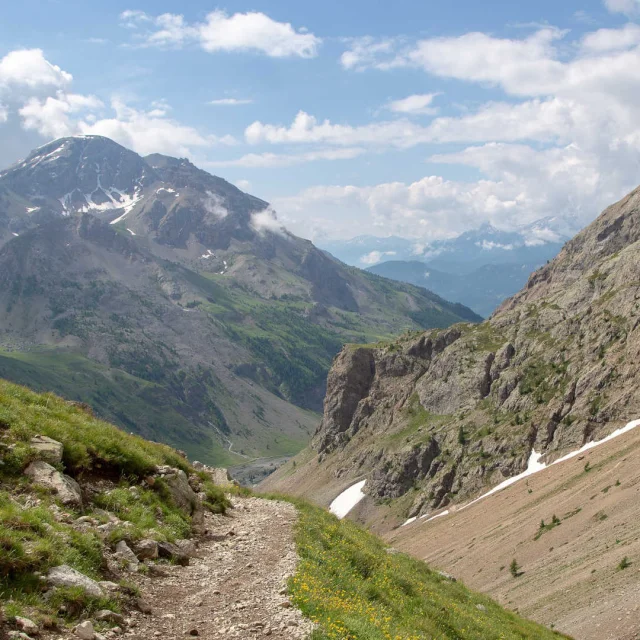
The Tour de l’Oisans et des Écrins, also known as the GR®54 is 176 km long with an accumulated height difference of 12,000 metres and goes over 14 cols. It’ss one of the three long-distance hiking trails in the French Alps with those of Mont Blanc and la Vanoise. It starts in Bourg-d’Oisans and goes through the sumptuous Alpine landscapes of L’Oisans and the Écrins National Park, and past the highest peaks of the range. It is also considered to be one of the most difficult GR® in Europe! Particularly due to late snow and certain parts with very steep slopes or slippery schist. It is therefore for seasoned hikers and can be done on average over twelve or fifteen days, with the possibility of only doing some sections for a shorter hike.

The Écrins National Park, a natural paradise for wildlife

To set out to conquer the Tour de l’Oisans et des Écrins is to see rare and diverse wildlife. The itinerary goes through the natural reserve of Haute-Séveraisse in the Valgaudemar and the Biological Reserve of Deslioures, a Natura 2000 listed site and the first European reserve of the famous “Reine des Alpes” that we know as the blue thistle. On the way, you’ll regularly see beautiful forests of larches and grey alders, whose wood turns bright orange when it’s cut, and also unique mountain plants and flowers such as glacier wormwood, Androsace argentea, slipper orchid, houseleek, marjoram, gentians and many others. If you look around, you’ll certainly see ibex, chamois, marmots and white-throated dippers living in this remarkable nature. And if you keep your eyes peeled, you may need a bit of luck, you might just see a bearded vulture, a wood grouse, a griffonvulture and even a golden eagle!

From magical landscapes to authentic villages

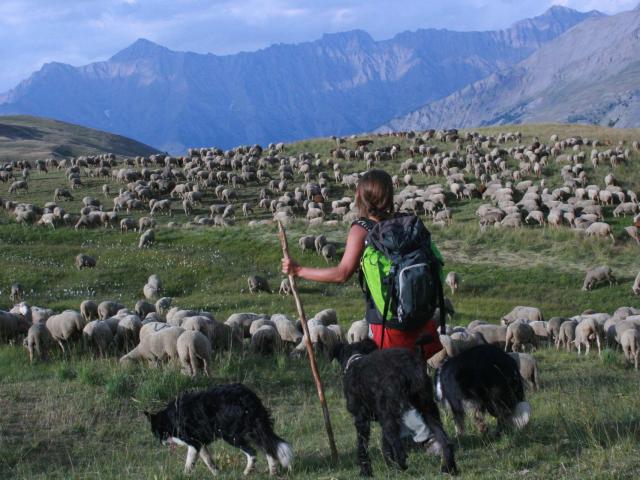
Valleys, cols, summits, lakes ? Villages… on the GR®54 you’ll get a real eyeful! In the Oisans, the Emparis plateau and its Lac Noir and Lac Lrié offer a sublime view of the Meije, which won’t leave you cold. Then it’s La Grave-La Meije, labelled one of the « most beautiful villages in France” before you enter the Écrins National Park. At the Col d’Arsine, climb up to see the glacial lake and enjoy a lovely view of the Pic des Agneaux. You’ll also cross the Col de l’Eychauda, with a possible alternative path to go and see the Lake of the same name. When you get there, you’ll have a breathtaking panorama, over the Vallon de Chambran, an important place for pastoral activity made up of old hay fields with huts and herds, and then it’s down to the authentic village of Vallouise, near Puy-Saint-Vincent. The superb Vallon de la Selle, which forms the communal Alpine pastures of Vallouise with the Cabane pastorale de Jas Lacroix, will take you to the Col de l’Aup-Martin, the highest on the itinerary and which will take you into the Valgaudemar.

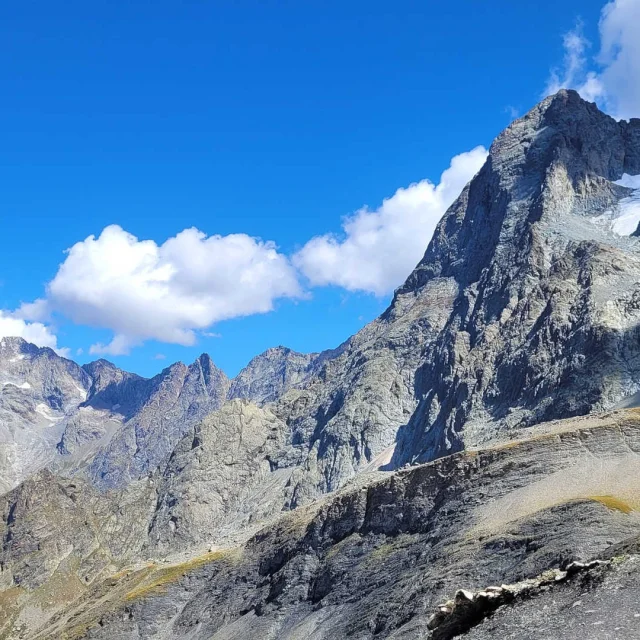
On the way, make the most of a lovely, wide open view of the emblematic peaks of the Écrins like Pointe de Verdonne and Sirac, particularly from the very beautiful Lac de Vallonpierre. As you go down towards La Chapelle-en-Valgaudemar, go and see the Cascade du Casset waterfall and continue your adventure in the heart of nature along the high Séveraisse valley. If you’re keen on geology, this is for you: chabournéite, the endemic mineral of the Valgaudemar, blends in with the crystalline rock made up of Sirac gneiss, and after you’ve gone past Villar-Loubière, you will be able to admire these walls of rock which seem to have been clawed by a giant tiger, known as Les Arraches. Continue on your way, watched over by the Pic des Souffles and enjoy the descent through the high, wild valley of Valjouffrey and then the Vénéon valley to finally return to L’Oisans.

The huts in the Écrins, reviving breaks in the middle of the mountains

  • In Villar-d’Arêne, the Refuge CAF de l’Alpe de Villar-d’Arène and the Chalet-refuge de Chamoissière await you at the foot of the glaciers for a peaceful break.
  • The refuge du Pré de La Chaumette is nestled at the bottom of the Vallée de Champoléon and welcomes you in a pleasant Alpine prairie.
  • The Refuge de Chabournéou is a rustic, authentic hut under the Sirac, in the Vallée du Valgaudemar.
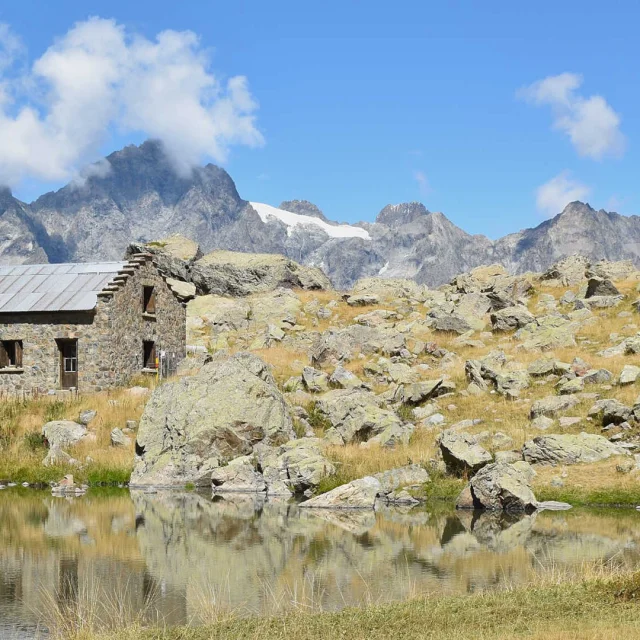
  • The Refuge de Vallonpierre is beside a little lake at the foot of the Sirac and shares the mountains with the local chamois that you may see very early in the morning.
  • The Refuge du Clot Xavier-Blanc is an old stone building which offers a warm welcome and a local home-made menu.
  • The Refuge de l’Olan is a belvedere which offers an incredible view of La Chapelle en Valgaudemar, the Cirque de l’Olan and the Cime du Vallon.
  • The Refuge des Souffles is a picturesque little wooden chalet above Villar-Loubière, surrounded by larch trees.