





Les Portes Anciennes d'Orgon.
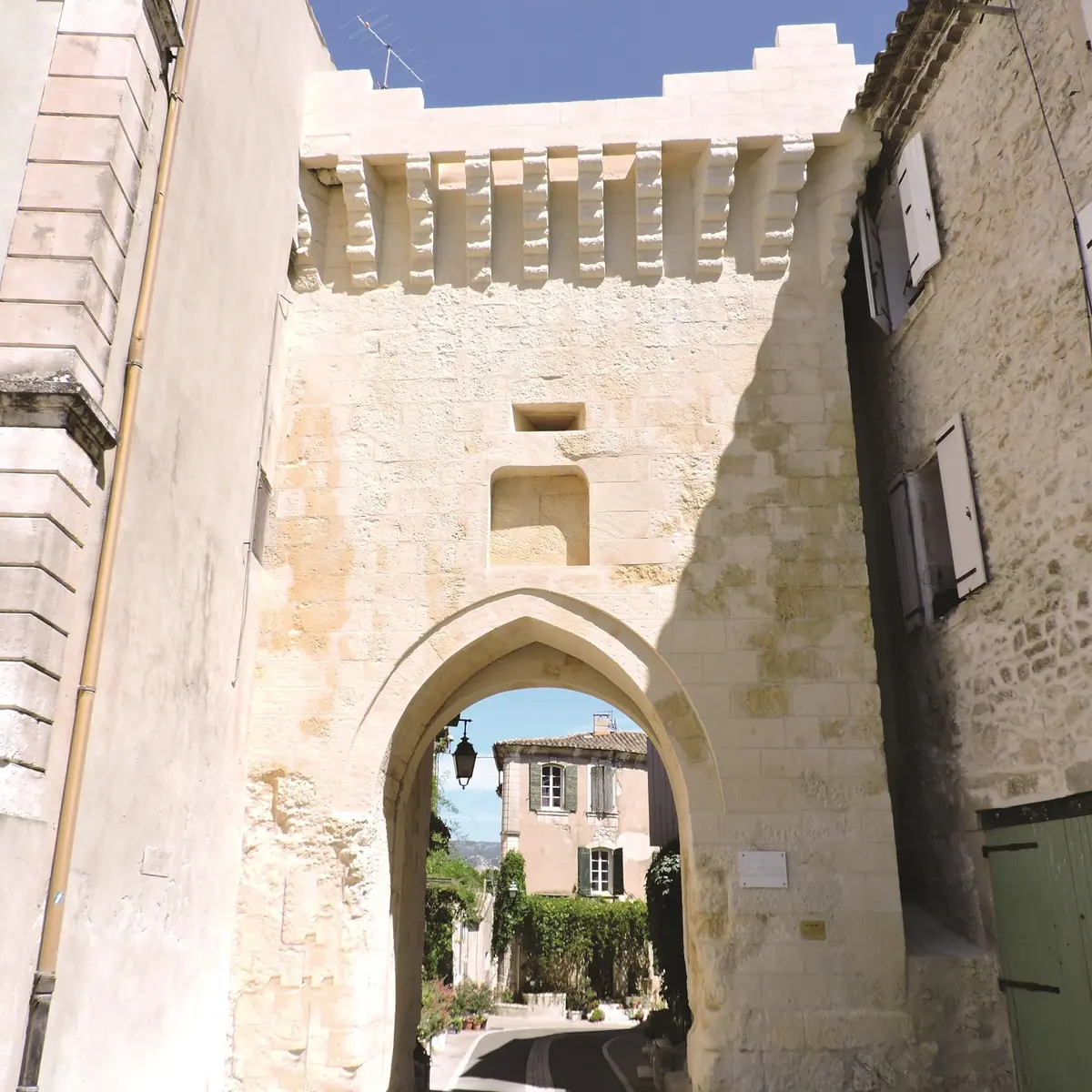
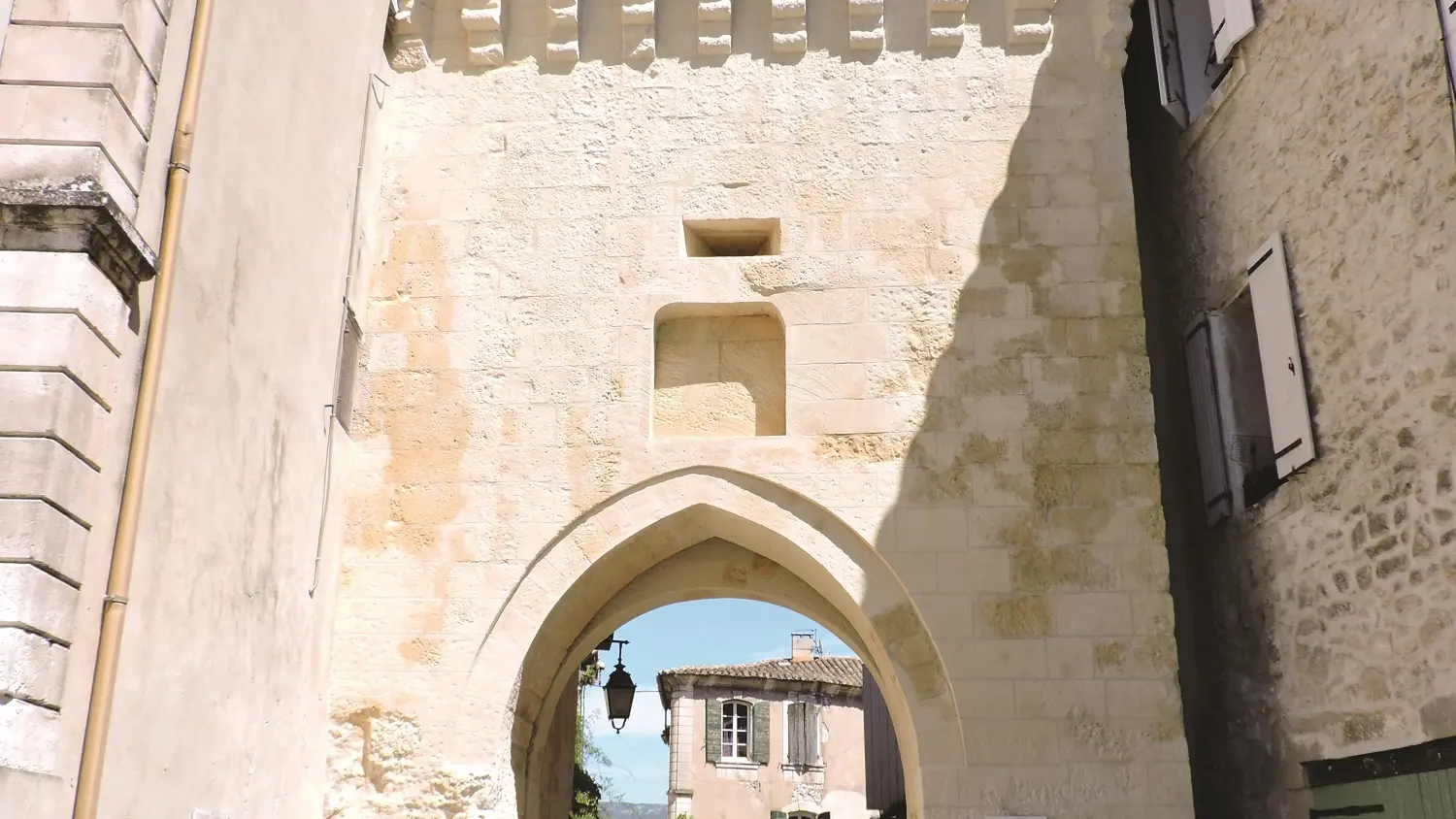
Porte de l'Hortet
This is the only remaining gate from the first surrounding walls built in the 12th century. It marked the end of the Chemin d’Avignon and the Chemin de Saint Rémy. It is well preserved and still has its guardroom, an oeil-de-boeuf window to the left, level with the crenellations, and a gun casement above the pointed arch.
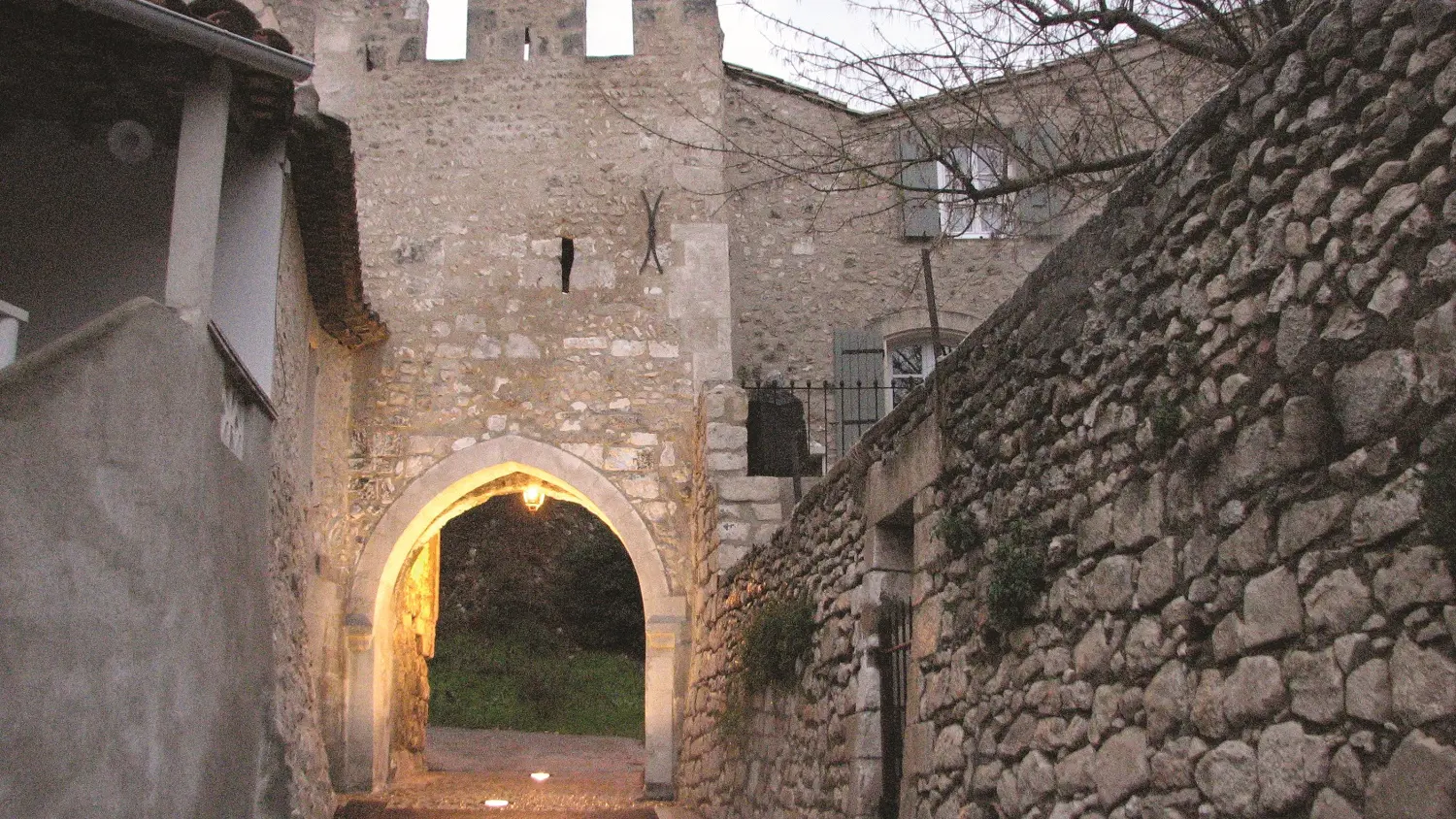
Porte Sainte-Anne
This is the western entrance of the second set of surrounding walls. It is located on Place Moulinas, named after our consul in 1739. If this gate could talk, it would describe all the great personalities who have passed beneath it! It would mention, for example, Francis I who stopped here for a few hours on his way back from Italy in 1516, before continuing his journey to Tarascon, Nostradamus, Pope Pius VII, who stayed in Orgon amidst great popular fervour at the Hôtel de Berne at N°13 rue Edmond Coste for a night's rest after his long journey and Napoleon I, who passed through Orgon on his way to the island of Elba and was forced to wear the uniform of a foreign officer in order to avoid the hostility of the villagers. Two other Popes, Louis XIV and Queen Christina of Sweden also passed under this gate. As well as a transit point, Orgon was also a stopover town for soldiers, placing a huge burden on our ancestors. In fact, these ancestors had to provide the soldiers with accommodation, food and a place by the fire. Each home housed between four and eight soldiers, who sometimes stayed for an entire season. It should also be noted that all the gates to the town were closed as soon as the troops arrived and nobody was allowed to leave without a pass. It was also a stopover town for convicts coming from inland France, on foot and in chains; they stopped either at the hospital or at the prison, before continuing to the port of Marseille or the labour camp in Toulon.
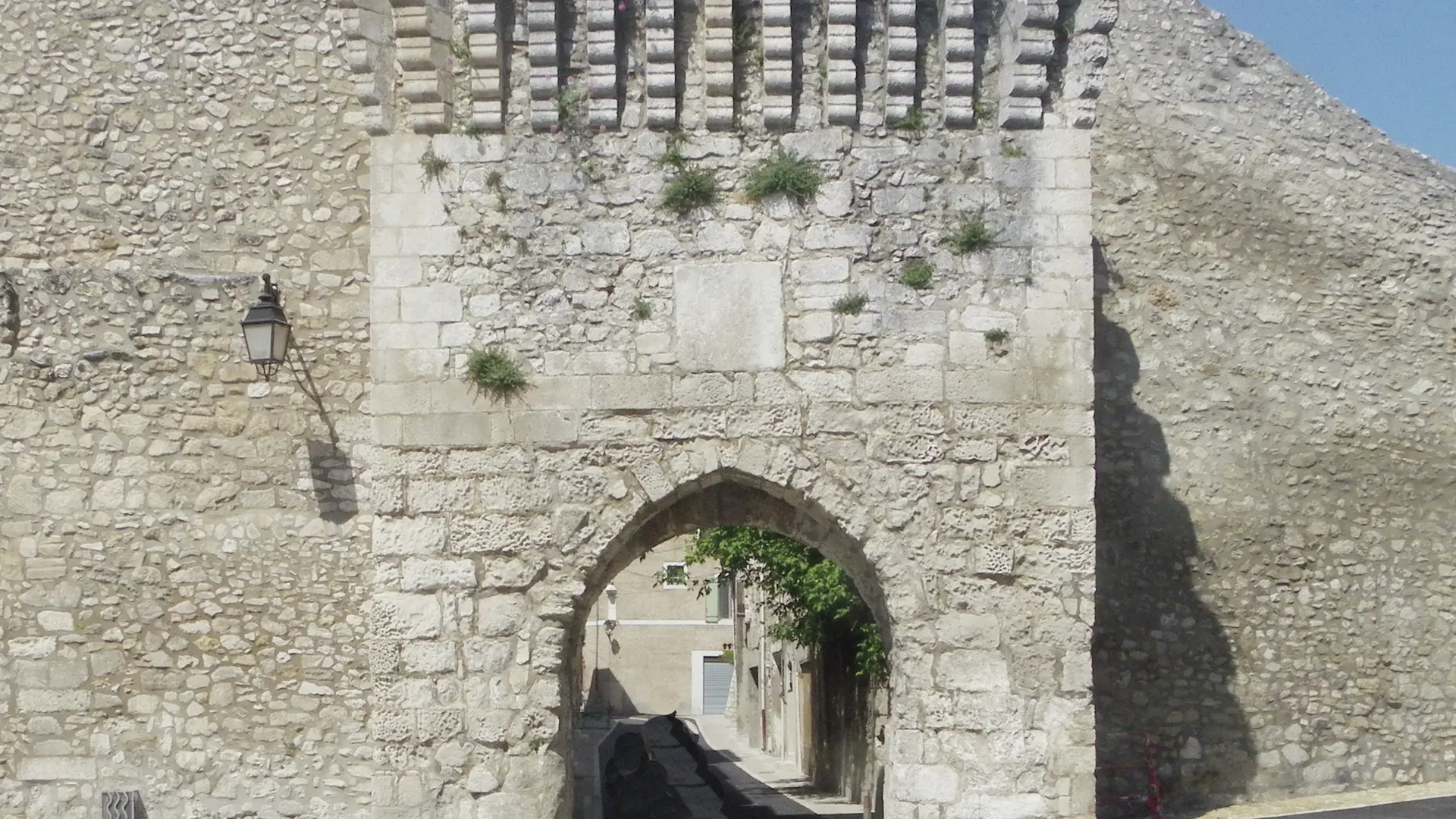
Porte de la Durance:
This is the eastern entrance to the second set of surrounding walls. This gate is also called Porte de l'Ange. The Porte de la Durance has dressed stone facings with ogival-shaped windows; the gate is crowned with crenellations and machiolations. In the Middle Ages, it was closed by means of a portcullis or 'Saracen', which still existed in 1741. It was a heavy openwork gate which formed an impassable obstacle. The portcullises were operated from the vaulted room located directly above the passage. This room, which was used as a guard room and later as lodgings for the watchman, opened onto the inside and was closed with beams during bad weather. The former Roman road passed here to the south of Orgon, between the Durance and the rock. There was a toll near the Porte de la Durance, in a natural cave beneath the Château de Guise. The traffic passing through the Orgon toll consisted mainly of fish and oil. Due to the rises in the water levels, boats docked slightly further to our left and for this reason the district became known as the Old Port.
Accessible for disabled