Villa Kerylos by the seaThe Kerylos villa at Beaulieu-sur-Mer in the Alpes-Maritimes department
©The Kerylos villa at Beaulieu-sur-Mer in the Alpes-Maritimes department |Mullanasrudin

Top architectural coastal sites in the Sud region

From the Camargue to the seaside in Menton, the Provençal and Côte d’Azur coast holds little-known architectural treasures, the reflection of local histories and remote influences. From military forts to artists’ villas and exotic follies, discover these unique sites where architecture is in communion with the sea.

The Marquis de Baroncelli’s Cabane du Simbèu

In Les Saintes-Maries de la Mer

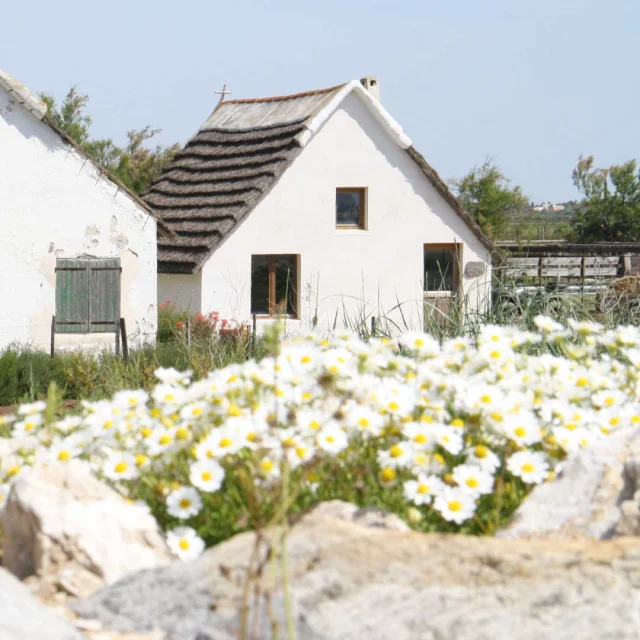
The Cabane du Simbèu is a living witness to the traditions of the Camargue and the Marquis de Baroncelli’s deep attachment to the territory. So deep was the Marquis’s love for the land that he devoted his whole life to it, and became an unavoidable figure of regional identity. As a manadier, writer and staunch defender of the profession of gardian, he widely contributed to forging current traditions, in a blend of local customs and the imaginary of the  Far West, influenced by Buffalo Bill’s Wild West Show. The Cabane de Simbèu is all that remains of the family mas, built in the 1930s and destroyed in 1944 by German troops. Restored in 2023, it has kept its traditional roof of sagnes (reeds) and a protective Camargue cross on its north wall, which has no window and is rounded to face the Mistral wind. Typical of the gardians’ buildings, which were also used by fishermen and Camargue farmers, the cabane is a rare example of vernacular architecture still to be seen. To fully discover this historic site, there’s nothing better than a horse ride in the surrounding marshes, just like in the times of the Marquis.
 

Fort de Bouc

In Martigues

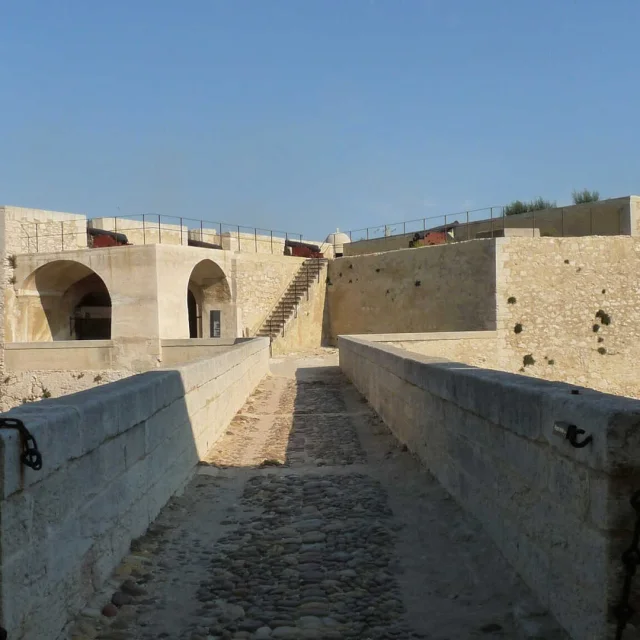
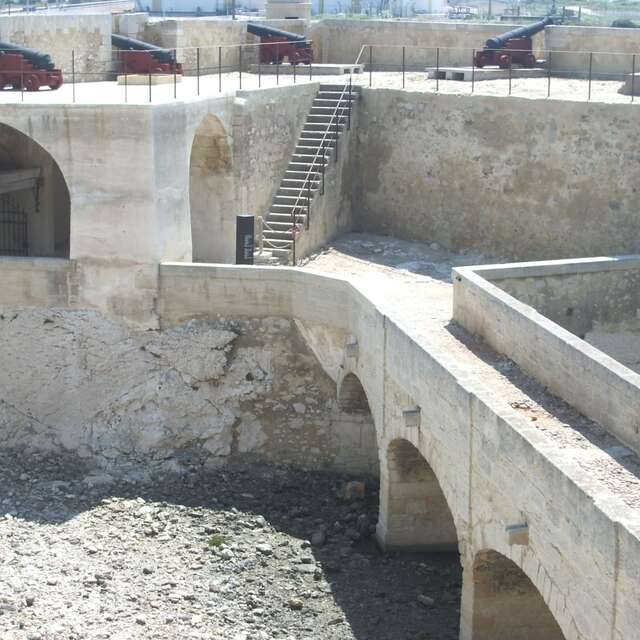
Located at a strategic point on the Provençal coast, at the entrance to the Etang de Caronte, between the Mediterranean and the Etang de Berre, Fort de Bouc has defended Provence and has kept watch over the Mediterranean coast for centuries. Built in the 12th century with a square tower which served as an observation post, the fortress was coveted throughout the centuries. In 1536, Charles Quint tried in vain to take it, yielding to the people of Martigues who defended the tower. The fort took on its present shape in the 17th century thanks to the de Bonnefons family: two bastions, a half-moon and a fixed bridge were added to strengthen the fort. It is often wrongly attributed to Vauban, who actually only added some interior fittings. Currently, the fort can be visited from mid-April to the end of October on guided tours organised by the Martigues Tourist Office. Access by boat, through the canals and under the Caronte viaduct, offers a spectacular view of the fort from the sea. The circuit continues with a tour of the fort to discover the military and architectural history of the place.

Fort Saint-Nicolas

In Marseille

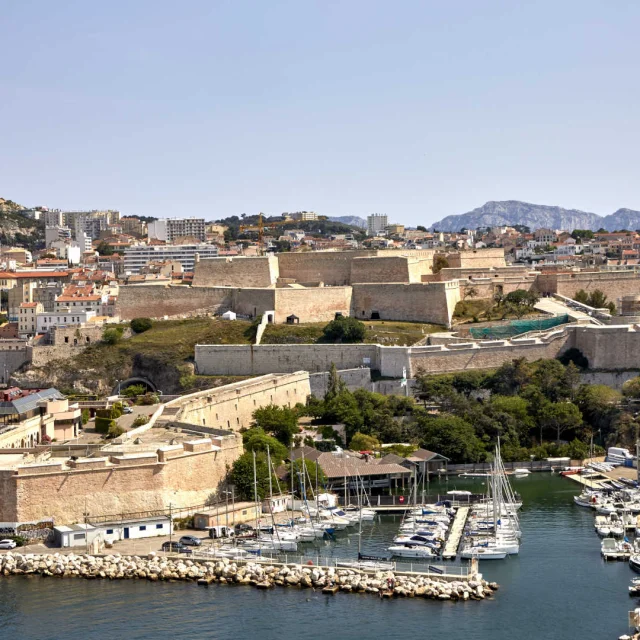
Fort Saint-Nicolas looks down over the Vieux-Port in Marseille, and tells the story of royal authority and the tumultuous history of the town. Building began in 1660 under the orders of Louis XIV, in a climate of defiance: following civil unrest, the fort was designed to control Marseille and assert the king’s authority over a town which was known to be rebellious, and also to protect it against possible attacks from the sea. The fort is very impressive with its double enclosure, its bastions and its moats cut into the rock, despite the constraints of the terrain. Built by Louis-Nicolas de Clerville, it was later criticised by Vauban, who deemed it to be ill-designed. A place of confinement and a symbol of oppression for the people of Marseille, the fort was partially destroyed during the Revolution, before being saved by the National Assembly, which ordered the end of the destruction. It has been listed as a Historical Monument since 1969, and is now divided into two entities: Fort Ganteaume on the sea side, with a military vocation, and Fort d’Entrecasteaux on the land side, which has become the Citadel of Marseille. The Citadel is now home to cultural events, entertainment and visits. In summer, its gardens come to life around a friendly guinguette. See the programme to make the most of this unique site which has become a place of culture and life in the heart of the Mediterranean town.

The mines of l’Argentière

In La Londe-les-Maures

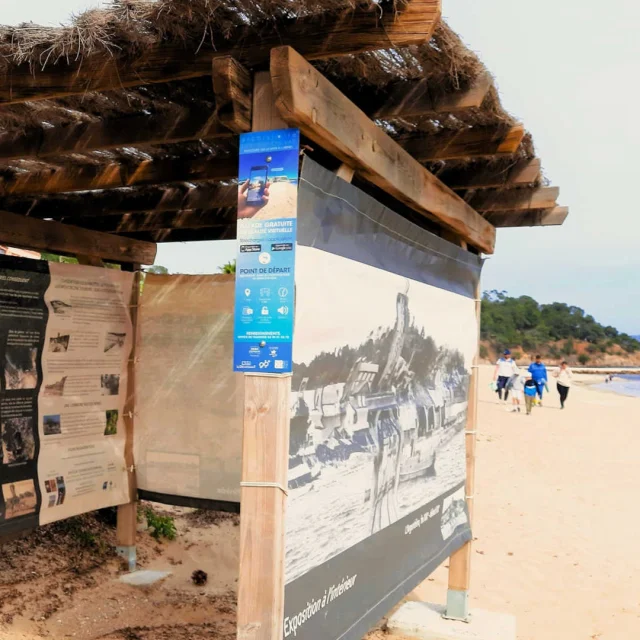
There is a surprising industrial past hidden beneath the seaside landscapes of La Londe-les-Maures. Known today for its beaches, the municipality thrived for a long time on mining, probably since the Middle Ages. However, it was mainly from the 19th century that the operation of the site, near the L’Argentière beach, reached a major turning point under the auspices of Victor Roux, who started up the mines once more for the extraction of zinc, lead and silver. The deposit became one of the largest in Europe for zinc, with a complex underground network and a dedicated railway line to the port of L’Argentière. But in the early 20th century, the depletion of the deposits and the fall in prices led to the permanent closure  of the establishment in 1929. Today, you can discover the old mining techniques such as fire-setting from a 90-metre gallery, which was restored in the 2000s. This little-known heritage is highlighted in an exhibition on the Argentière beach that is open to all, as well as on the Archistoire app, which offers a virtual tour of the mine, and during guided tours from the L’Argentière beach – book before with the La Londe-les-Maures Tourist Office. A unique opportunity to dive into the underground, industrial history of the Var coast.

Villa Tamaris Pacha and the hamlet of Les Sablettes

In La Seyne-sur-Mer

In the 1880s, when the Côte d’Azur was becoming the wintering place to be, the very rich Michel Pacha launched into a very audacious project: to create a seaside town in Tamaris, on the banks of the bay of Toulon. Villa Tamaris Pacha is part of this large-scale project: looking down over the sea from its hillside, it was built in 1890 by Michel Pacha for his wife and remained unfinished when she died. This vast 3700-square metre building, which was rehabbed in the 1990s, was to become a major art centre dedicated to contemporary painting, photography and the image in 1995. It now houses a collection of over 750 works and regularly hosts exhibitions, artists’ residencies and cultural events. Located in the middle of a pine forest, the villa has a superb panoramic view over the entire Lazaret Bay. Just below, the hamlet of Les Sablettes, also created by Michel Pacha from 1883, completed the Tamaris project, attracting a local clientele with a grand hotel and a casino. ​Destroyed in 1944 by the Allies, it was rebuilt after the war by the architect Fernand Pouillon. Currently approved as Patrimoine du XXᵉ siècle, the Hameau des Sablettes is a lively place, hosting works by 20th century artists and offering an exceptional view of Cap Sicié and Les Deux Frères. Guided tours proposed by the Les Sablettes Tourist Office help you understand the architectural and social history of this unique coastal unit.

The Missiri Mosque and the Hong Hien Tù Pagoda

In Fréjus

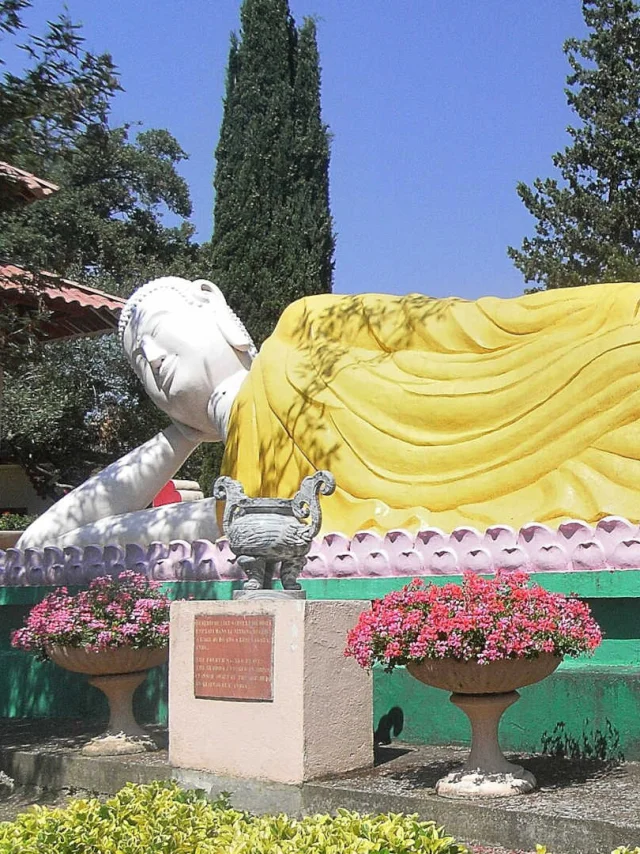
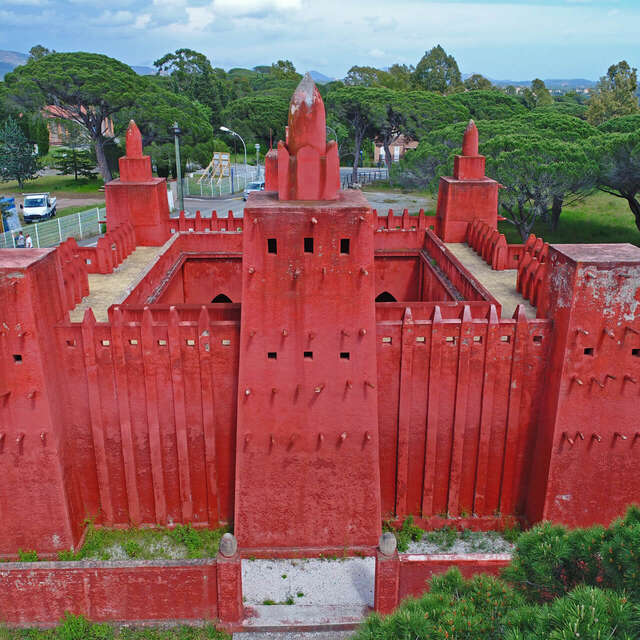
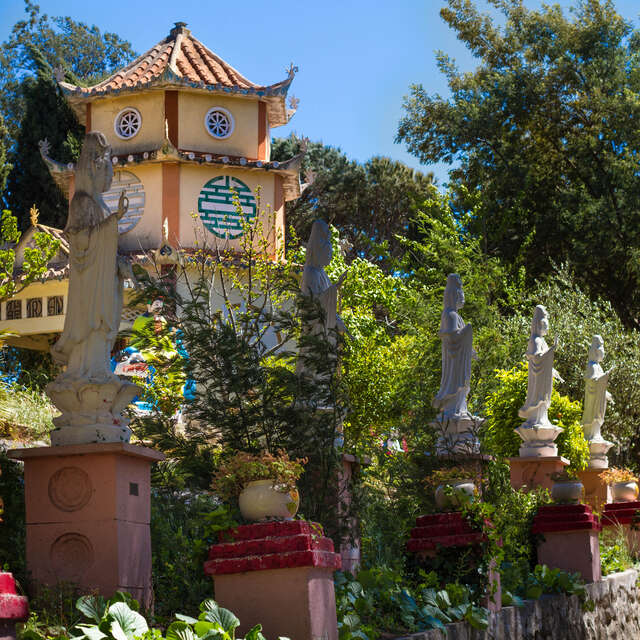
In Fréjus, two out-of-the-ordinary monuments bear witness the colonial and military history of the 20th century: the Missiri Mosque and the Hong Hien Tù Pagoda. Built in 1930 in the Caïs military camp, the Missiri Mosque is a faithful replica of the Great Djenné Mosque in Mali. Designed for the Senegalese riflemen, it was destined to offer them a cultural landmark in mainland France, to lighten their isolation. With its red ochre facade and its concrete points which imitate traditional wooden beams, this is a truly unique monument. Even though it resembles the original mosque, the Missiry Mosque was not designed as a place of worship, but was used as a community centre. Restored in 2025, it was listed as a Historical Monument, labelled “Architecture contemporaine remarquable” and belongs to the Ministère des Armées. Not far from it, the Hong Hien Tù pagoda, the first Buddhist pagoda in France, was built between 1917 and 1919 by Indochinese soldiers. Abandoned after WW2, it was restored in 1954. Its traditional Vietnamese architecture –  layered hip roof decorated with dragons and great 10-metre reclining Buddha make it a place of recollection and discovery. Currently, it hosts major Buddhist ceremonies, such as the Têt or the birthday of Buddha, and is still an important meeting place for the Vietnamese community. Free or guided tours are offered and even meditation sessions!


The Château des princes de Monaco

In Cagnes-sur-Mer

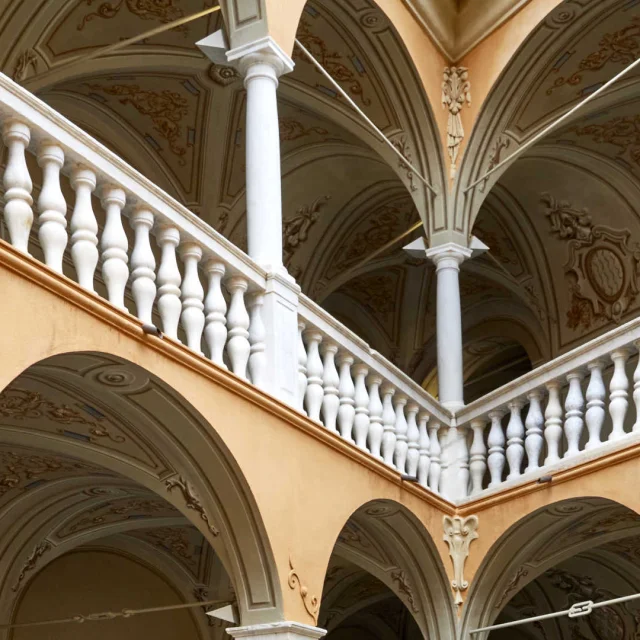
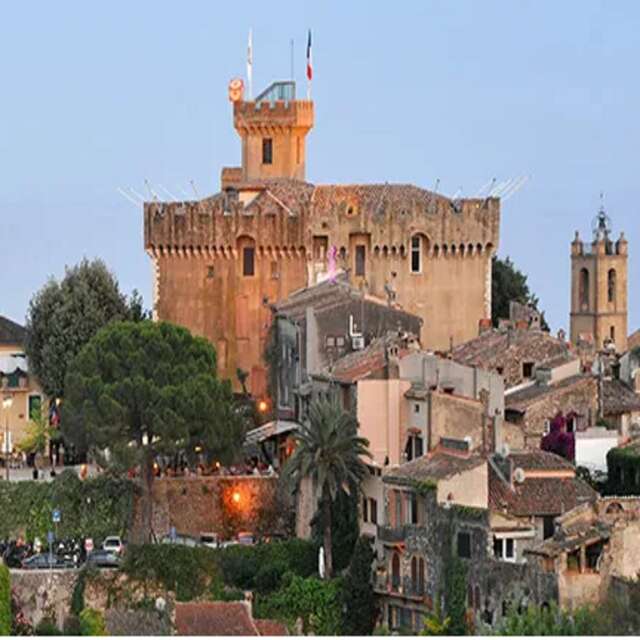
The Château des Princes de Monaco dominates the medieval village of Haut-de-Cagnes and embodies both feudal authority and architectural refinement. It was built in 1309 by Rainier 1st Grimaldi, Admiral of France and Lord of Cagnes, to ensure the defence of the territory. The imposing medieval fortress was deeply transformed in 1620 by Jean-Henri Grimaldi, who made it into an elegant Italian baroque-style residence. The château then received a monumental staircase, a light-filled patio lumineux and ceilings painted with rich decorations. Acquired by the municipality in 1937, it was reconverted into a museum in 1946, before being listed as a Historical Monument in 1948. Today, it hosts contemporary art exhibitions, a fund dedicated to the olive tree and a series of portraits of Suzy Solidor, a singer and personality of 1930s Tout-Paris. From its terraces, you get a plunging view of the Mediterranean, which demonstrates the strategic and aesthetic importance of this site which has become a heritage and artistic emblem of the Côte d’Azur. See the programme to prepare your visit.

The Domaine des Collettes

In Cagnes-sur-Mer

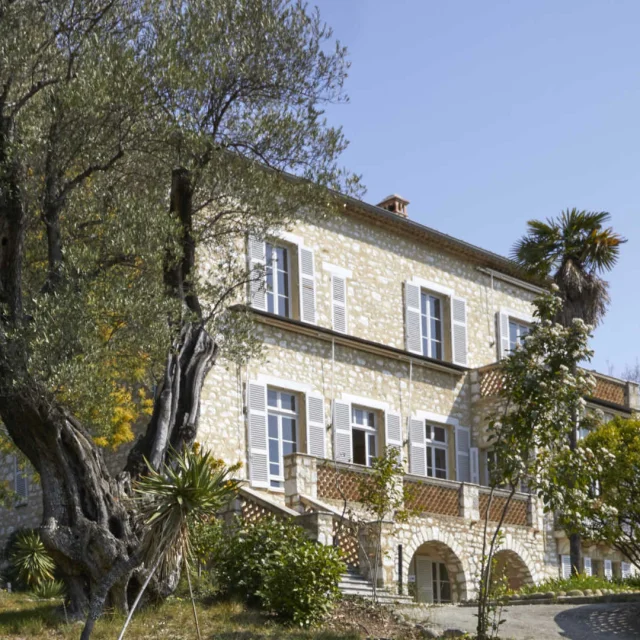
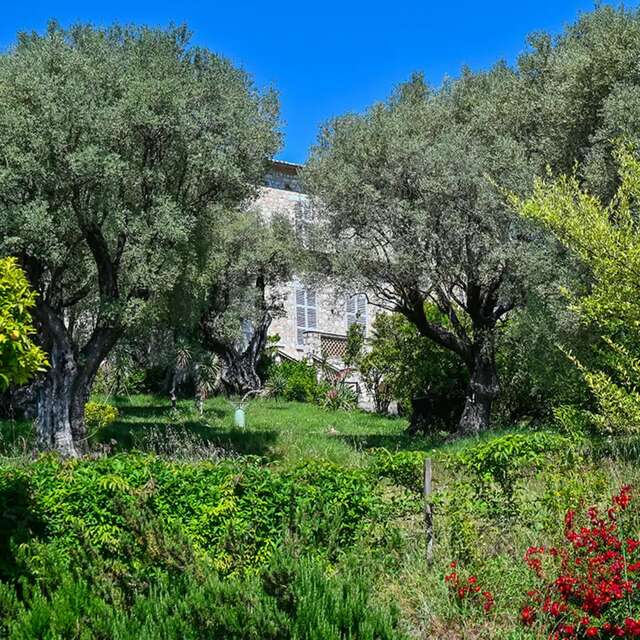
In 1908, attracted by the light of the South of France and a hundred-year-old olive grove on the heights of Cagnes-sur-Mer, Auguste Renoir purchased the Domaine des Collettes on which he had a Neo-Provencal style villa built. Despite ailing health due to severe polyarthritis, the painter settled there with his family and continued intense artistic activity until he died in 1919. The domaine bcame the place of major creation of his « Cagnois period », marked by a light-filled, sensual and soothing painting. Renoir painted some of his most famous works there, such as Paysage aux Collettes, and learned sculpture with Richard Guino. Great names such as Matisse, Maillol, Modigliani and Rodin came to see him in this haven of creation. Made into a museum in 1960, the villa still has its original furniture, the artist’s personal objects and a selection of his works. The 3-hectare park, filled with olive and orange trees, offers an exceptional view of the Cap d’Antibes, which often recurs in his paintings. A listed Historical Monument historique and labelled “Maison des Illustres”, the estate bears strong witness to the Mediterranean enracinement and the creative vitality of the Impressionist master.

Villa Kérylos

In Beaulieu-sur-mer

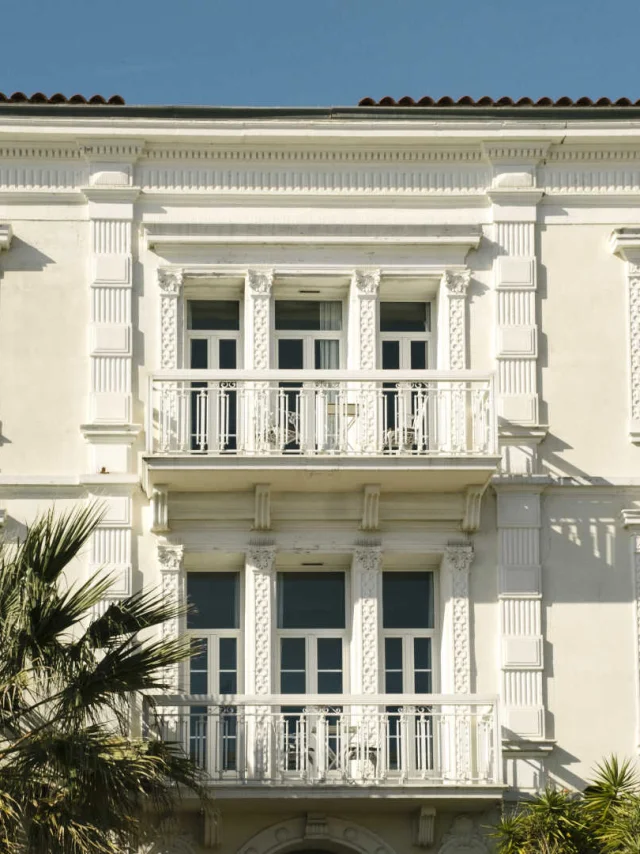
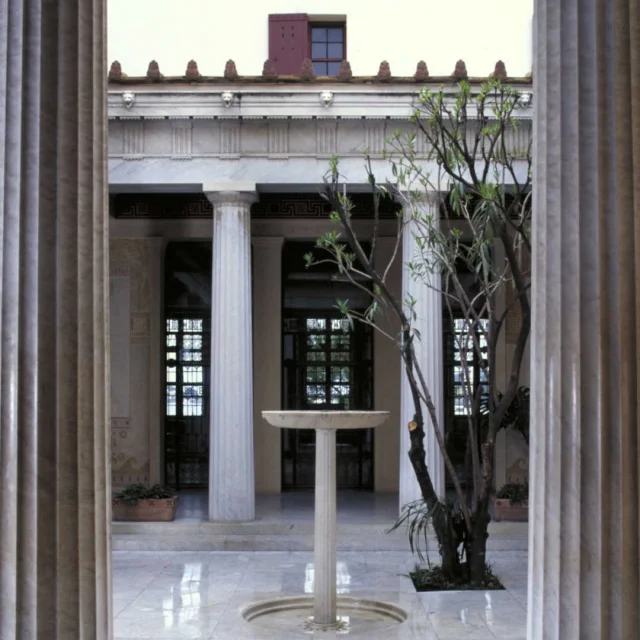
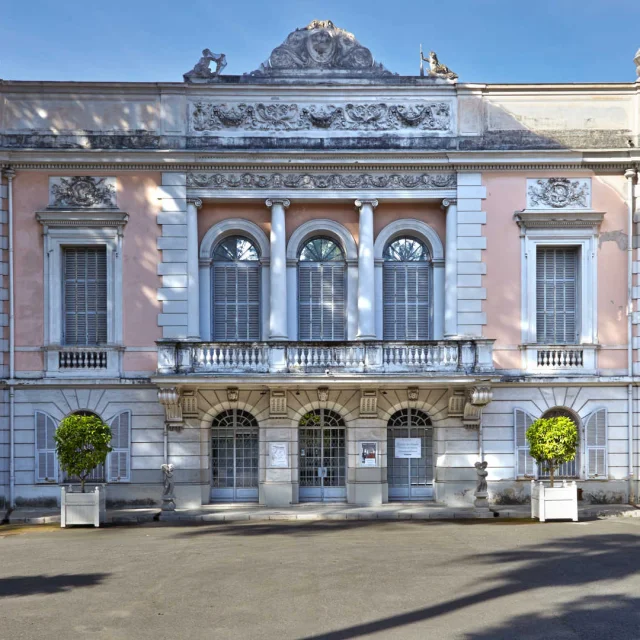
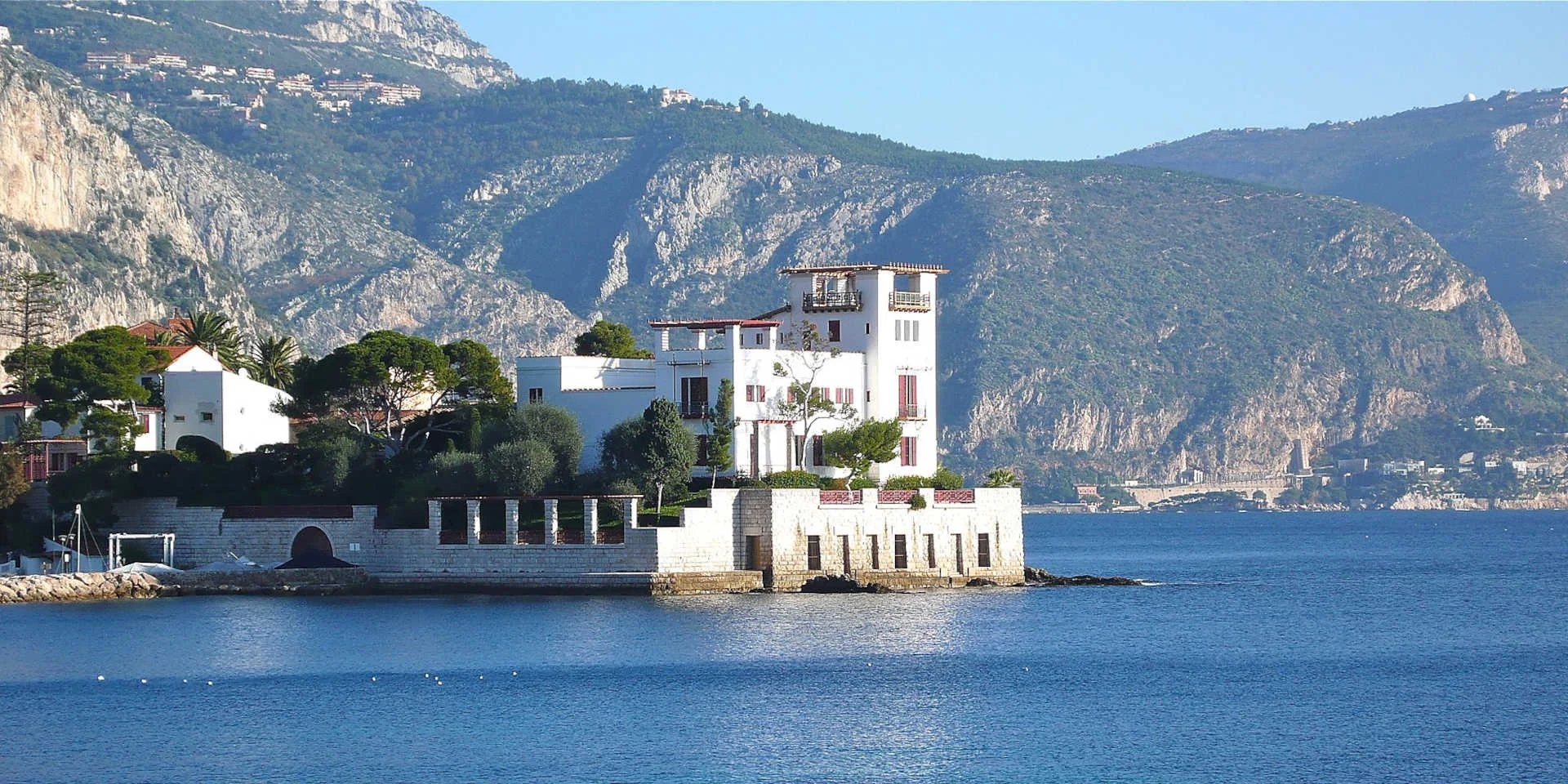
Nestled on a rocky point facing the sea, Villa Kérylos is an architectural masterpiece, designed to be the faithful reproduction of an ancient Greek house. It was built between 1902 and 1908 on the initiative of Théodore Reinach, a passionate Hellenist, who had it designed by the architect Emmanuel Pontremoli. Inspired by the noble dwellings on the island of Delos in the 2nd century BC, the villa is a blend of archaeological rigour and modern comfort: the frescoes, mosaics, columns and furniture were made according to ancient models, while the heating, electricity and sanitary installations were discretely integrated to preserve the aesthetics. Noble materials such as Carrara marble and exotic woods were also used. The exterior is also reminiscent of Greece, with a garden of olive trees, vines, pomegranates and bay. The house and garden, which were bequeathed to the Institut de France in 1928, are now managed by the Centre des monuments nationaux. The free or guided tour of Villa Kérylos is a real immersion in Hellenic civilisation, and offers a unique sensory and intellectual experience on the banks of the Mediterranean.

Palais Carnolès and its park

In Menton

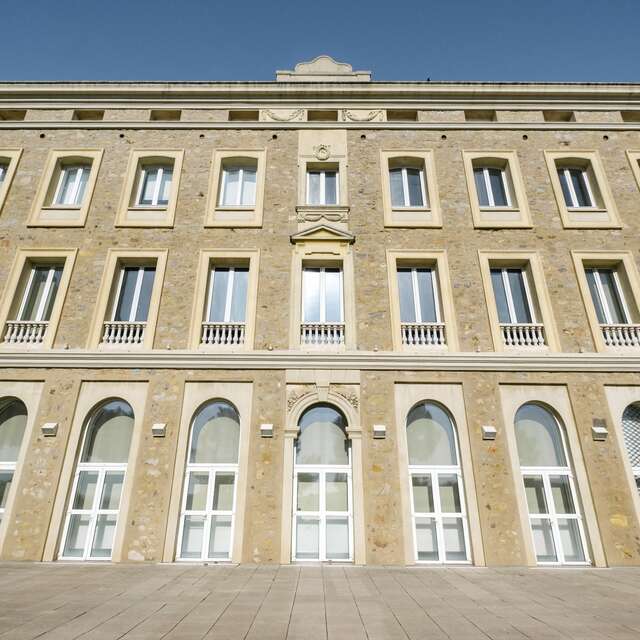
Palais Carnolès, a prince’s holiday home, a musuem and an exceptional garden, bears witness to the life style of the Grimaldis on the Riviera. It was built in the early 18th century on the request of Antoine Ist Grimaldi, Prince de Monaco, in a style inspired by the Grand Trianon. Designed as a summer residence, at the time the palais combined fashioanable pleasures, such as hunting, music or theatre, and a farm with orchards, vegetable gardens, stables and a farmyard. From the 18th century, the estate had over 1,700 fruit trees. Recreated in the 1970s, it is now home to 137 varieties of citrus fruits, which makes it one of the biggest collections in Europe, with bitter orange, lemon, sweet orange… In 1961, the Palais was purchased by the department, restored and made into a Musée des Beaux-Arts in 1977 to host the works from the Wakefield-Mori donation. The park, which is open to the public, blends botany and contemporary art, with its alleys lined with citrus fruit trees and a collection of outdoor modern sculptures. With its architecture, horticulture and art, the garden of Palais Carnolès is a peaceful, refined stop a stone’s throw from downtown Menton. You can visit it on your own or guided tours organised by the Tourist Office.

Discover