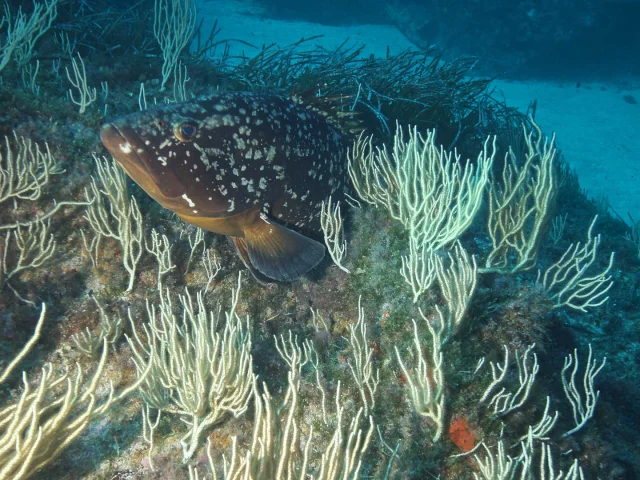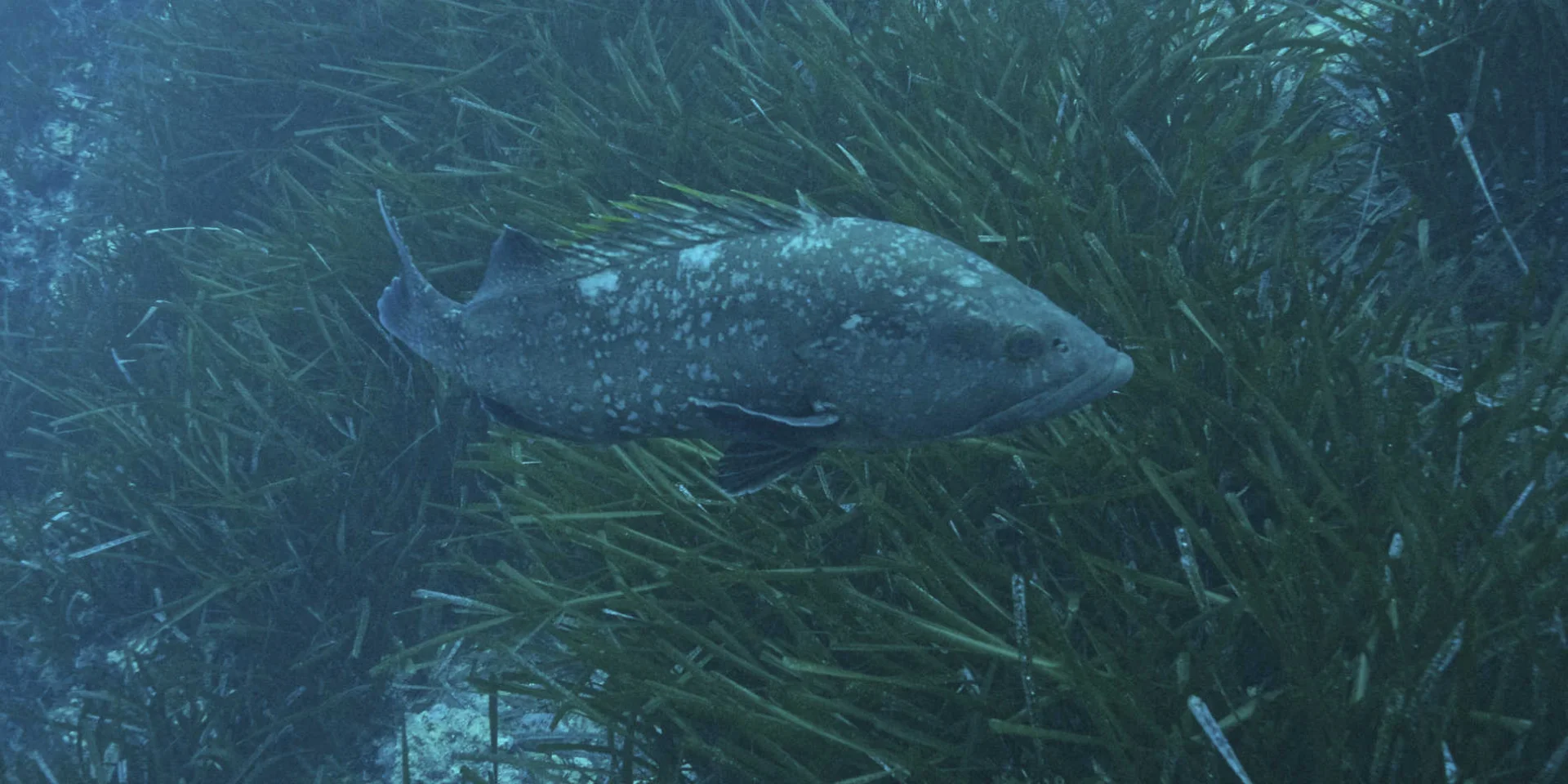
Dusty grouper and Posidonia meadowDusty grouper and Posidonia meadow in Port-Cros National Park, Var
©Dusty grouper and Posidonia meadow in Port-Cros National Park, Var|CLefebvre

I’m César, I’m a 15-year-old dusky grouper from Porquerolles

Come and live my life as a predator and star of the seas

Hi there, human! In this article, I (César, a dusky grouper from Porquerolles) am going to tell you about my life in this little marine paradise of the South of France seas. You’ll discover my character, my lifestyle, and my occupations. It’ll make you want to dive in and say Hi!

Port-Cros and Porquerolles

My favourite spots

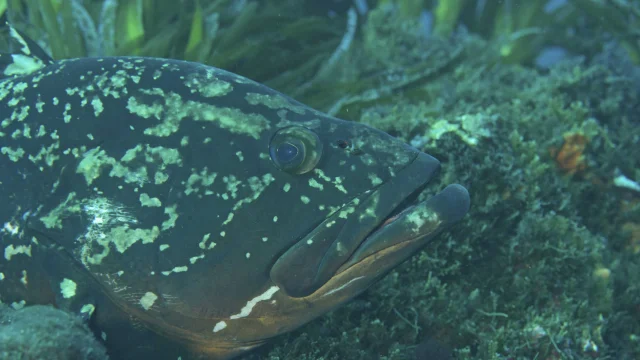
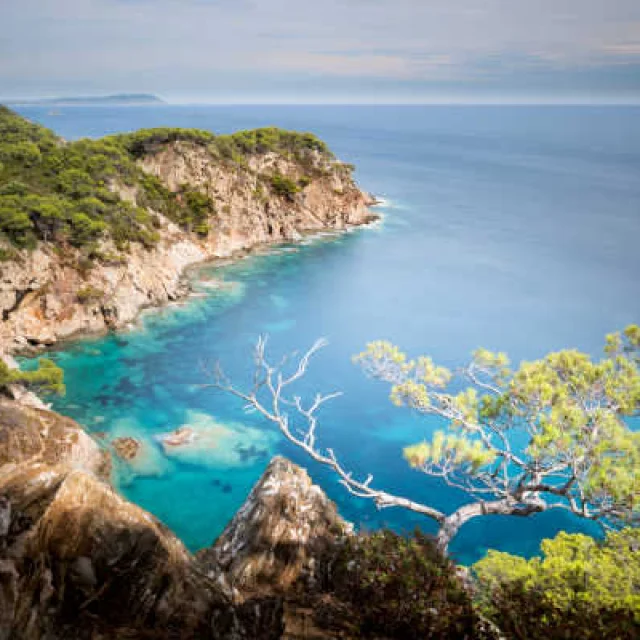
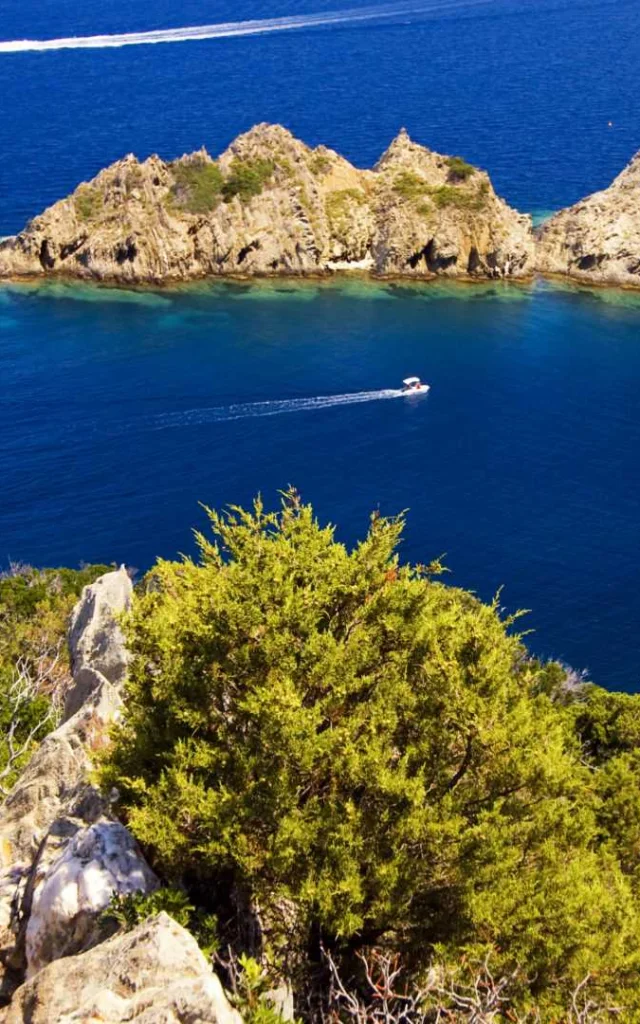
Hello, I’m César, I’m a dusky grouper, and I’m 15 years old. If you want to shine at cocktail parties, you can try and remember my scientific name: Epinephelus Marginatus. But dusky grouper is just as good. I live in the Mediterranean Sea, in the enchanted waters of the Port-Cros and Porquerolles National Park off the Var coast. Some humans come from the other side of the world to discover the coastline of my birthplace. Here, the sun’s rays cut through the bright blue sea and light up the coastal seabed, where Posidonia grasses, sea urchins, anemones, starfish, and sponges live together in harmony. I move around more in deep waters, several dozen metres below the surface.
I’m very big

And stylish

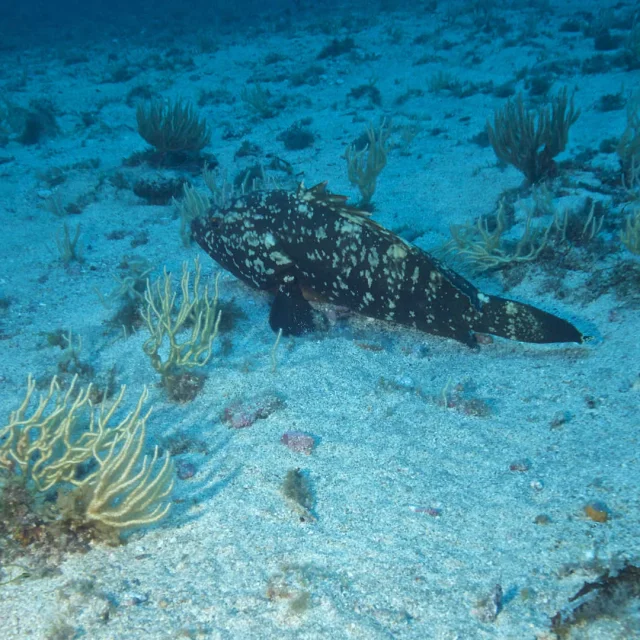
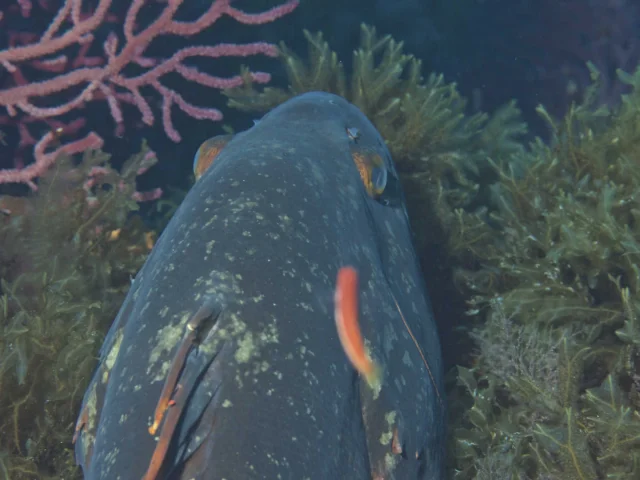
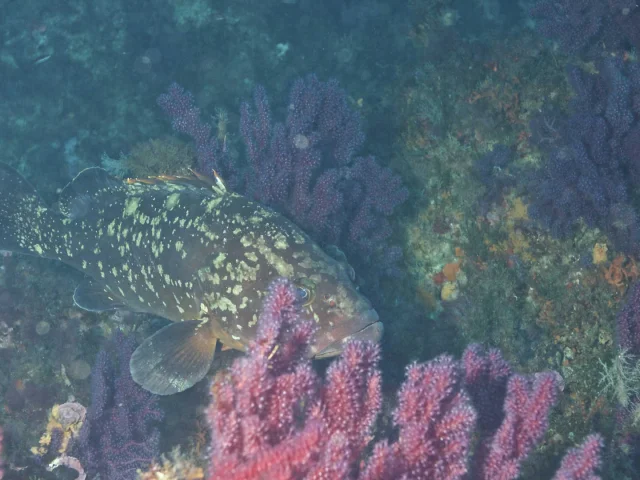
I’m easy to recognise: I’m one of the biggest fish in the Mediterranean – some groupers can measure up to 1.30 metres! – I have very big eyes and a huge mouth. Some humans put all their money into plastic surgery to plump up their lips (You really are VERY strange…), but for me, it’s natural. I’m a greyish brown and dappled, but groupers’ colours vary from one individual to another or with the colour of the seabed. I can live up to the age of 50 and sometimes more.

I’m a star

And bankable, what’s more!

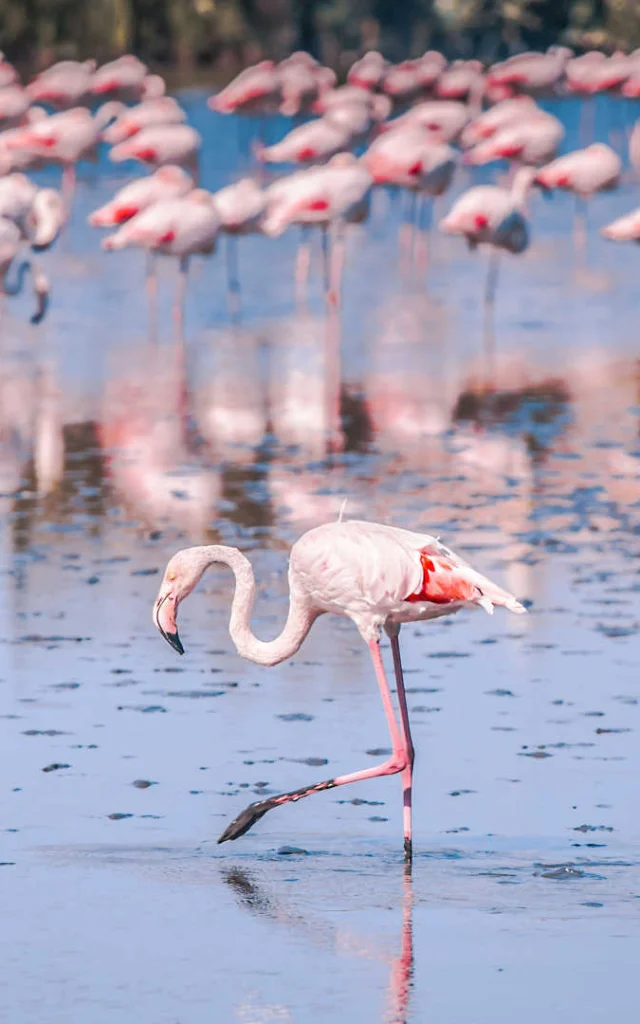
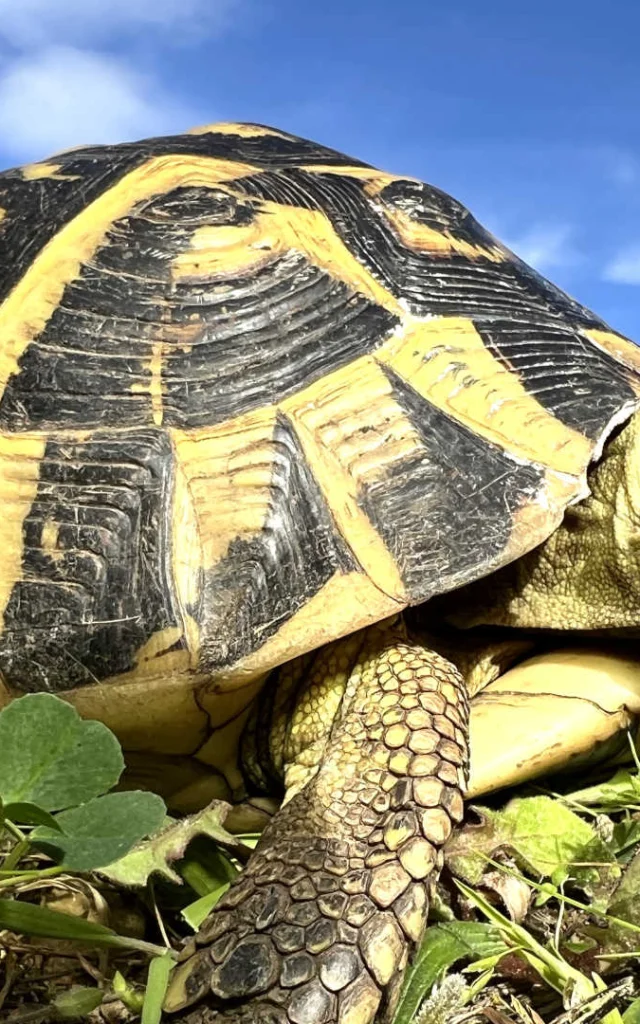
By character, I’m inquisitive. Much more than my pal Marcel, the flamingo, who lives in the Camargue, and quite the opposite of my friend Fanny, a solitary Hermann’s tortoise. When humans like you dive to explore the Côte d’Azur seabed, I come out of my hole and watch them. I love it. It’s a bit like having my own Netflix. And of course, many divers come to the Port-Cros and Porquerolles National Park to try and get a glimpse of me. According to a 2006 survey, 95% of them come to this marine reserve because there are groupers in abundance here. And that’s why, according to some bright researchers, I’m worth a lot… alive! Fishing for me has been totally BANNED in the territorial waters of the Western Mediterranean since 2013. Let me explain what a brilliant professor of ecology told Var-Matin in 2018: killed for food, I’m worth around 600 Euros. But alive, in my environment, if you consider that I’m observed by 500 divers a year, my value reaches 7500 euros. Probably worth opening an Instagram account.

I am the head of the sea

And I changed sex

So you’ve got it, humans just love me. Some for company, others for my flesh (remember that they’re totally outside the law). Other marine animals, on the other hand, hate me and are afraid of me. As a voracious predator, I’m at the top of the food chain and I swallow all the octopus, squid, shellfish and fish that pass by. The more prey there is in my environment, the better I feel. I just LOVE eating ! One day, I even dreamed that I was eating bouillabaisse, I was shocked. Another interesting thing about me: like all us groupers, I was born a female. Yes, that’s right, and at the time, my name was Césarine! I reached sexual maturity at 5, and then from 9 to 12, I changed sex and I became César. Surprising!

My species is threatened

But it’s producing more babies than before!

As a result of this peculiarity, I have to reach a certain age to be able to reproduce. In the 1980s, poaching almost caused my species to disappear, but now it’s protected. And in the Port-Cros and Porquerolles National Park, some nice humans kindly observed the demography of dusky groupers. Since 1993, every 3 years at the same time, they scuba dive or free dive to count our population in Port-Cros. According to their calculations, there were 565 of us in 2008, and that number has been multiplied by more than 6 over 15 years. It’s great news, but let’s not get excited too fast: dusky groupers are still a threatened species.

See you soon in Port-Cros and Porquerolles!

There we are. I hope that all this information about my life as a dusky grouper has made you want to put on your wetsuit and flippers and meet me for real in the Port-Cros and Porquerolles National Park. It’ll be great, you’ll see. And if you’re not already aware of it, you’ll come under the spell of the beauty of the sea and the great responsibility that is yours, as a human being, to protect it. For example, you can avoid sun oils and creams which form a film on the surface, blocking out light and oxygen to underwater species. It’s better to use milks which respect the environment. You can also use less plastic. Do you really need to buy vacuum-packed precut fruit, you lazy thing? And what about drinking your coffee from a disposable beaker? Think about next time you’re going to do it, and I’ll send you a big heart with fins.

See you soon! Love

César

Discover