


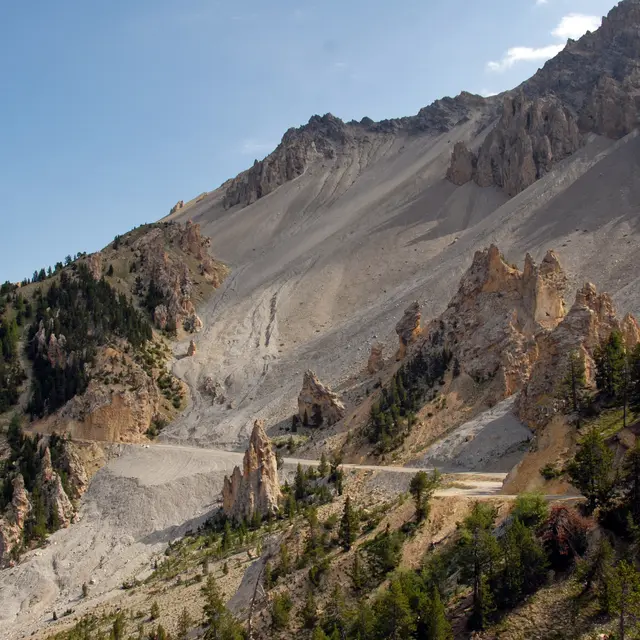
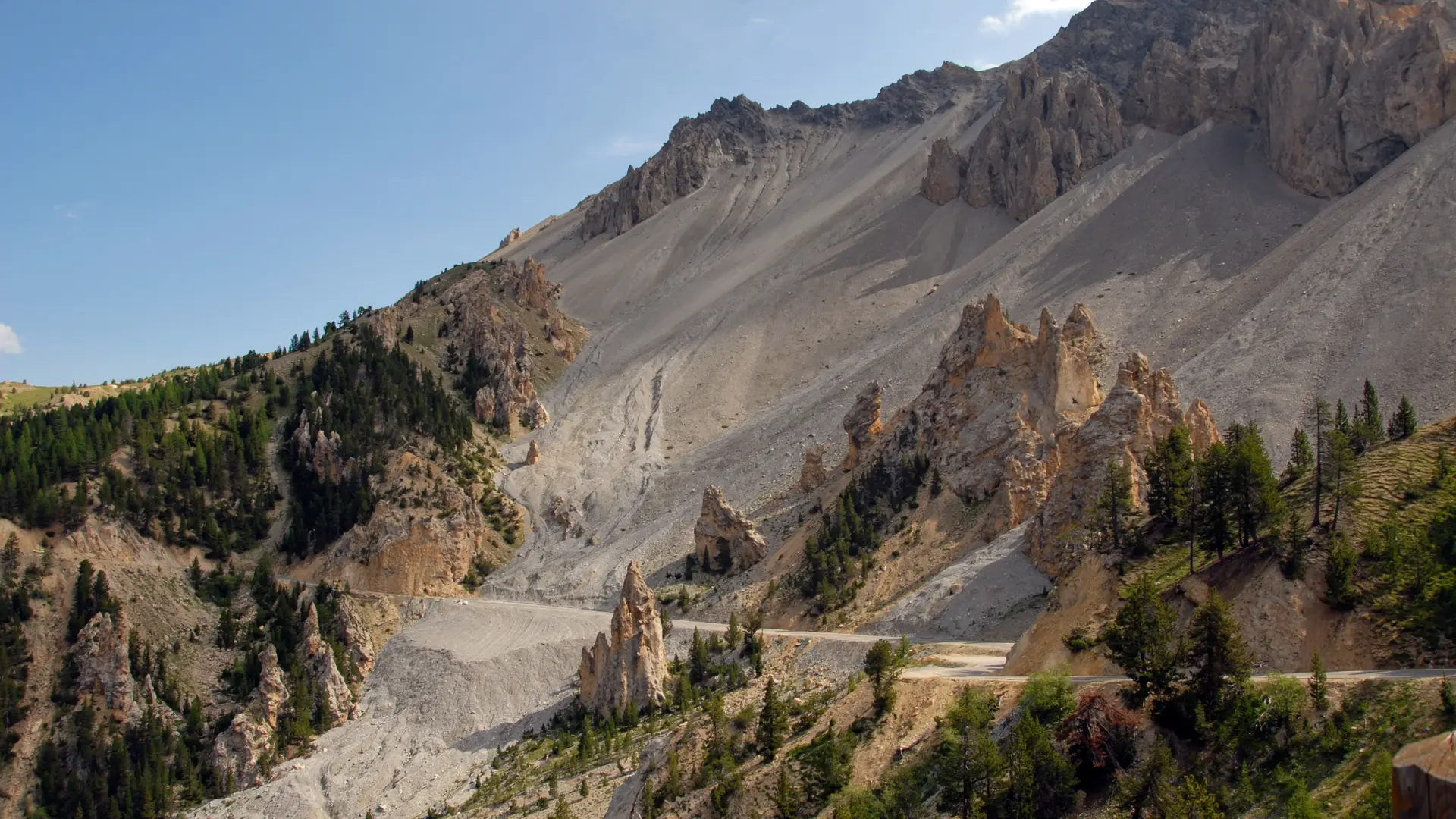
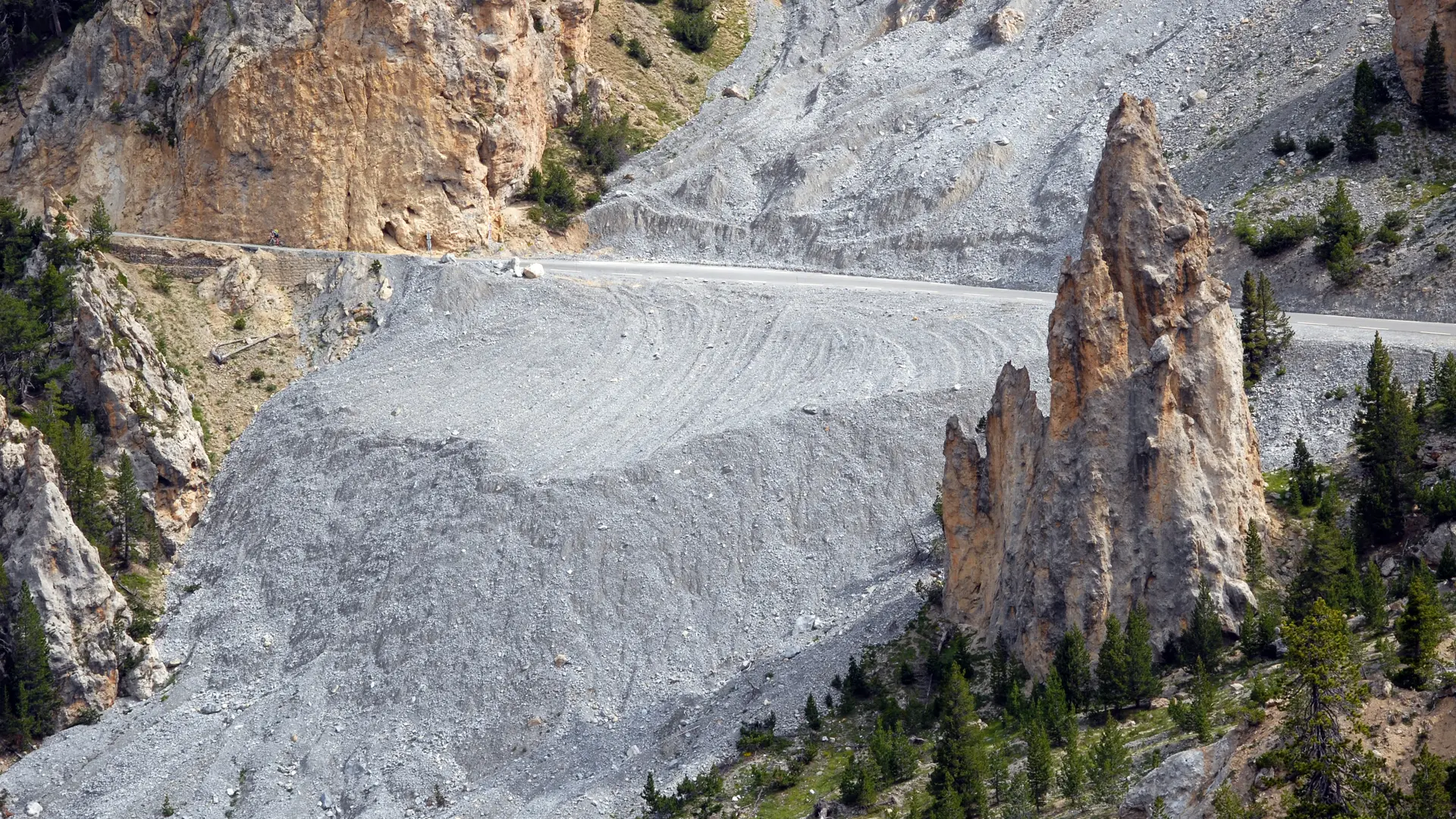
A spectacular ruiniform relief, the site of La Casse Déserte, made famous by the Tour de France cycling race, is remarkable for its landscape resulting from the erosion of reddish cargnelized dolomites and livid white gypsum that outcrop there.
Located on the southern slope of the Col d'Izoard, the Casse Déserte is a true geological curiosity: the combination of dolomitic limestone and gypsum has allowed erosion to reveal imposing ochre-colored rocky peaks (known as cargneules), giving this landscape its distinctive desert-like appearance.
The Casse Déserte site is protected as it is classified as a natural monument and site in the Hautes-Alpes, by ministerial decree of June 1, 1937, in order to protect it from commercial exploitation or degradation.
Geology in detail:
The circulation of fluids within the gypsum has loaded the water with sulfates. This selenite-rich water has preferentially dissolved the dolomite within the cargneules and Triassic dolomitic limestones, resulting in the cavities that characterize the cargneules and the associated ruiniform erosion.
The Casse Déserte site is protected as it is classified as a natural monument and site in the Hautes-Alpes, by ministerial decree of June 1, 1937, in order to protect it from commercial exploitation or degradation.
Geology in detail:
The circulation of fluids within the gypsum has loaded the water with sulfates. This selenite-rich water has preferentially dissolved the dolomite within the cargneules and Triassic dolomitic limestones, resulting in the cavities that characterize the cargneules and the associated ruiniform erosion.
Rates
Rates
Free access.
—
Openings
Openings
All year 2026 - Open everyday
Location
Location
Contact La Casse Déserte: Gypsum and cargneules from the Col d'Izoard
- www.maisondelageologie.fr
- cbga.net
Environment
Environment
- Mountain view
- Isolated