



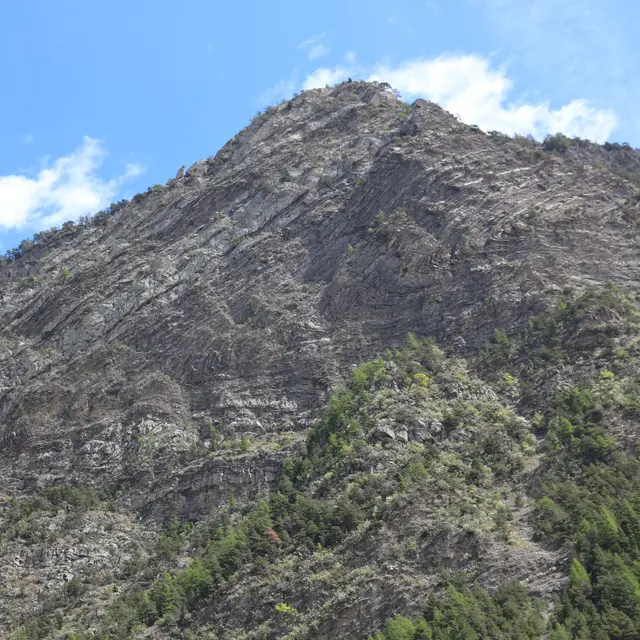
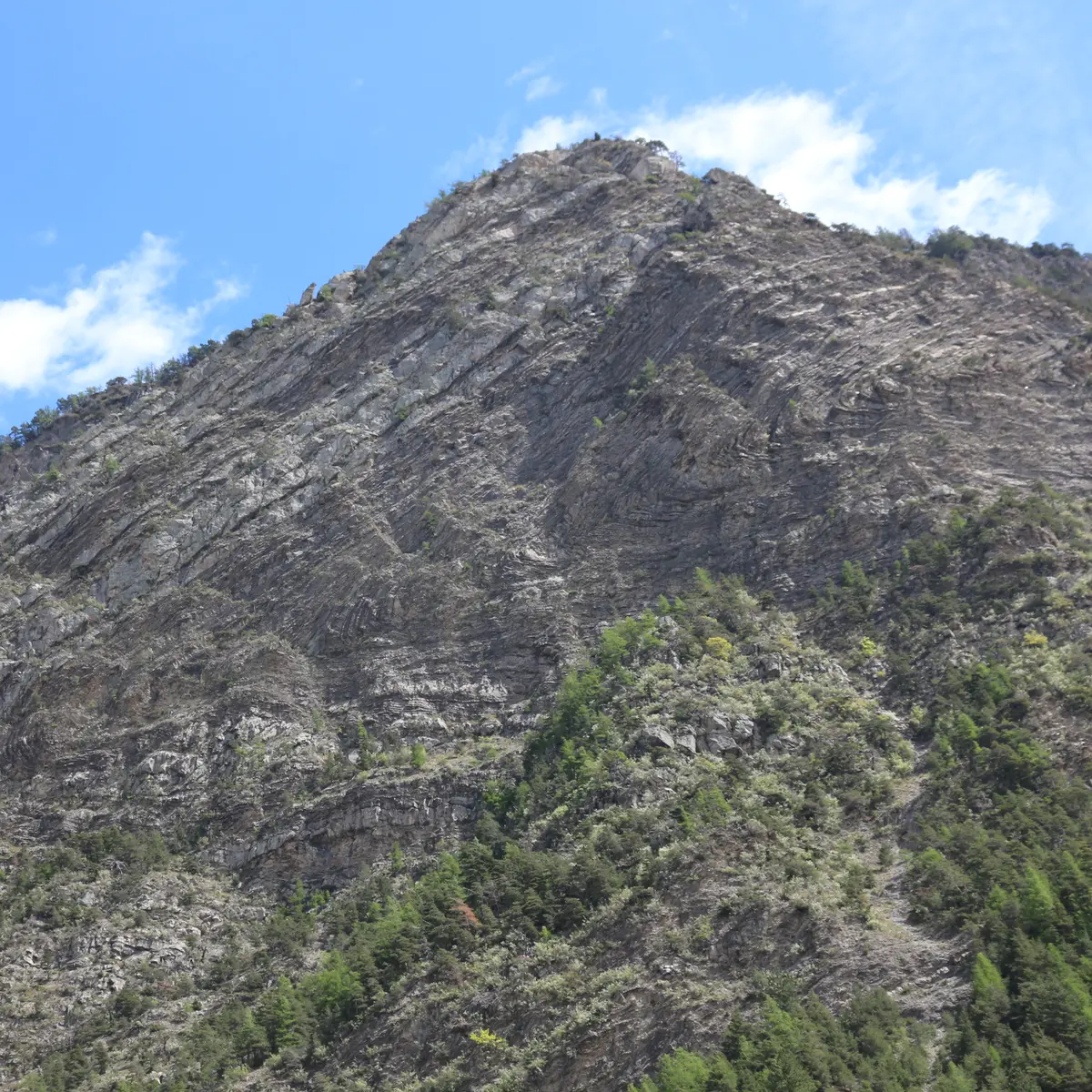
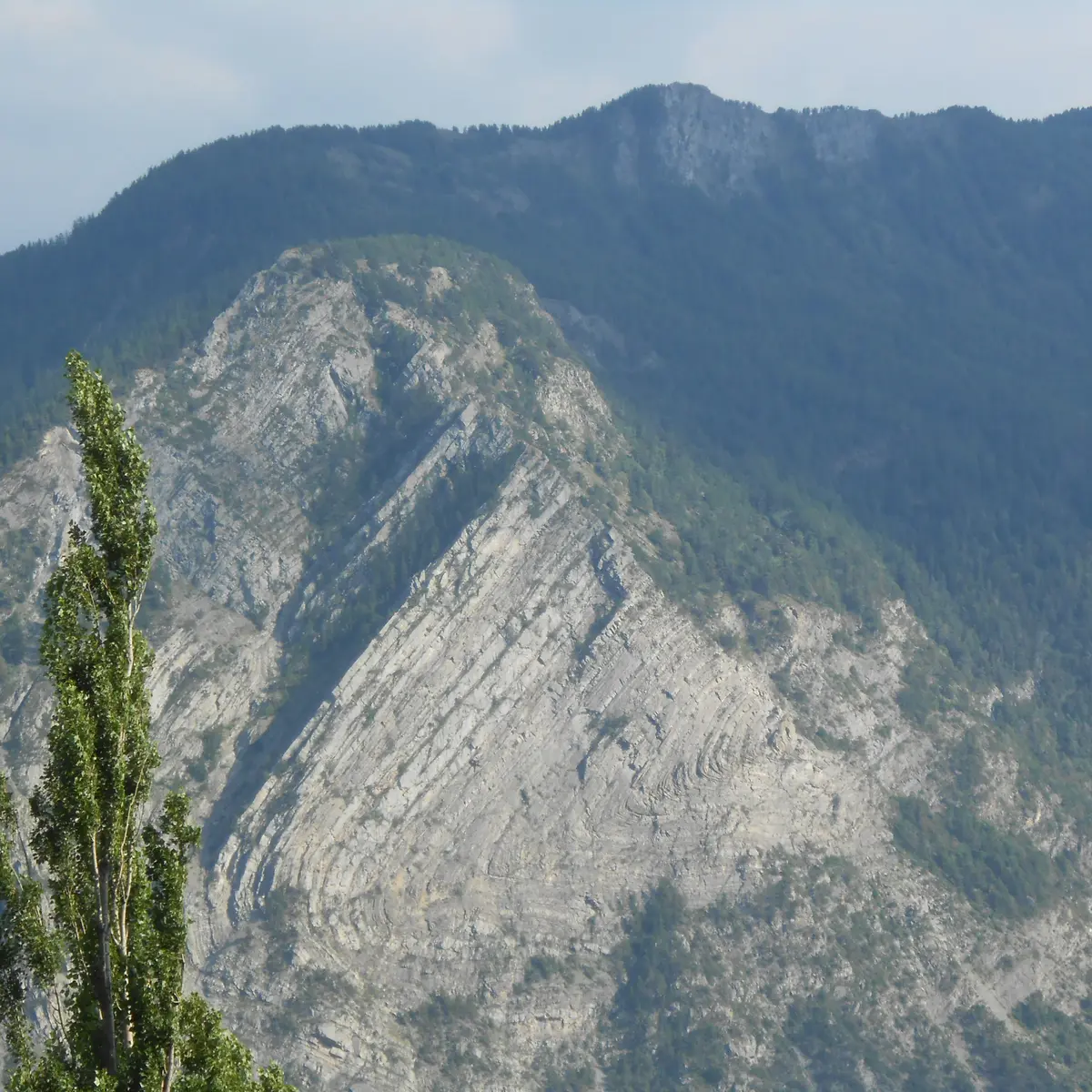
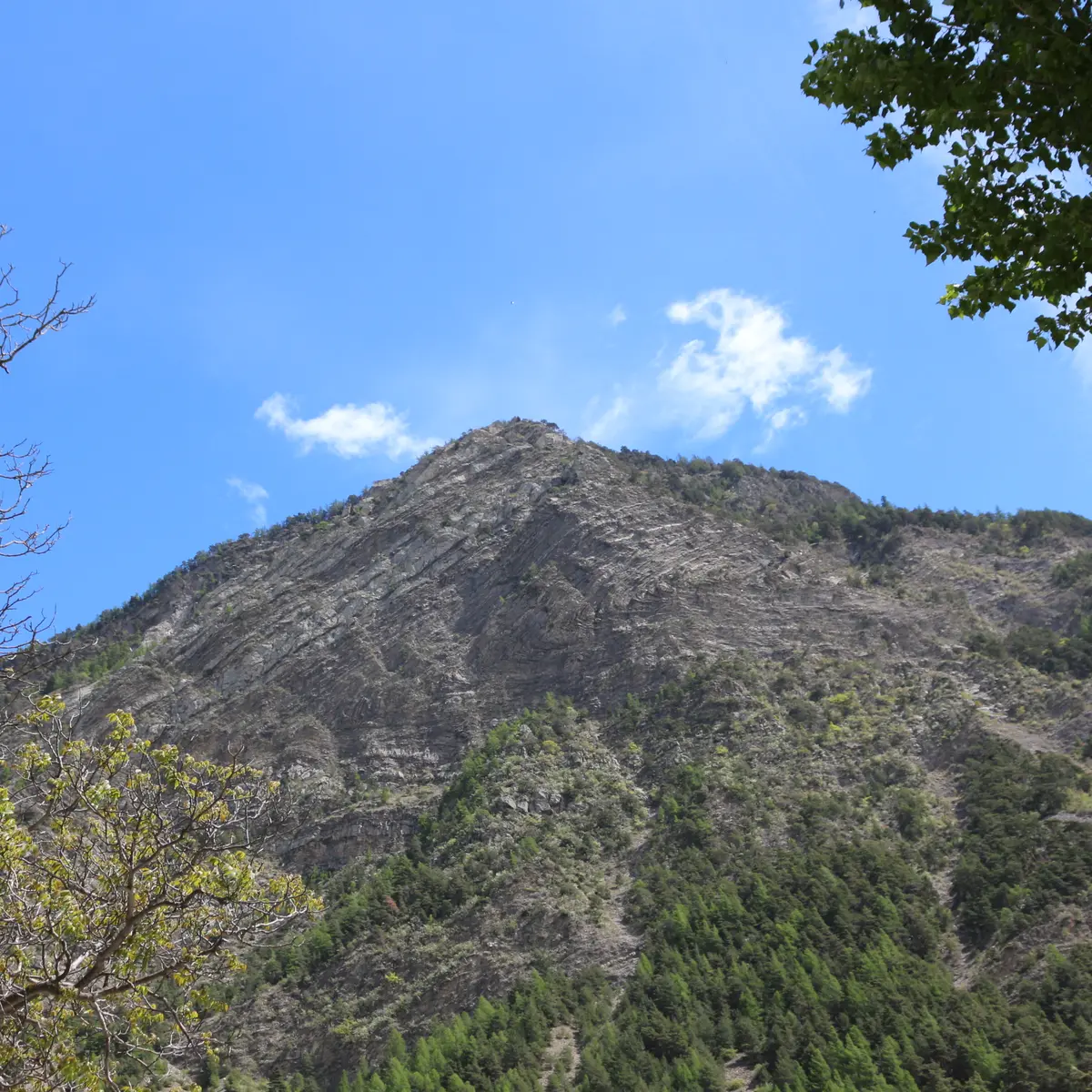


The Pli Couché is a geological curiosity facing Saint-Clément-sur-Durance. It covers the entire rock face and illustrates the geological history of our country and the formation of the Alps. It is part of the Géoparc des Alpes Cottiennes.
The Pli Couché is proof of the titanic forces that brought about the formation of the Alpine chain 30-40 Millenia ago. The rocks in the fold date from the Upper Cretaceous. These are deep-sea sedimentary rocks that have been laid in layers of alternating sandstone and shale. The sandstones are the most visible layers, just a few decimetres thick, while shale is former clayey muds, receding slightly because they are more easily eroded. The fold lies on one side.
The formation of the fold: Alpine reliefs were created by the forces of convergence leading to the closing of the ocean and the collision of the continents of Europe and Africa. The continental lithosphere then has to adapt to shrinkage. On the surface, it breaks and fractures with reverse faults. At depth, the rocks undergo plastic deformation, giving rise to folds due to the rise in temperature. Folds appear on the surface as a result of erosion, which strips away the overlying terrain. The Pli de Saint Clémen is referred to as a syncline because the most recent layers are at the heart of the fold. Convergence forces are therefore at the origin of the fold but also responsible for the east-west tilt.