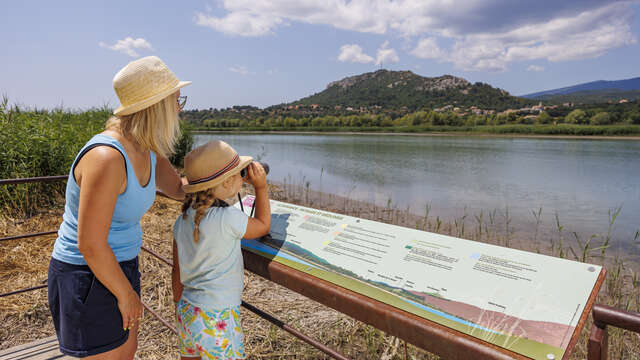





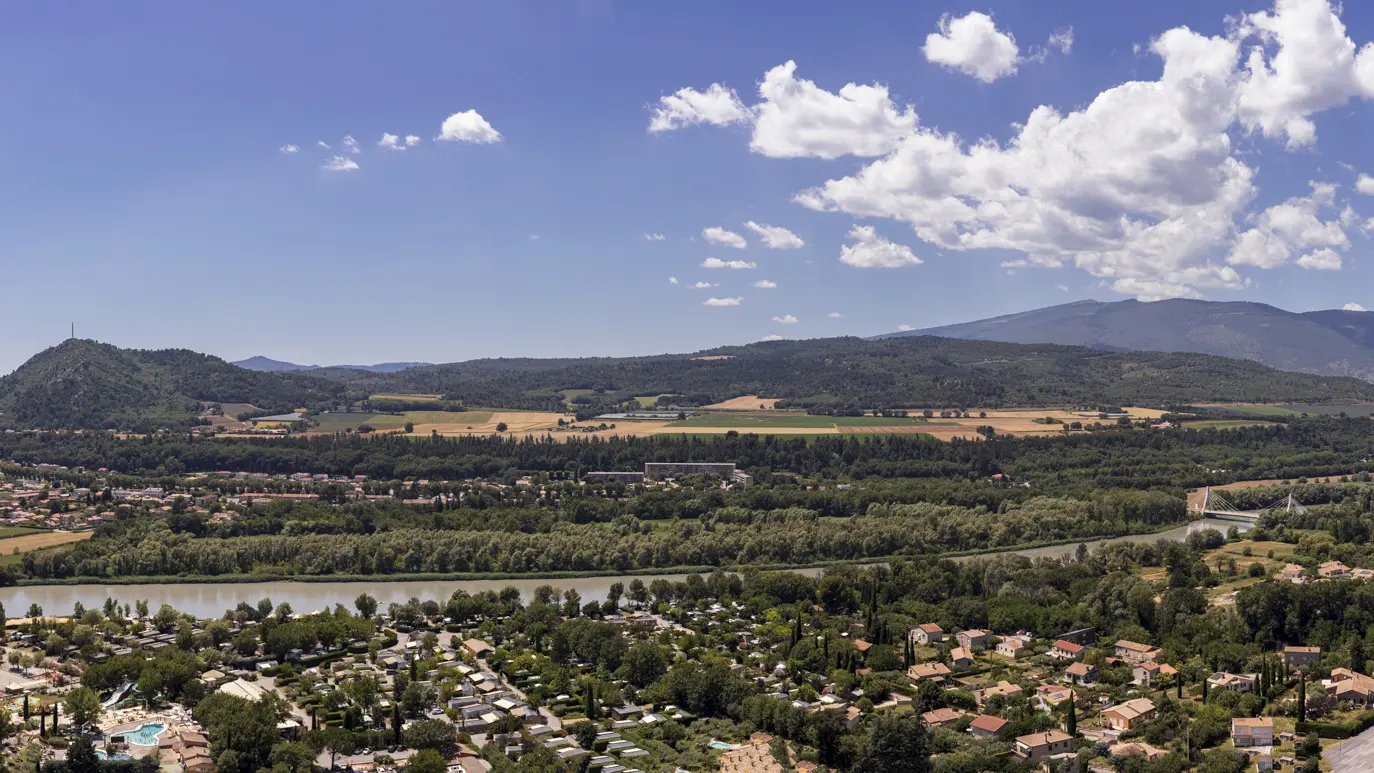
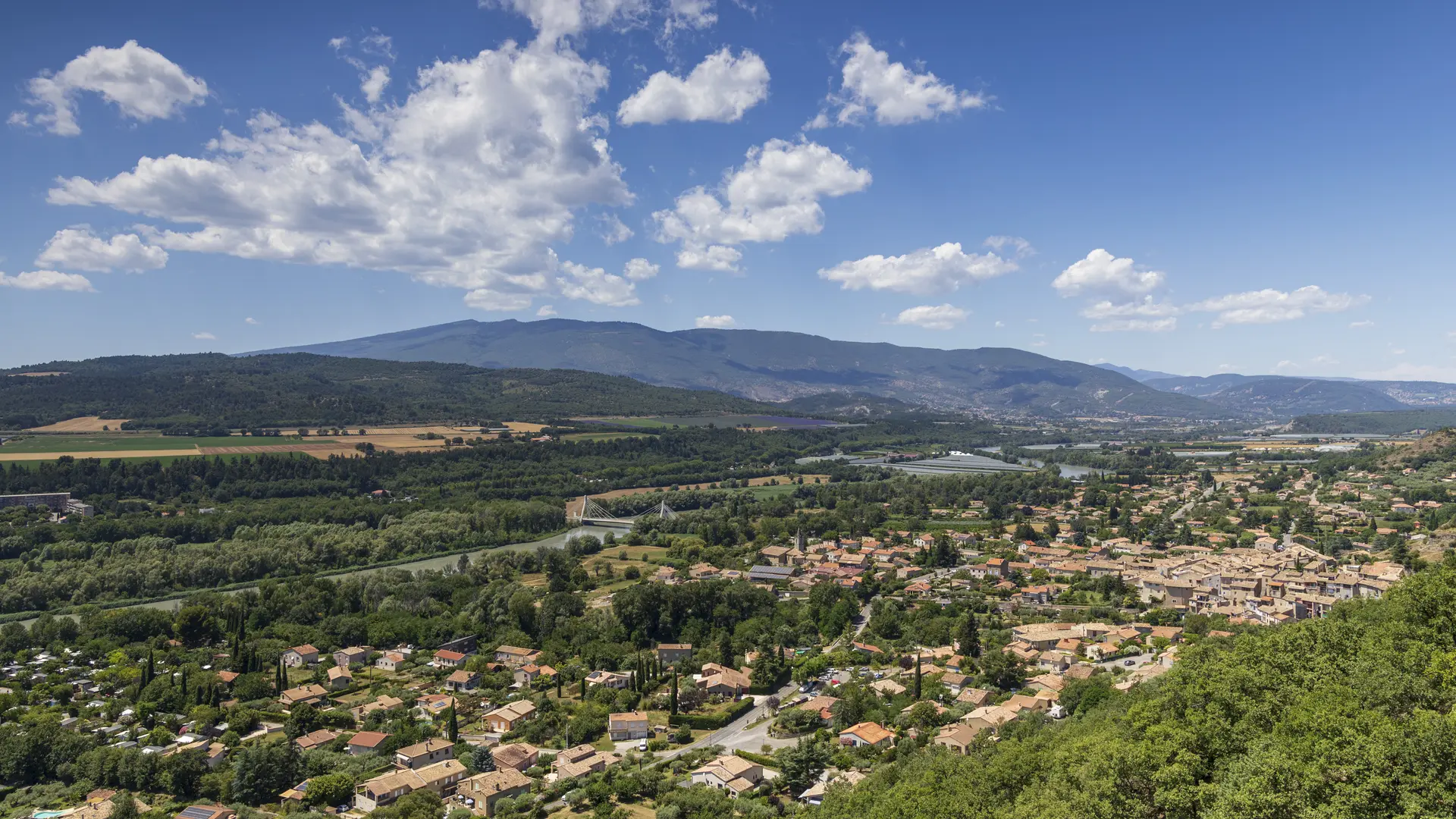
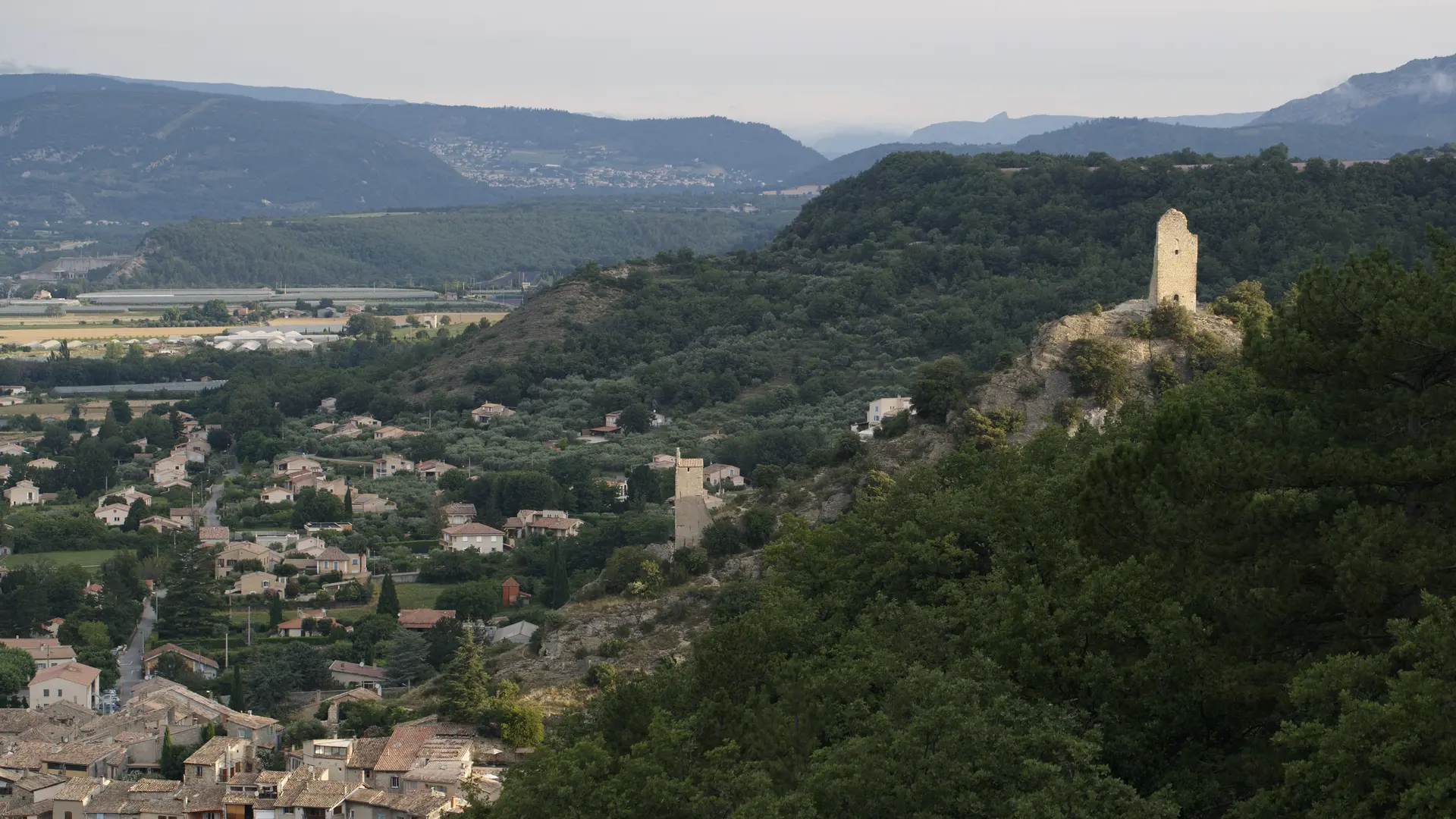
The remains of the medieval castle rise above the village. The belvedere offers a beautiful panoramic view and an insight into the geological history of the Durance valley.
The earliest mention of the château dates back to 1068, but its existence certainly predates this. A veritable feudal fortress, it was almost entirely destroyed during the French Revolution. Only its keep continues to defy time.
The site allows visitors to observe the Durance valley: the furrow carved out by the river, the terraces created during glacial periods, the groupings of settlements and human activities. Downstream from Château-Arnoux, the river's almost rectilinear course is guided by the Moyenne Durance fault, which cuts through the thickness of the sedimentary rocks over several kilometers. Formed 300 million years ago, this fault divides Haute-Provence into two blocks that have constantly risen and fallen in relation to each other. The landscapes on either side are highly contrasting: the Valensole plateau to the east, mountains and hills to the west.