



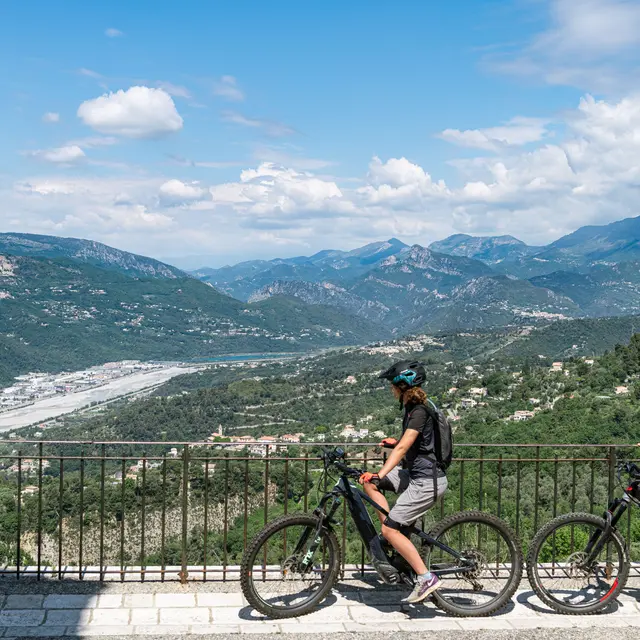
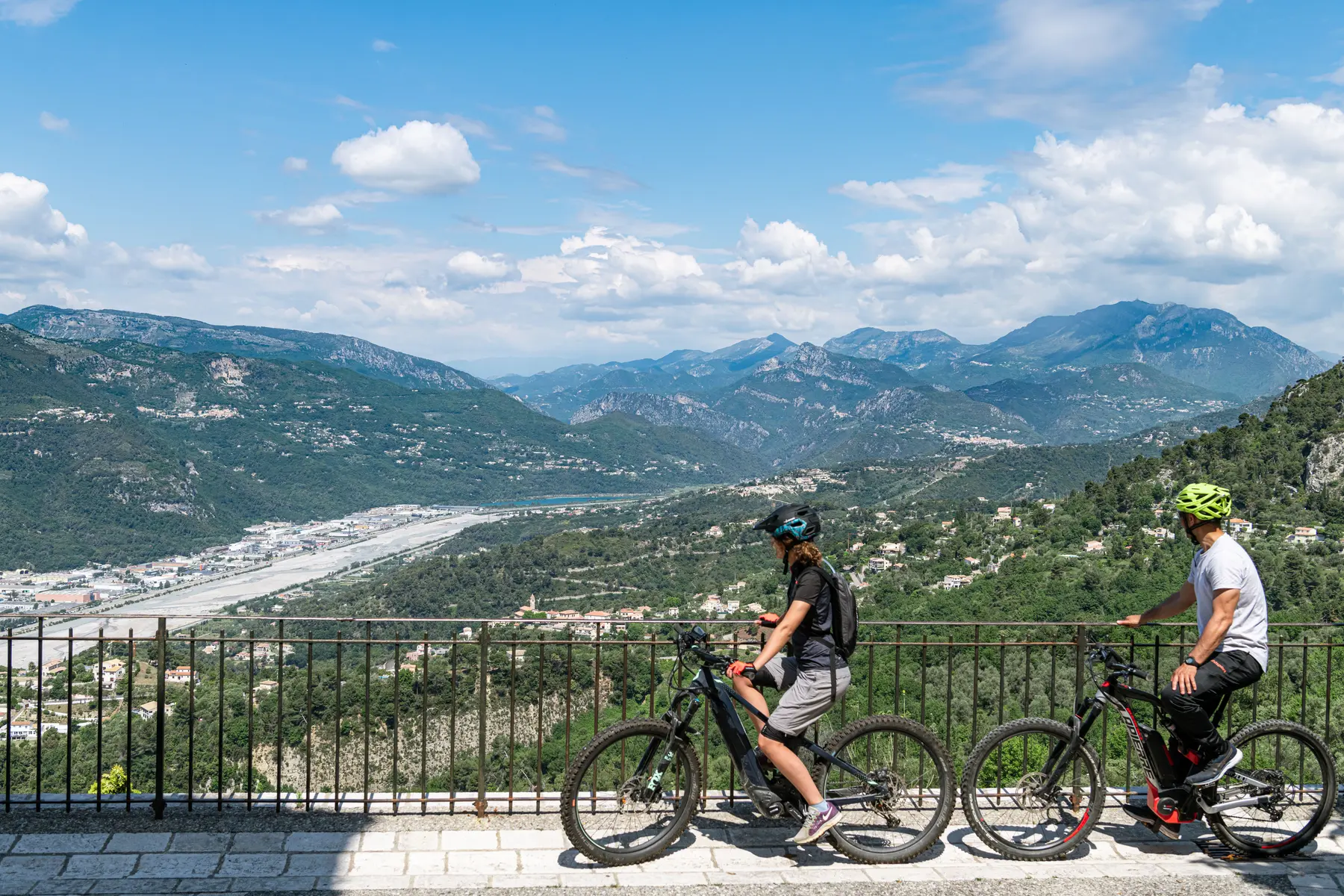
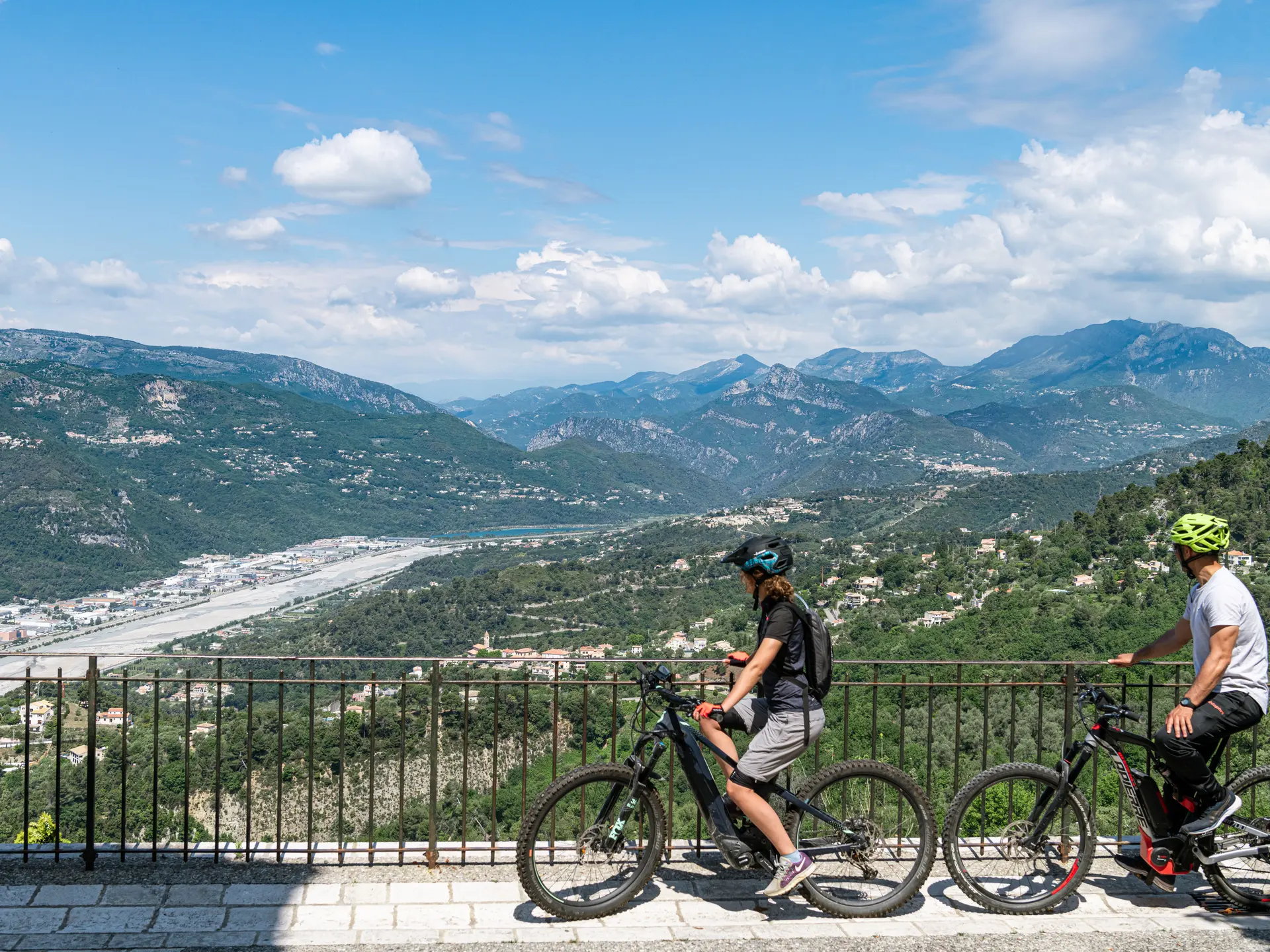
The view over the Var plain from this small square is magnificent.
Aspremont takes its name from the Occitan aspre, meaning arid, stony place, a word derived from the Latin asper, harsh, rough, or aspera, escarpment. The epithet aspre, with its topographical value, in combination with mont, which has the meaning of château, gives it a warlike connotation. Aspremont is indeed home to the remains of castles.
Landscape interpretation :
In the foreground, on the left bank, the eye is drawn to pine forests typical of Mediterranean vegetation, set on land composed of pudding rock with clearly identifiable cliffs; the one supporting the village of Castagniers, remarkable for its bell tower, is clearly visible. Pockets of silvery olive orchards emerge here and there. Your gaze then turns to the flat land reclaimed for market gardening, then to the meandering Var riverbed.
On the right bank, behind the Var dike, you can make out the buildings of the Carros- Le Broc industrial zone; on the heights, the old village of Carros; and further south, the new town of Carros, with its taller, tighter residential buildings. In between, a diffuse fabric of suburban dwellings and a vast, seemingly barren space that has been replanted with trees following a fire.
A broad sweep of the horizon reveals the great plateaus of the Pre-Alps, ending in the Baous escarpments that stand out in the landscape.
