



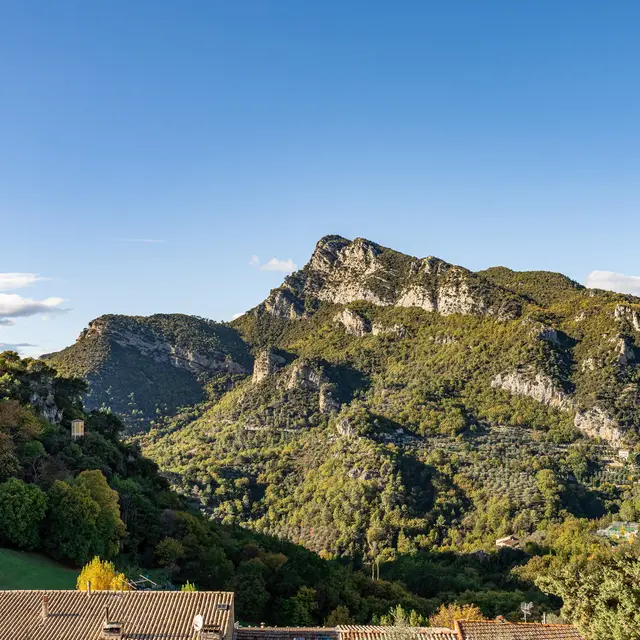
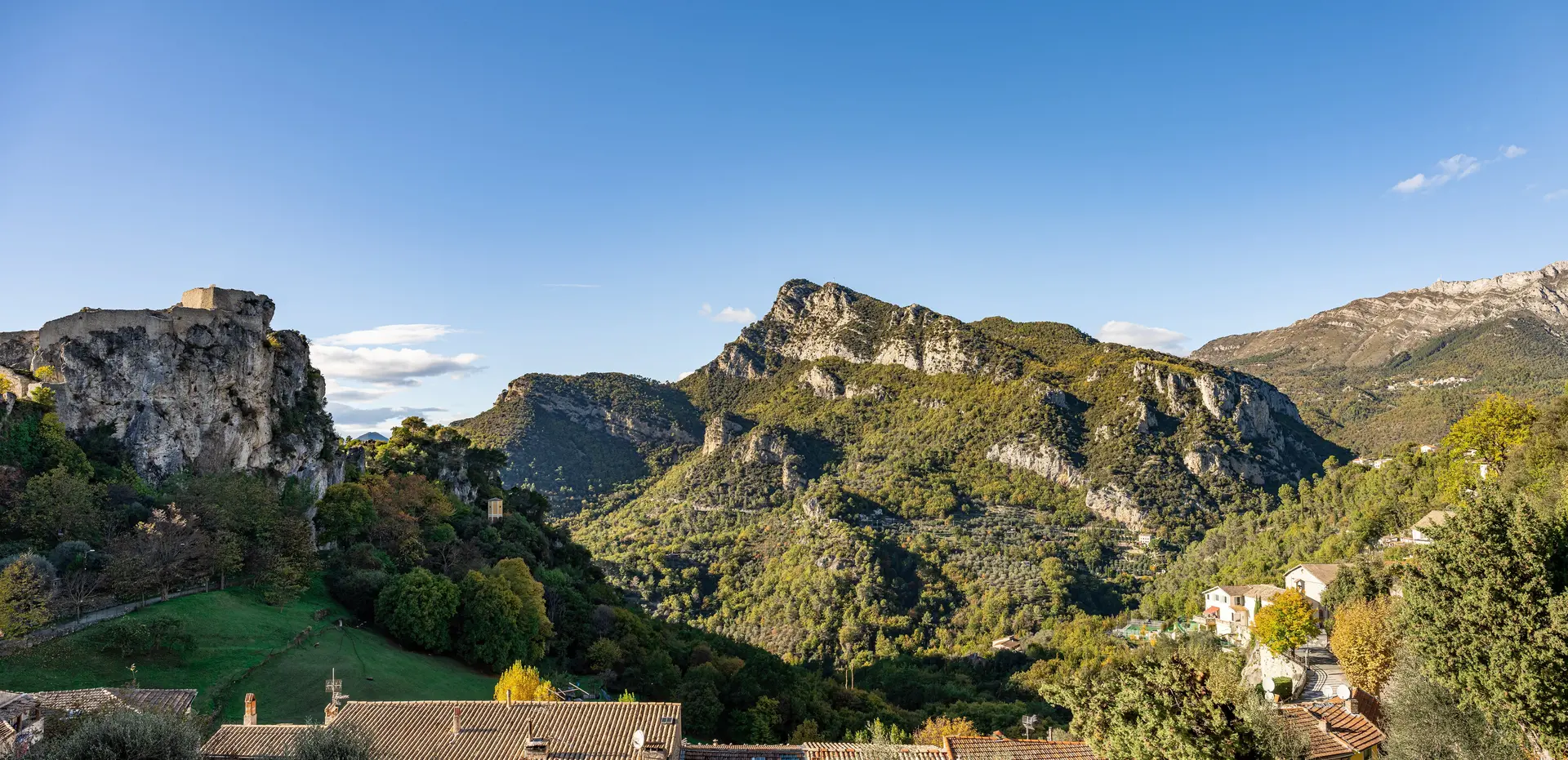
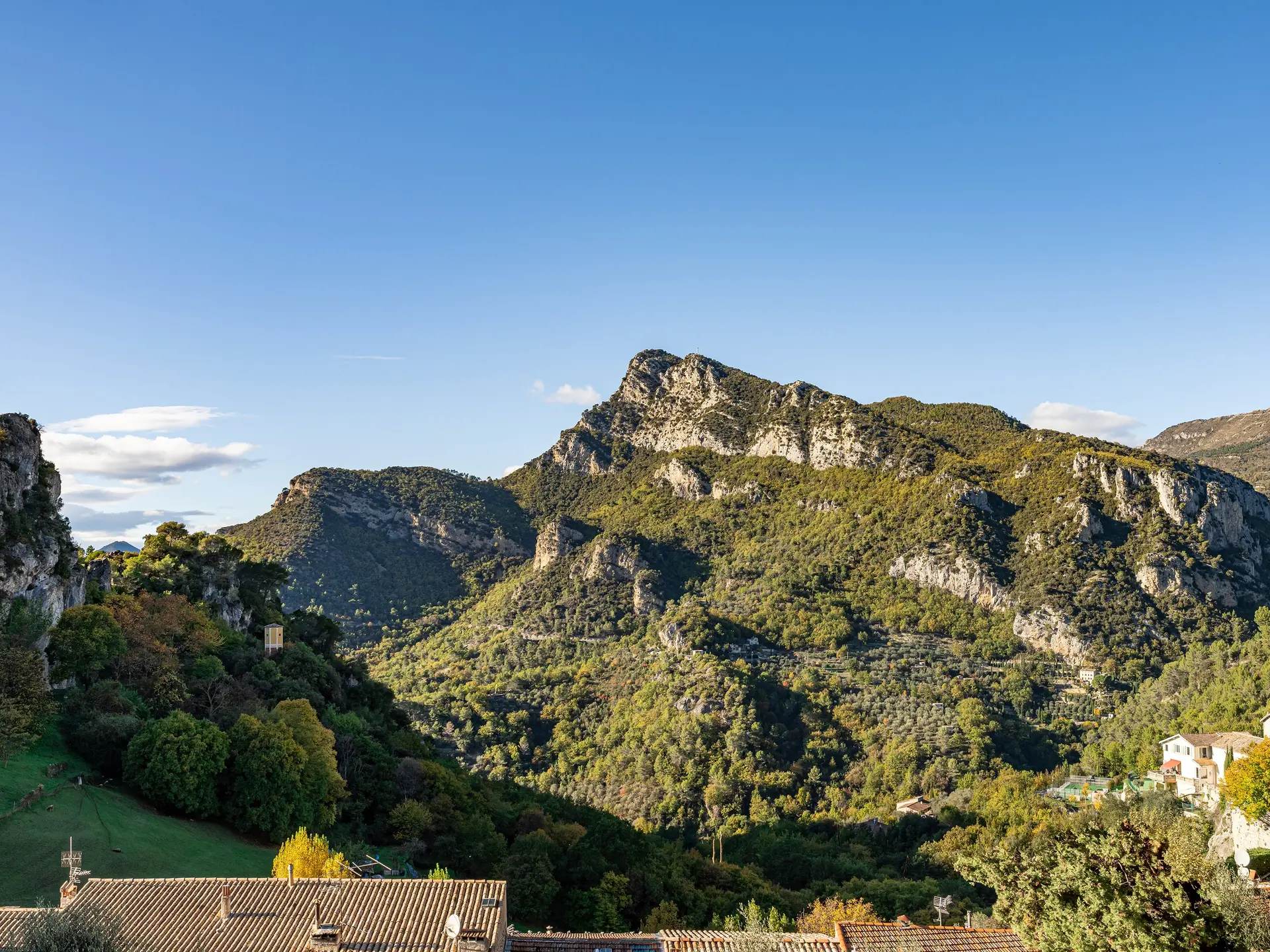
Crossing the village of Gilette, whose name is said to come from gel, the dominant summit, leads you to this square in front of the chapel of the Saint-Roch cemetery, which leads to the botanical garden.
Landscape interpretation
In front of your eyes, you'll see the many delicately scented species of Mediterranean gardens: May roses, lavender and rosemary, rockroses, immortelles, santolina and thyme, as well as olive trees with silvery foliage, fig and pomegranate trees with orange-red flowers... all plants capable of growing in stony soils held back by low drystone walls and resisting summer droughts.
In the foreground, the massive parish church of Saint-Pierre-et-de-l'Assomption and its square bell tower with red and yellow glazed tiles, then the eye wanders down the garden slope to find the village's tall, narrow houses, set against each other, with their typical roofs of golden canal tiles.
In the background is Grand-Pré and its surroundings, with its octagonal dovecote used as an observation post during the wars of possession in the 18th century. Then, the rocky spur housing the remains of the defensive château de l'Aiguille, dominates the Estéron and Var valleys. Famous for the 1793 battle of Gilette, inscribed on the north pillar of the Arc de Triomphe, it is the subject of a painting by Roehn in the Château de Versailles museum.
