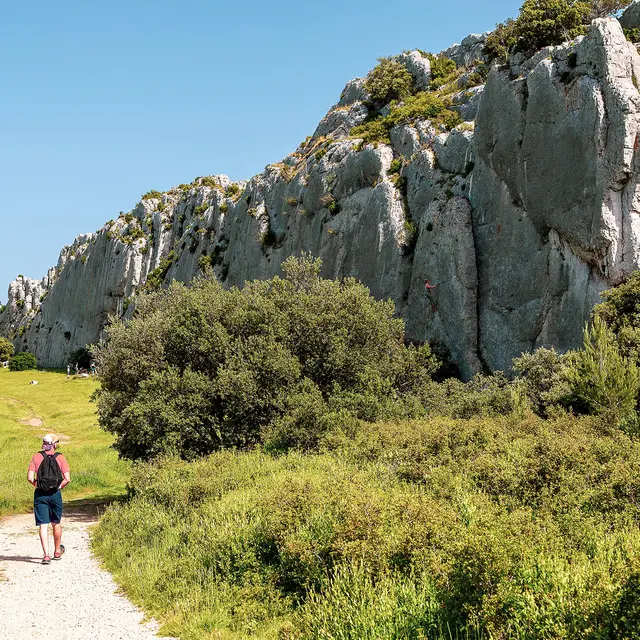
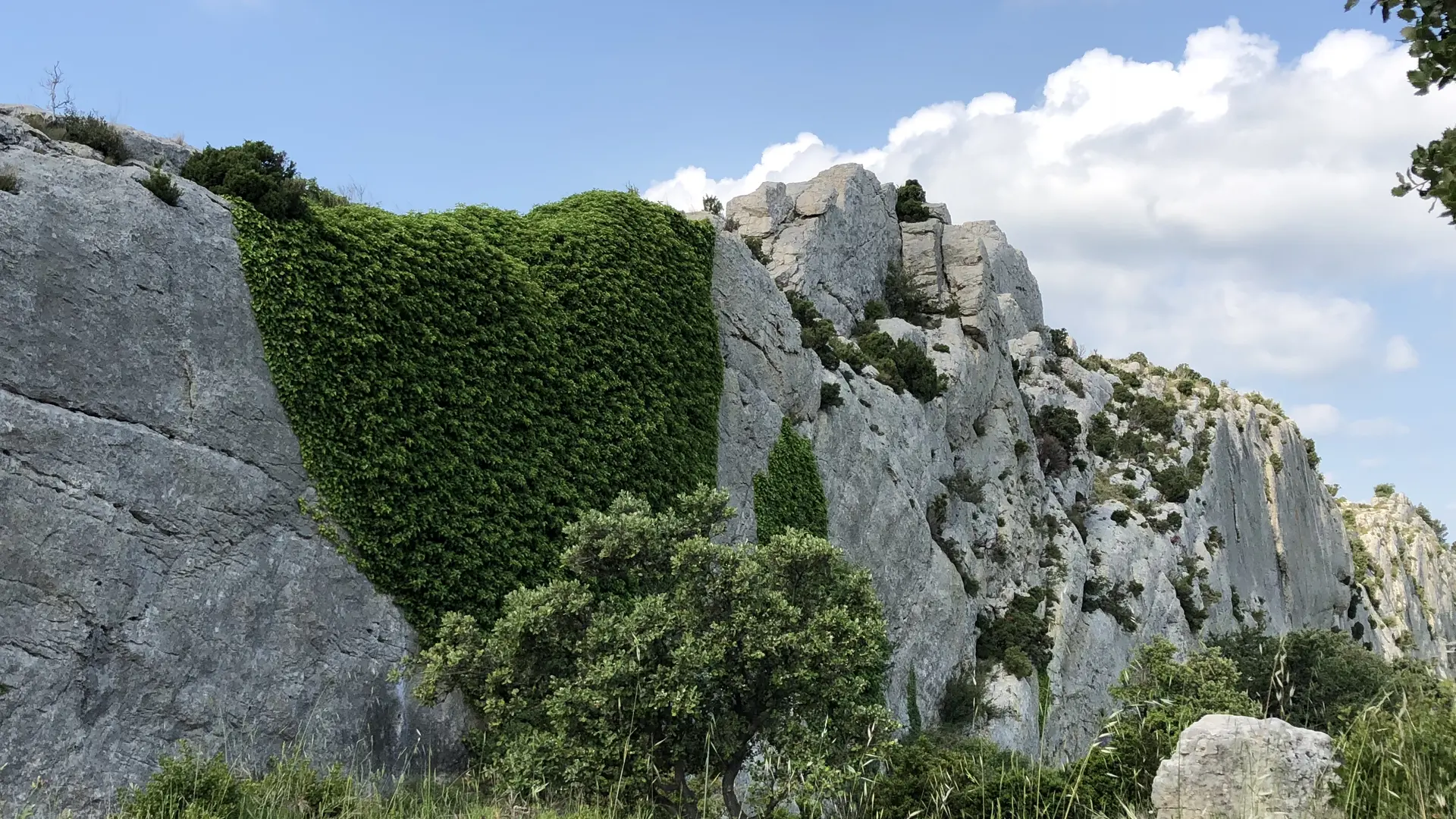
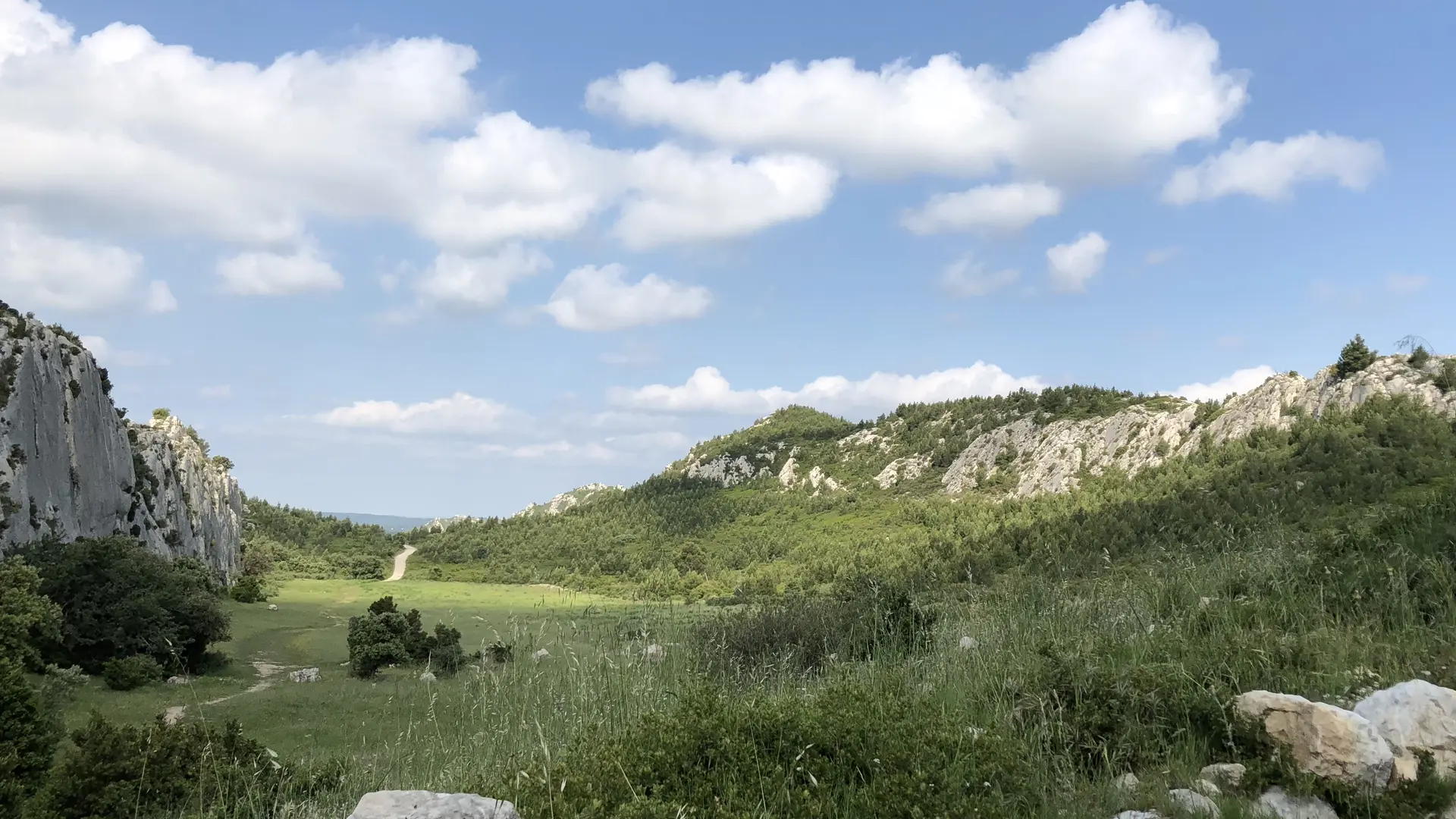
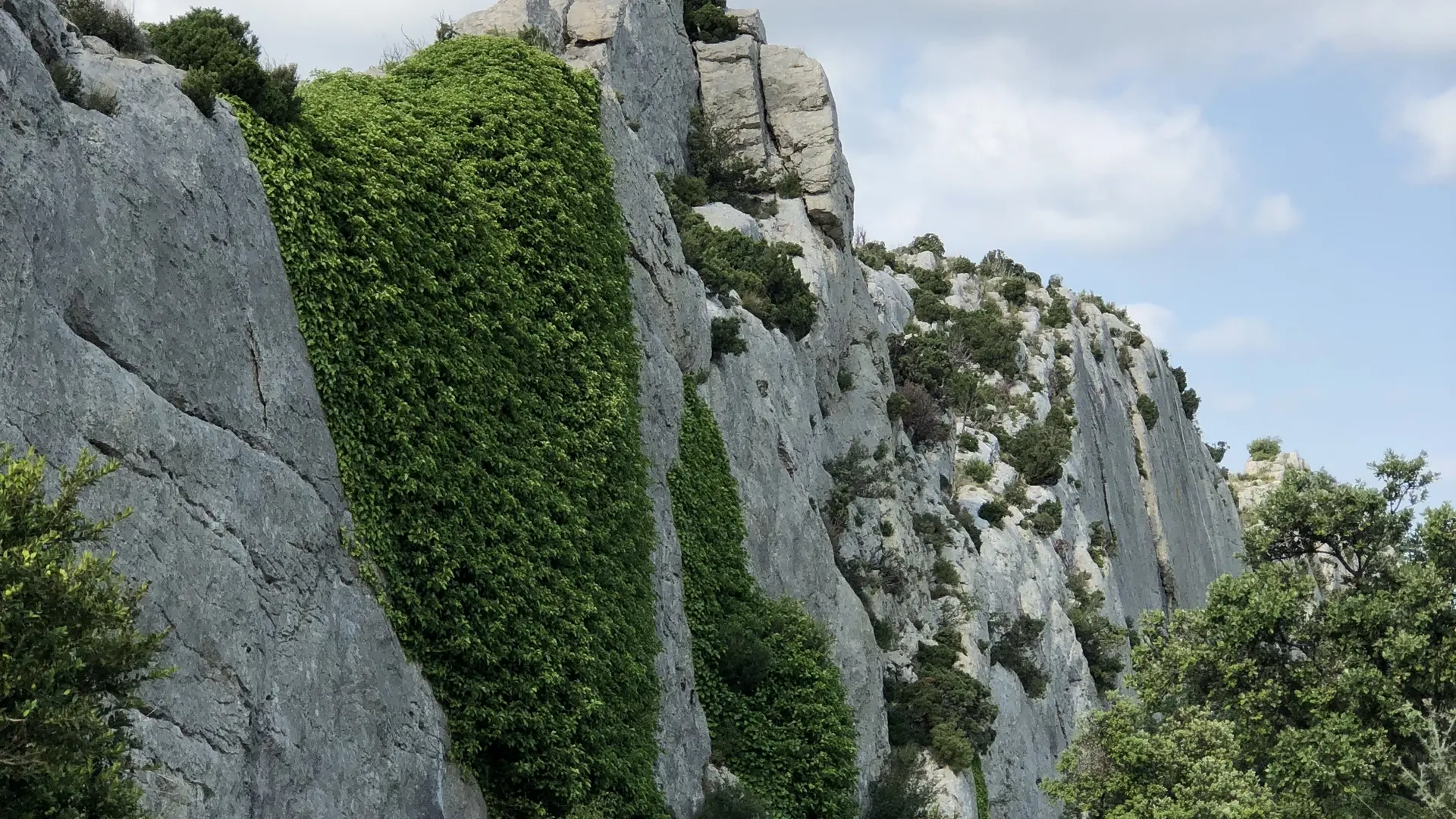
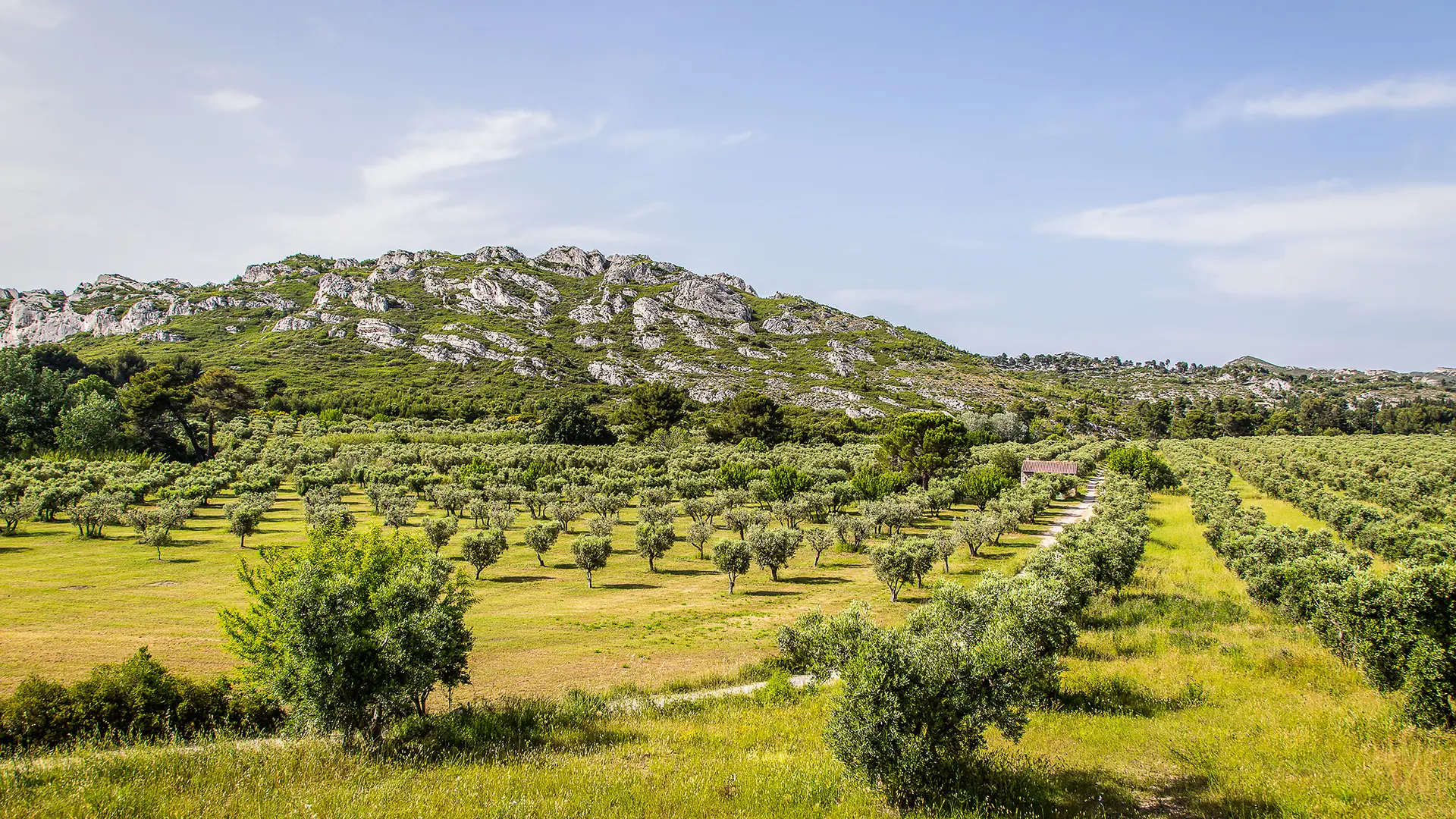
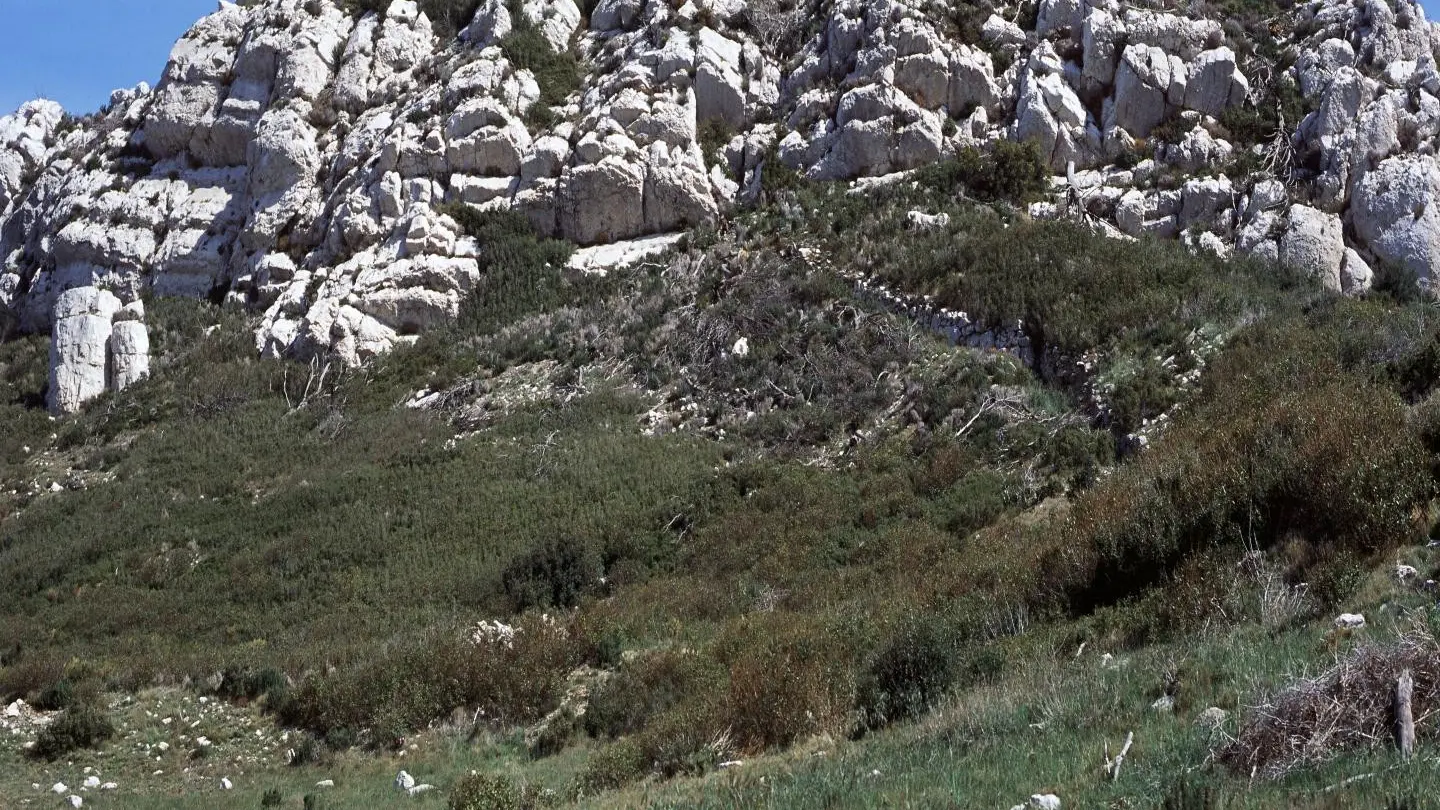
This oppidum (fortified settlement) is located in a basin surrounded to the north and south by steep limestone cliffs, which meet in the east to form an acropolis.
Fortifications from several periods have been identified here, attesting to the settlement of this oppidum from the 6th to the 1st centuries BC.
The first rampart dates back to before 500 BC. However, it underwent successive reconstructions, with the last rebuilding – the remains of which are still visible today – taking place between 180 and 150 BC.
The defensive structure was reinforced to the west by four successive ditches alternating with earth embankments and a line of jagged rocks serving as a palisade.
The fragments of the ramparts contain reused blocks (steles, lintels, etc.) bearing a single motif: that of a horseman armed with a javelin. This suggests that the site may have been home to a sanctuary around the 7th or 6th century BC. The spur and its southern slope were inhabited until the end of the 3rd century AD.
The oppida in the region were gradually abandoned during the Romanisation of Provence, a process that accelerated under the reign of Augustus (late 1st century AD). Some were abandoned permanently, but others, such as Les Baux and Castillon (in Paradou), were reclaimed in the Middle Ages.
The site was listed as a historic monument by a decree dated 2 February 1974. It is accessible via a marked trail.
Read more