


Collection of earthenware from the Renaissance to the French Revolution.
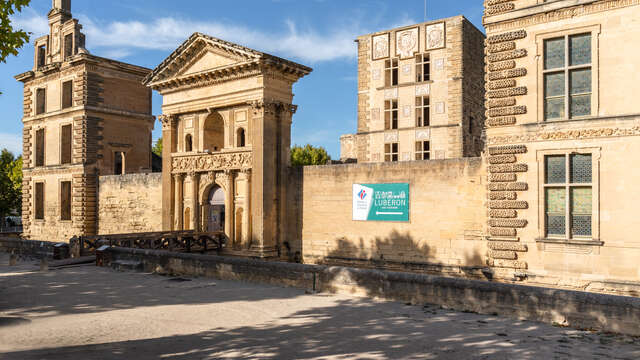
The creation of the Musée des Faïences is closely linked to the history of the castle.
On two occasions, La Tour d'Aigues was a center for the production of original ceramics:
In the 16th century Jean-Louis-Nicolas de Bouliers, Lord of La Tour d'Aigues, transformed his medieval castle into a true Renaissance palace. He entrusted a craftsman, François Auriol, with the realization of a polychrome earthenware pavement for the chapel, imitating the decorations of the Renaissance castles of Northern France.
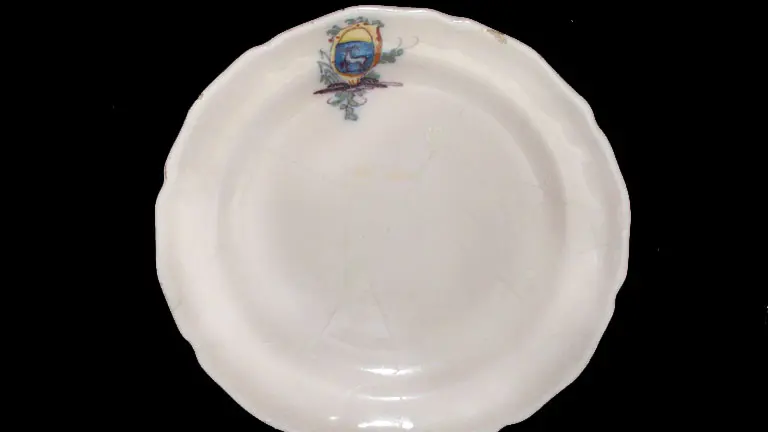
During the second half of the 18th century, La Tour-d'Aigues was a center of earthenware production, thanks to Jean-Baptiste-Jérôme de Bruny, owner of the castle. This descendant of an ennobled family of the great bourgeoisie of Marseilles was a scholar, a lover of natural history, medicine, agronomy and a great lover of art. His entrepreneurial spirit, his curiosity, his taste for applied research led him to try various experiments in the most varied fields. Thus he created an earthenware factory in a country house near the castle, some of whose products are in the museum. He surrounded himself with artists, looked for engravings that could be used as models and, following his concern to maintain a constant link between science and commerce, the useful and the beautiful, he made a few attempts with porcelain. Installed in the restored parts of the Renaissance castle, the Musée des Faïences presents:
Ceramics of Provence and Europe (16th-18th centuries):
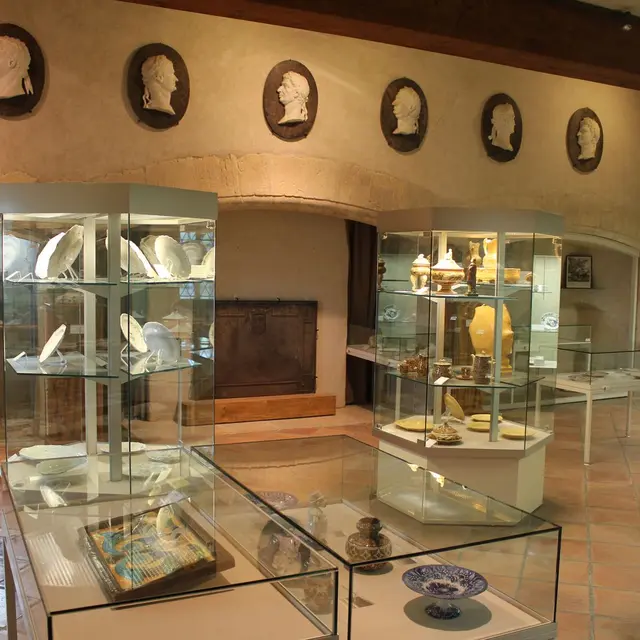
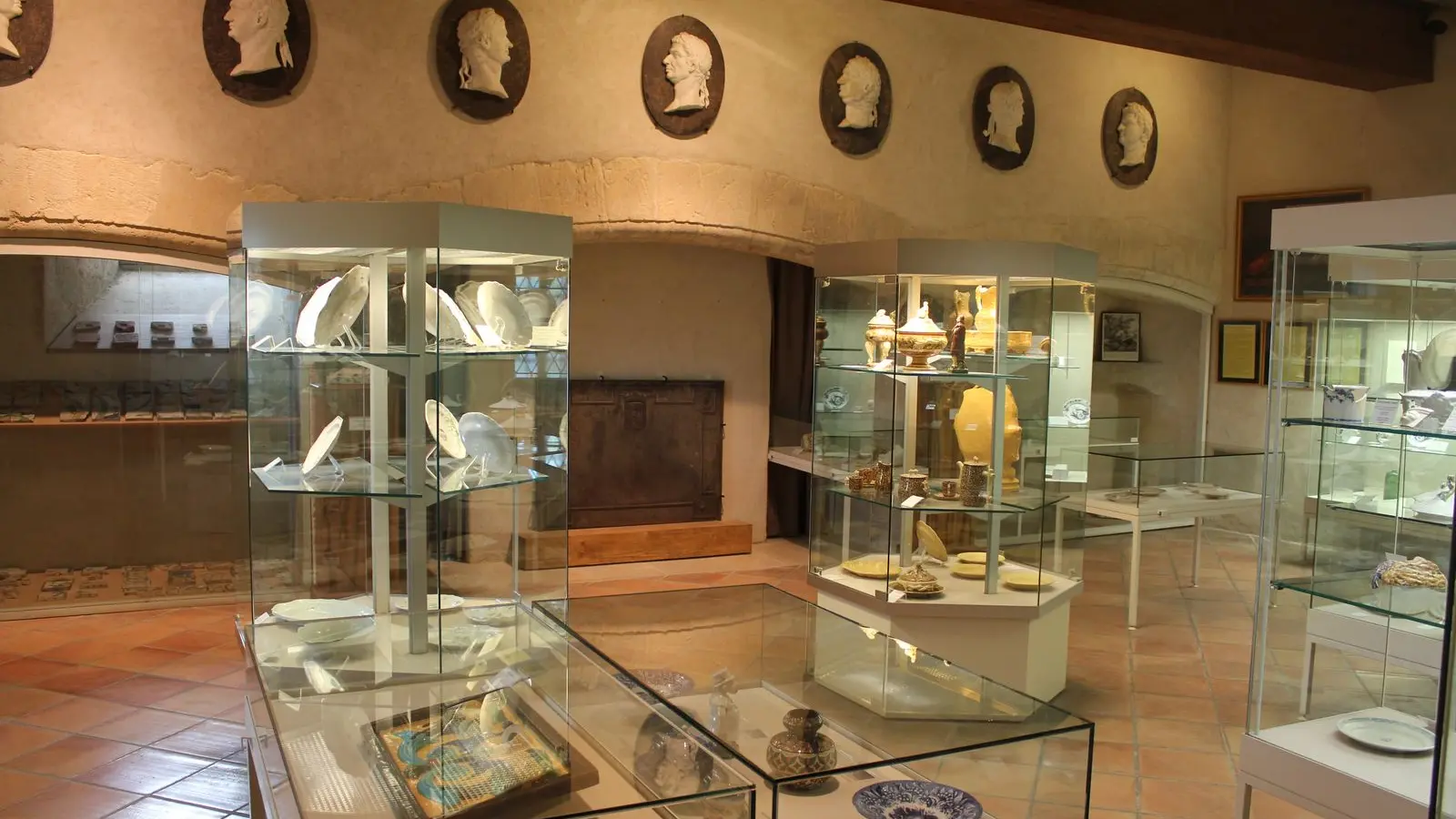
Created in 1985 to present the ceramics (earthenware, porcelain, glazed earthenware, pavement tiles) discovered during the excavations of the castle, the museum now has more than 2000 inventoried pieces in its collections.
They include : - The earthenware tiles that adorned certain rooms in the castle in the 16th century.
- The productions of the earthenware factory of Baron de Bruny
- The model of a kiln, made thanks to the article of Baron de Bruny for the Mémoires d'Agriculture published in 1787.
- The earthenware and porcelain pieces acquired by the local lords from the most prestigious French and foreign manufacturers.
- Common glazed earthenware and ceramics used in the castle from the 16th to the 18th century.
- Elements of the castle's sculpted decor (basin borders, fireplace mantels, medallions representing the heads of Roman emperors, in Carrara marble, the work of an Italian Renaissance sculptor, etc.)
The work and the reconstruction of the workshop Pierre Graille
In 2015, the Musée des Faïences received in deposit the entire collection of the santonnier Pierre Graille (1915-2014). Post office employee in Grambois, santon maker, earthenware maker, wood carver, Pierre Graille was a man of many facets. Self-taught, he left an immense work inspired by his love of Provence, by his thirst for knowledge and culture. Pierre Graille represented in santon the men and women of his village, the people dear to his heart, artists or political figures. "Telling a story is one thing, the most difficult thing is to make this piece of clay into something that thinks", this is how he liked to define his passion.
Contemporary ceramists
In recent years, the museum's collections have opened up to the different categories of contemporary ceramics. Recent acquisitions of ceramics allow us to present a collection of 130 contemporary works illustrating the richness and diversity of production in Vaucluse: glazed earthenware, earthenware, porcelain, stoneware, raku, sculpture...
Accessibility
Not accessible in a wheelchair
Payment methods
 Check
Check Bank/credit card
 Cash
CashOpenings
All year
All year
Monday
09:00 - 12:30
13:30 - 17:00
Tuesday
09:00 - 12:30
13:30 - 17:00
Wednesday
09:00 - 12:30
13:30 - 17:00
Thursday
09:00 - 12:30
13:30 - 17:00
Friday
09:00 - 12:30
13:30 - 17:00
Saturday
Closed
Sunday
Closed
Location
Contact Ceramics Museum
Spoken languages
Spoken languages


Environment
Environment
- Riverside
- Mountain view
- Waterside
- View over the vineyards
- Lake 5 km away
- Village centre
- Bus stop < 500 m
- Close to a public transportation