



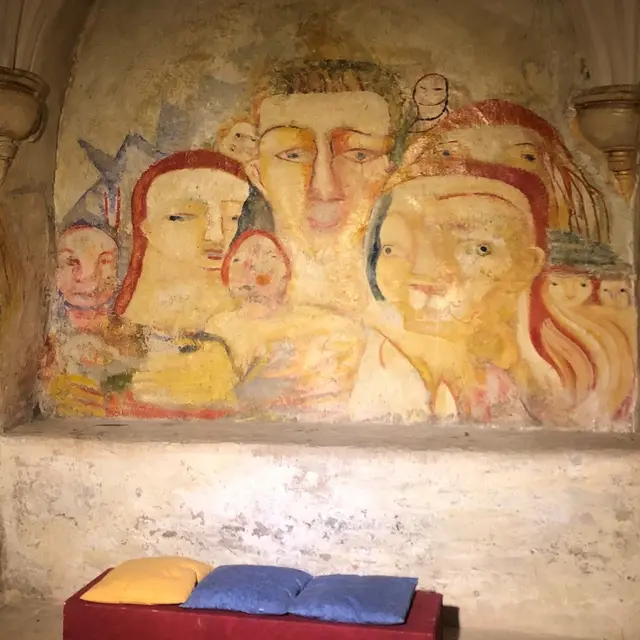
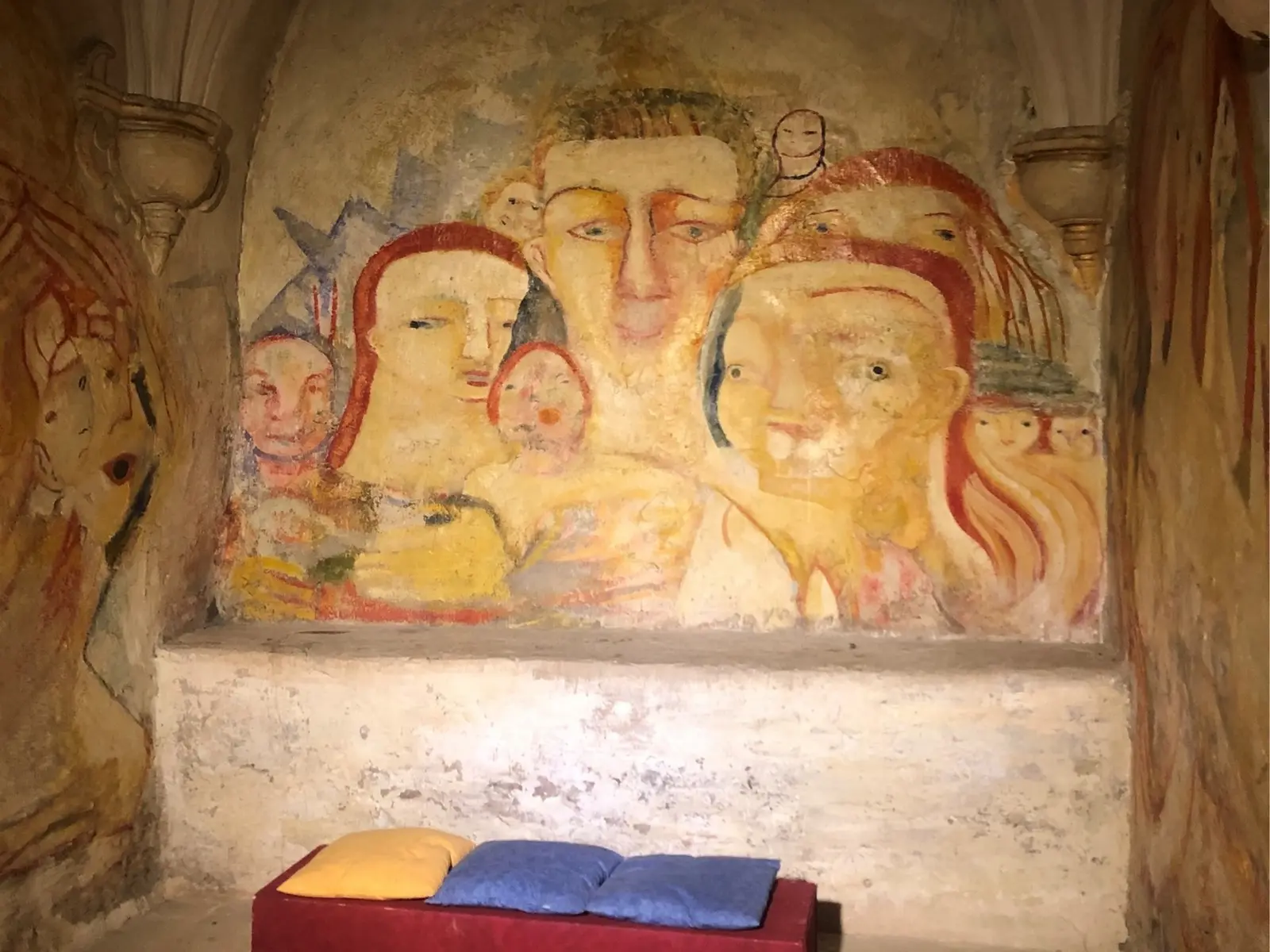
The 18th century chapel was decorated (1945-1950) by the painter Edgar Mélik. It features a rib vault with wide keystones adorned by floral patterns.
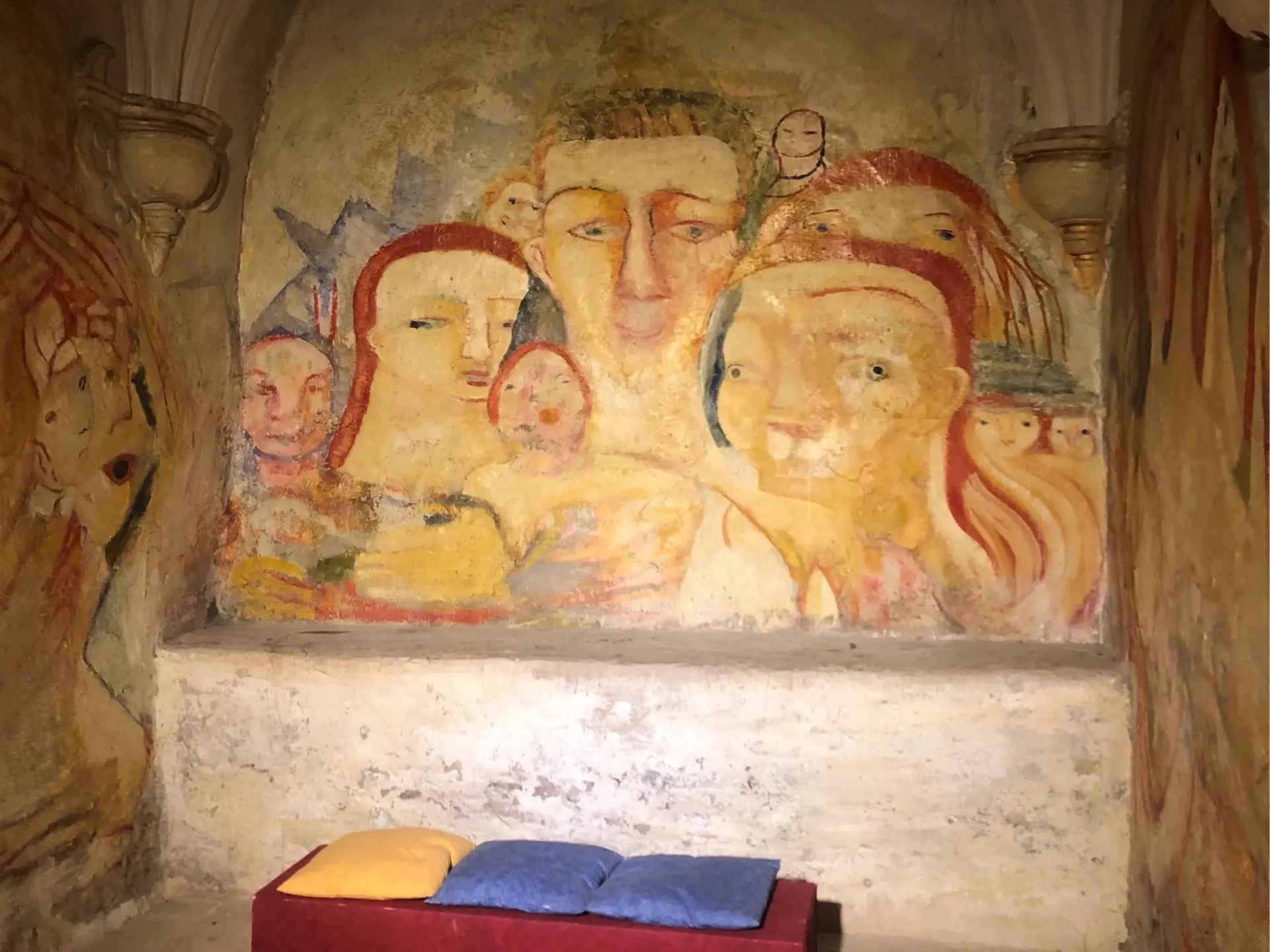
Above the altar, the painter is shown with his friends in the glory of heaven. To the east are women with long red hair singing his praises, and to the west are his enemies, the art dealers, who are being thrown into hell by a Mongol riding a white horse.
The triptych was painted directly onto the walls and is filled with expressive images painted with different ingredients. It has links to prehistoric cave painting and religious art, but with a secular framework. "The frescoes" (in Italian, fresco means "fresh") were painted on a surface that had to be kept cool and fresh.
The artists drew with a needle on a piece of card. Through the holes in the card they passed coal dust to trace drawings on the wall, then covered them with a whitewash and fine sand coating. Worshippers who could not read could follow episodes from the Bible in the frescoes.
Here, the château chapel evokes the painter and his pictorial world.
Location
Contact Chapelle du Château
- www.cabries.fr