



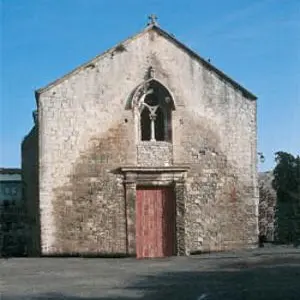
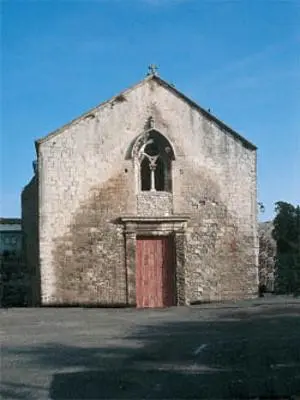
The conventual chapel of the Abbey of Saint-Césaire, founded in the 6th century by the bishop of the same name, the church of Saint-Blaise is of interest to historians and archaeologists alike.
It was built in three main stages, starting in the 12th century, but has nevertheless revealed earlier remains. Disused during the French Revolution, it was put to various utilitarian uses before being excavated in 1972 and 1982.
Today, it is recognized as a heritage site of considerable interest, which could be enhanced in the Saint-Césaire enclosure project currently under study.
The current building still bears the traces of its various additions and alterations.
The oldest part features a non-protruding transept with two barrel-vaulted apsidioles.
The crossing features a cloister-arched vault.
Separated from the choir by two large cruciform pillars, a short nave bay with round arches is flanked by cramped side aisles.
The second part, with its simpler architecture, sees the disappearance of the two narrow side aisles.
Finally, the third, slightly narrower bay features acoustic vases at the base of the vault, designed to reduce the echo effects of the nave.
The only piece of furniture to have survived is a painted gilded wood high altar, currently on loan to the Notre-Dame-de-la-Major church.
It was built in three main stages, starting in the 12th century, but has nevertheless revealed earlier remains. Disused during the French Revolution, it was put to various utilitarian uses before being excavated in 1972 and 1982.
Today, it is recognized as a heritage site of considerable interest, which could be enhanced in the Saint-Césaire enclosure project currently under study.
The current building still bears the traces of its various additions and alterations.
The oldest part features a non-protruding transept with two barrel-vaulted apsidioles.
The crossing features a cloister-arched vault.
Separated from the choir by two large cruciform pillars, a short nave bay with round arches is flanked by cramped side aisles.
The second part, with its simpler architecture, sees the disappearance of the two narrow side aisles.
Finally, the third, slightly narrower bay features acoustic vases at the base of the vault, designed to reduce the echo effects of the nave.
The only piece of furniture to have survived is a painted gilded wood high altar, currently on loan to the Notre-Dame-de-la-Major church.