



This mansion is one of three buildings in Aix-en-Provence built in the colossal order.
This private mansion is one of three buildings in Aix-en-Provence in the colossal order.
In 1671 Joseph de Martiny, Paymaster-General of France, had work carried out in the family home of his wife, Louise-Françoise d'Estienne de Saint Jean.
The solemn and sober order of the frontage is attributed to the stone-cutter, entrepreneur and architect Louis Jaubert, his son Jean-Claude and his nephews Jean and Laurent Vallon.
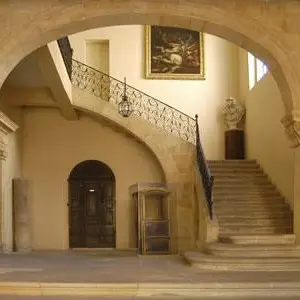
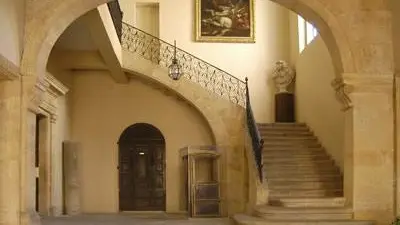
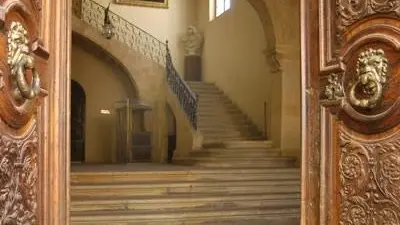
The vestibule leads to a large "vanity" staircase in wrought iron.
Overlooking the intimate garden is a suite of rooms, including is a boudoir with a painted cupola held up by moulded atlantes, and five charming little cherubs with flowers.
This structure was created by the sculptors Jean-Louis Michel and Jean Routier and the painter Jean André.
Listed as a Historical Monument in 1937, it now houses the Old Aix Museum and its collections evoking the traditions of Aix and its region.
