



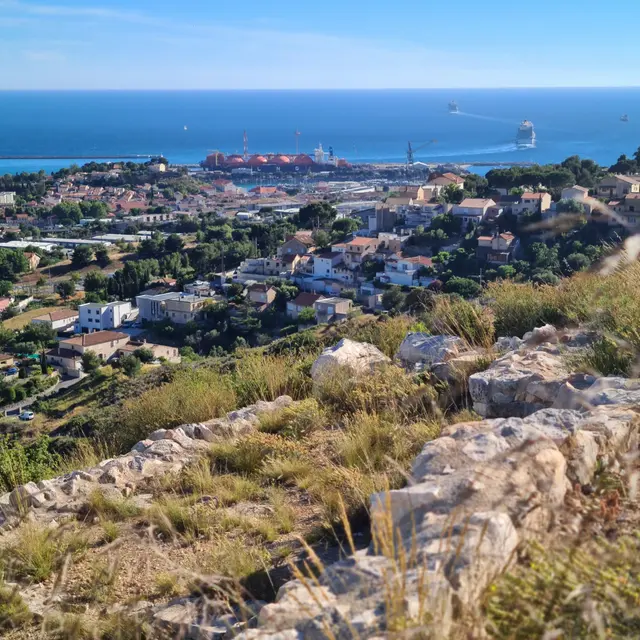
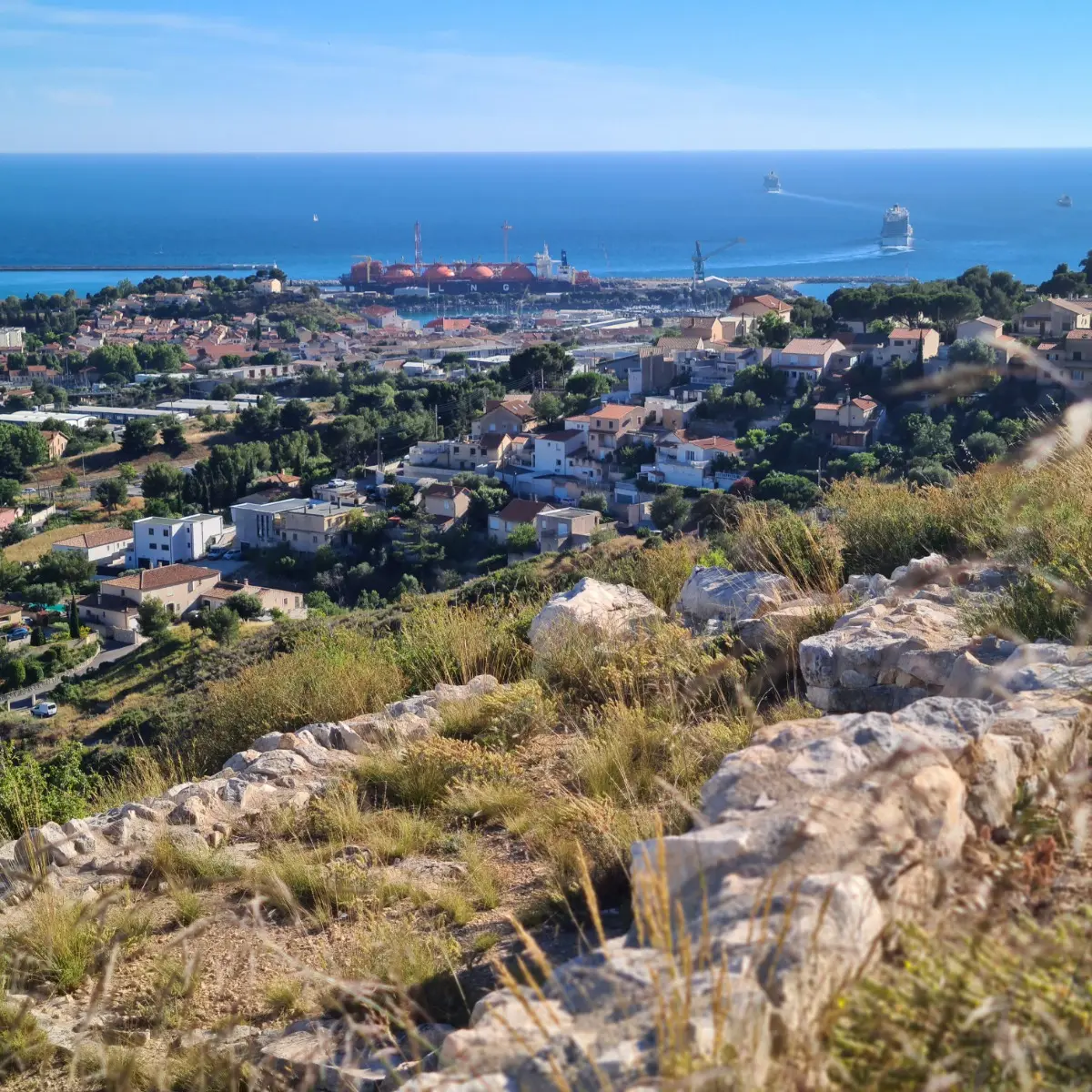
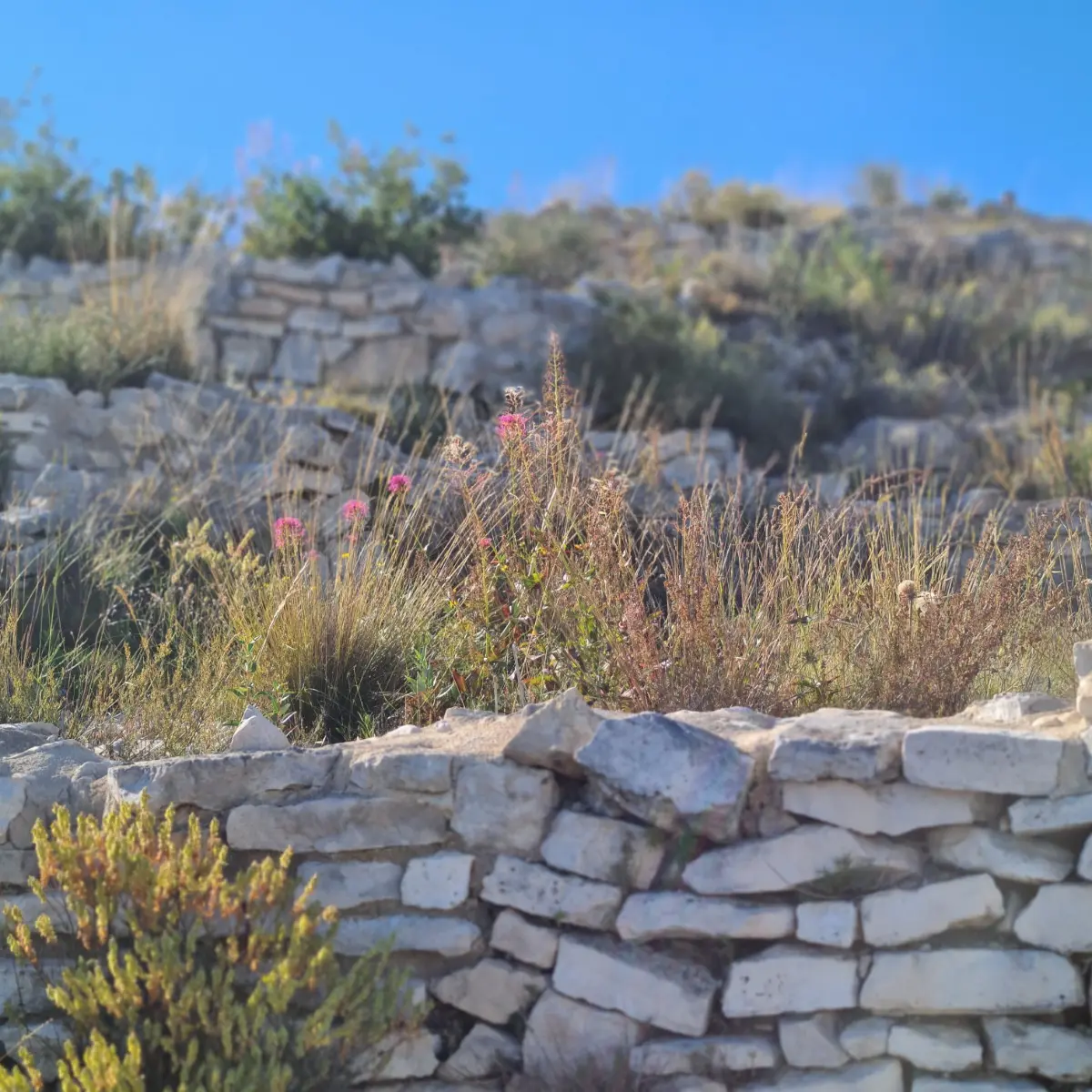
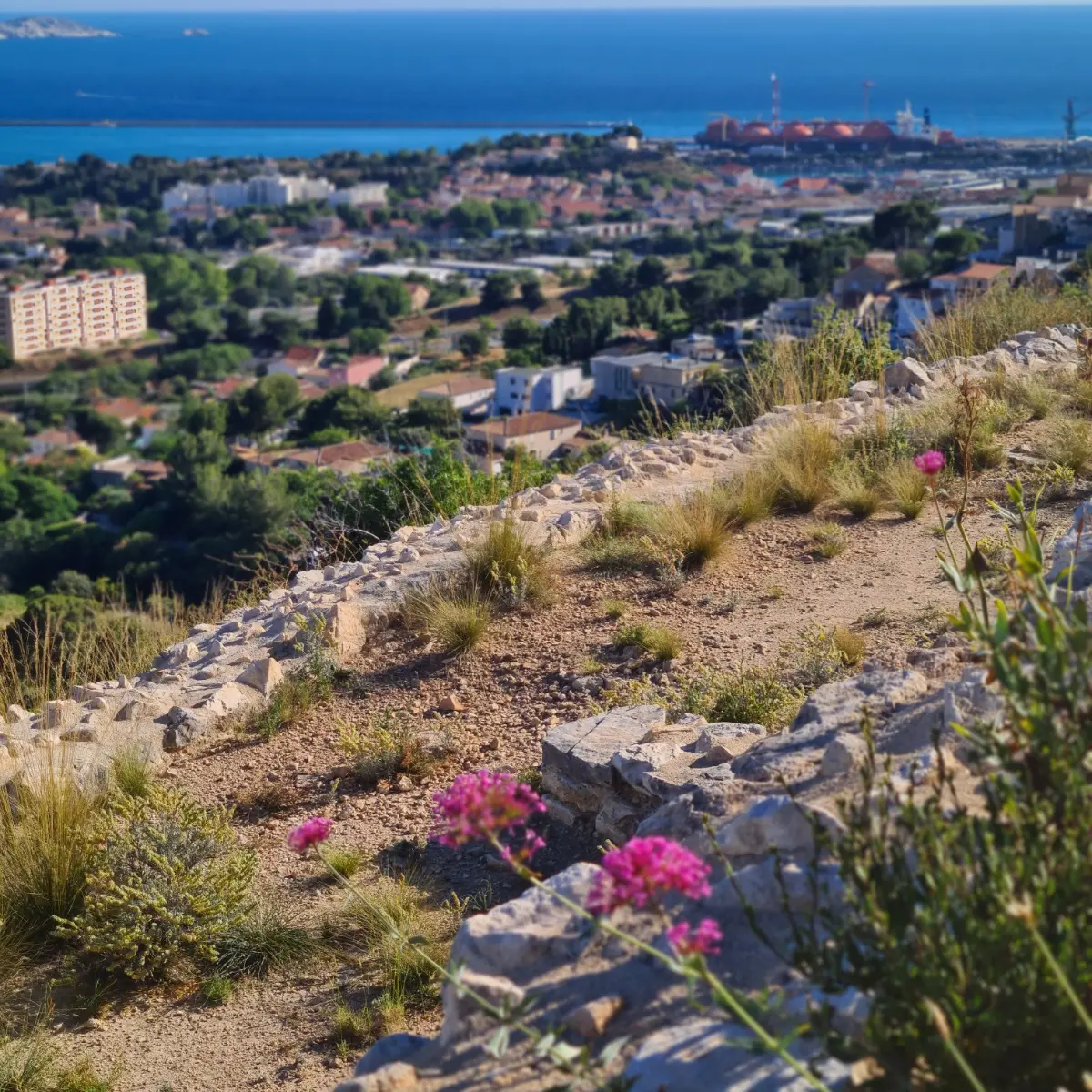
The Verduron oppidum preserves the remains of a Celtic village. It is one of two Celtic-Ligurian sites in the town, the other being at Saint-Marcel to the east.
The area around the site was affected by a fire in July 2025.
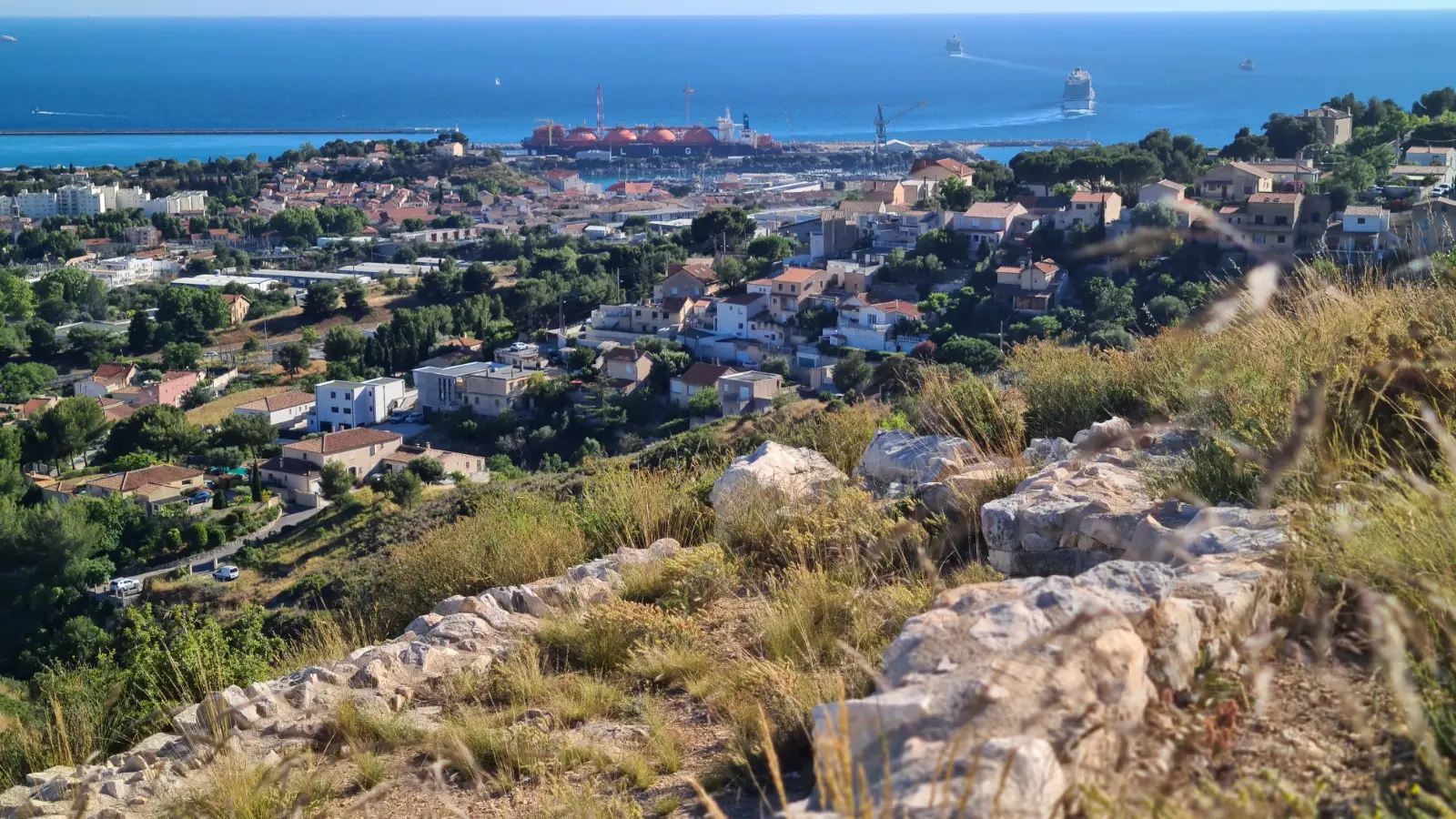
The oppidum is located 9 kilometers from Marseille, in the 15th arrondissement.
Established on the southern slopes of the Nerthe chain overlooking the harbor, it is now owned by the City of Marseille and protected as a Historic Monument. The site was discovered and excavated between 1905 and 1911 by Marseille sculptor St. Clastrier, and between 1999 and 2011 by researchers from the CNRS and the University of Strasbourg.
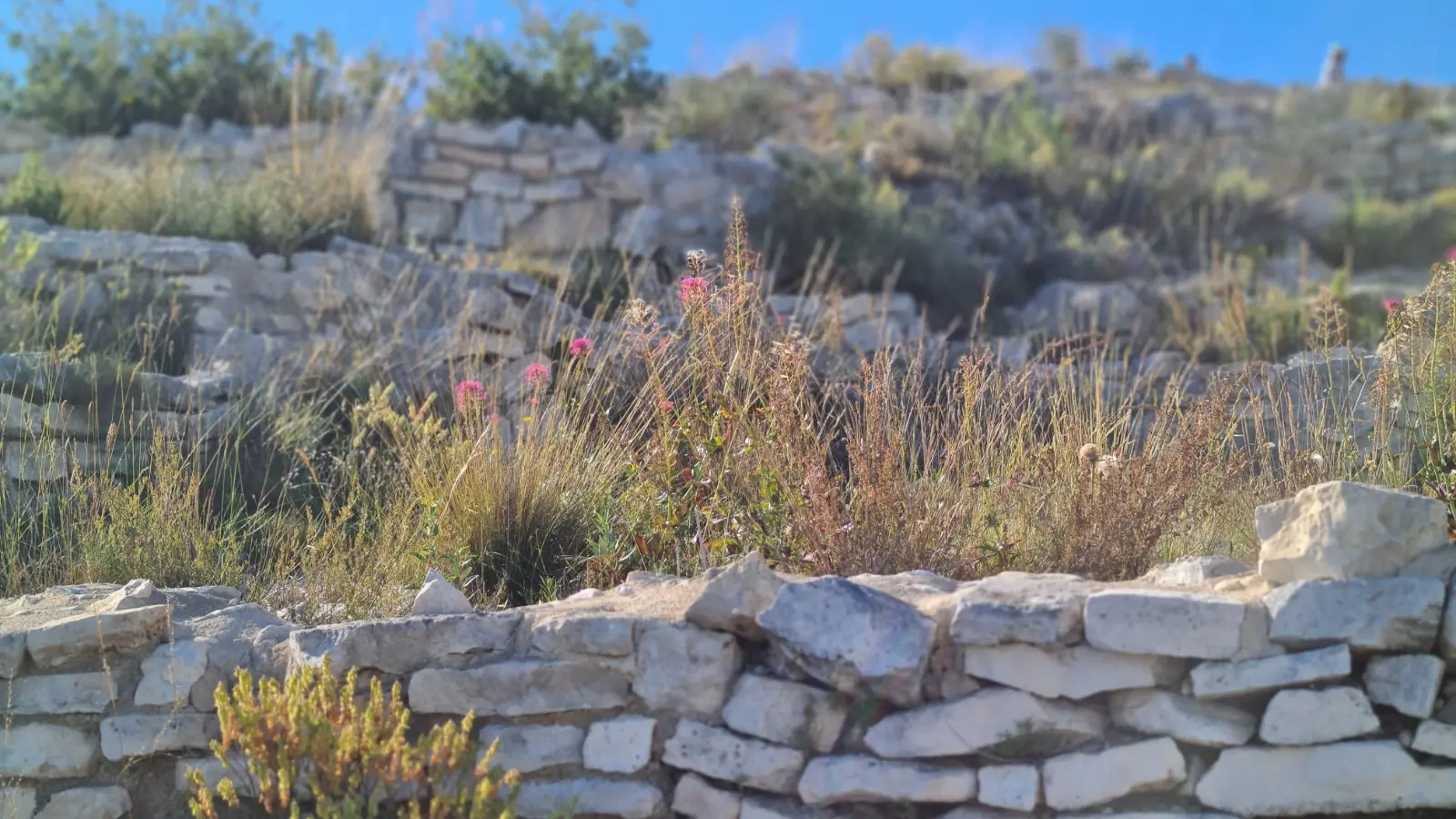
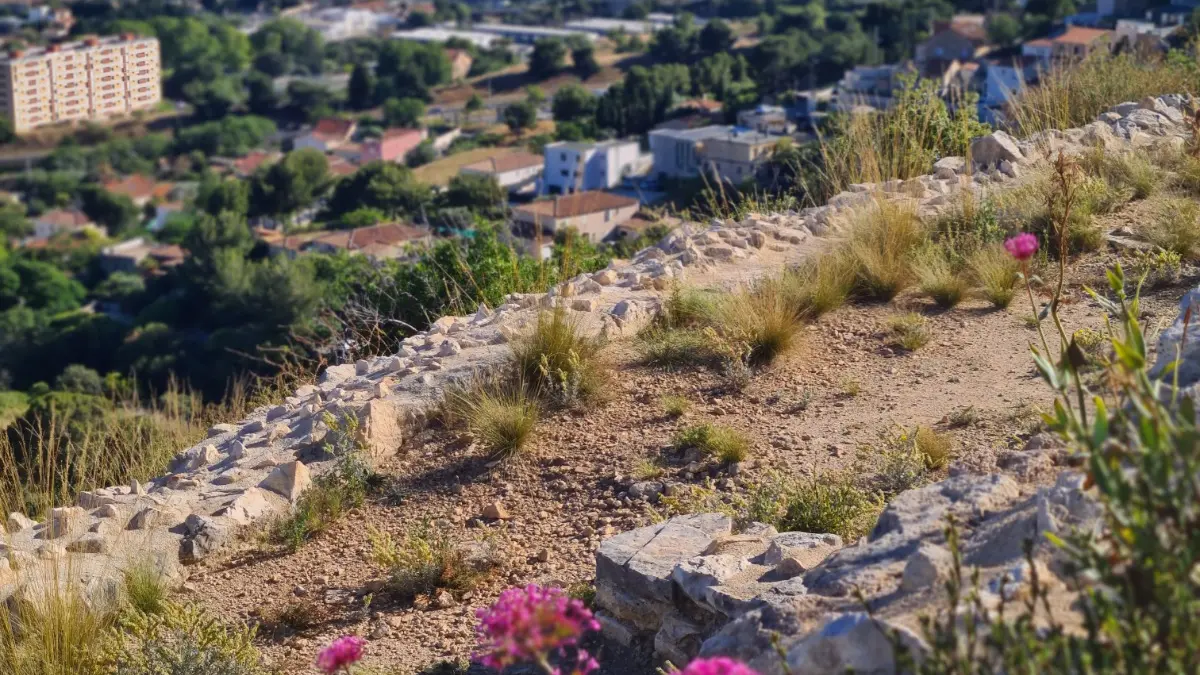
Le Verduron or "Pain de Sucre" is a small perched settlement, surrounded by a 0.80 to 1 metre wide enclosure wall dominated by a "tower" defending the site. The main entrance was at the bottom, to the south-east. Around forty terraced rooms abutted the rampart, organized in islets around the streets and alleys that served them. They are grouped together in orthonormal islets. The Gallic settlement, covering an area of around 1,250 square meters, had a very short lifespan, in the second half of the 3rd century BC. It was, in fact, besieged and violently destroyed around 200 BC.
The finds from the St. Clastrier excavations are held in the archaeological repository of the Musée d'Histoire de Marseille. Its study shows that the majority of ceramics, representing 85% of the ware, is unturned and of local origin, while imported turned ceramics account for only 12% (light paste Massaliète ceramics). Black-glazed ceramics enable us to refine the absolute chronology of the duration of occupation in the second half of the 3rd century BC.
Source: City of Marseille website