



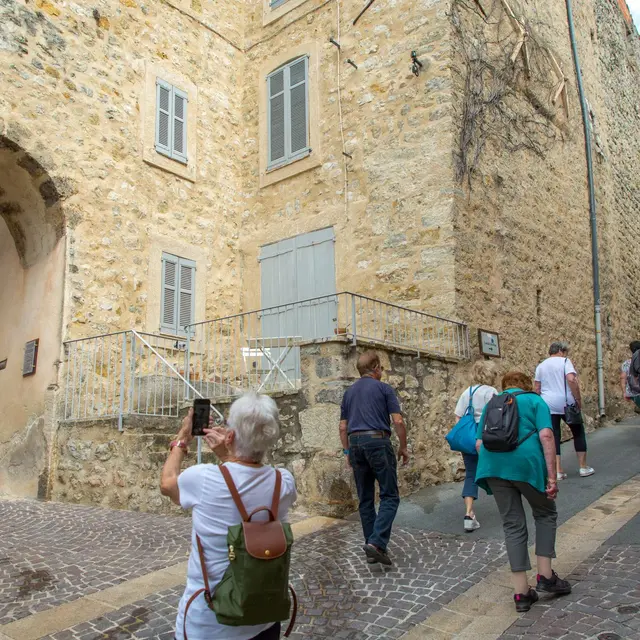
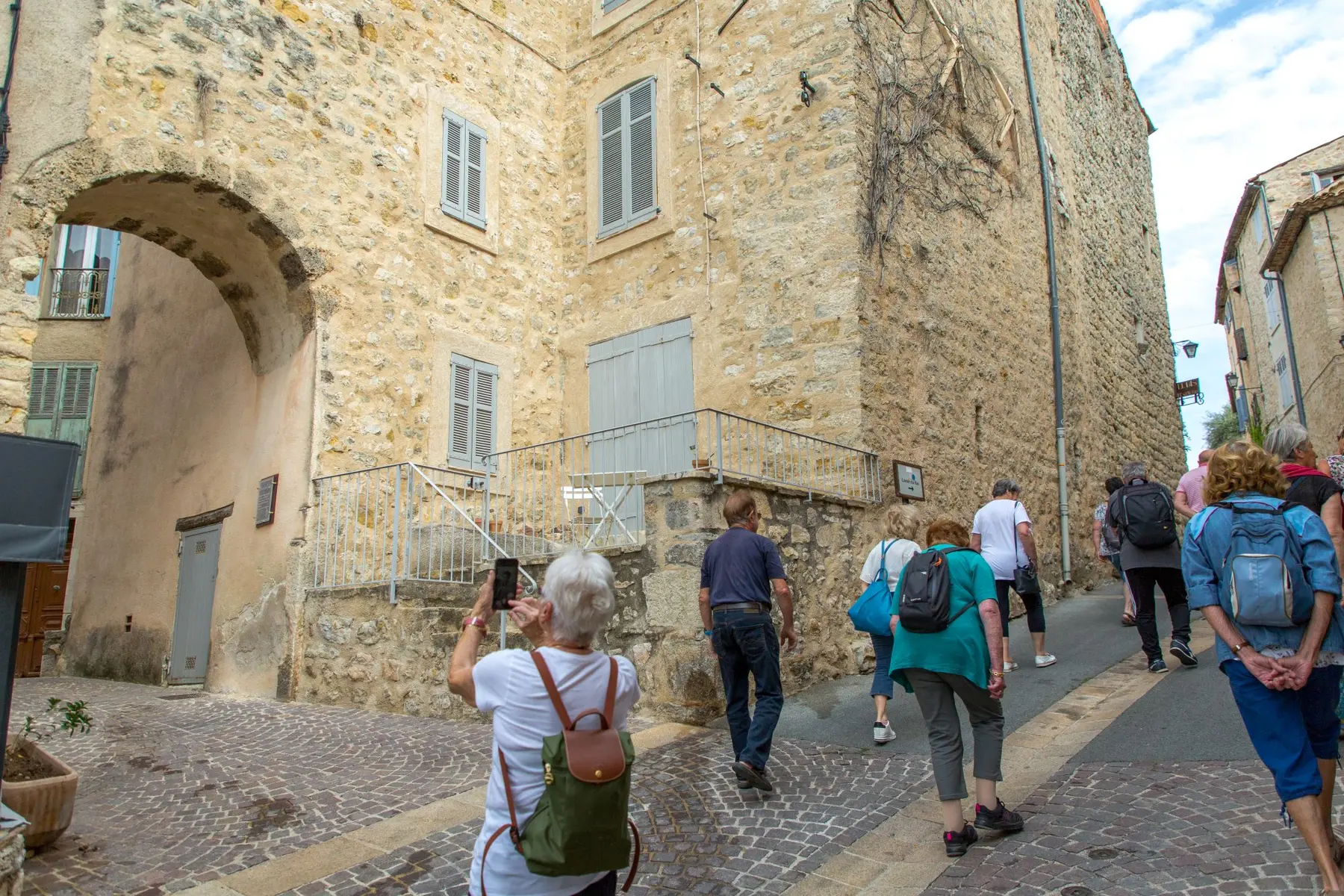
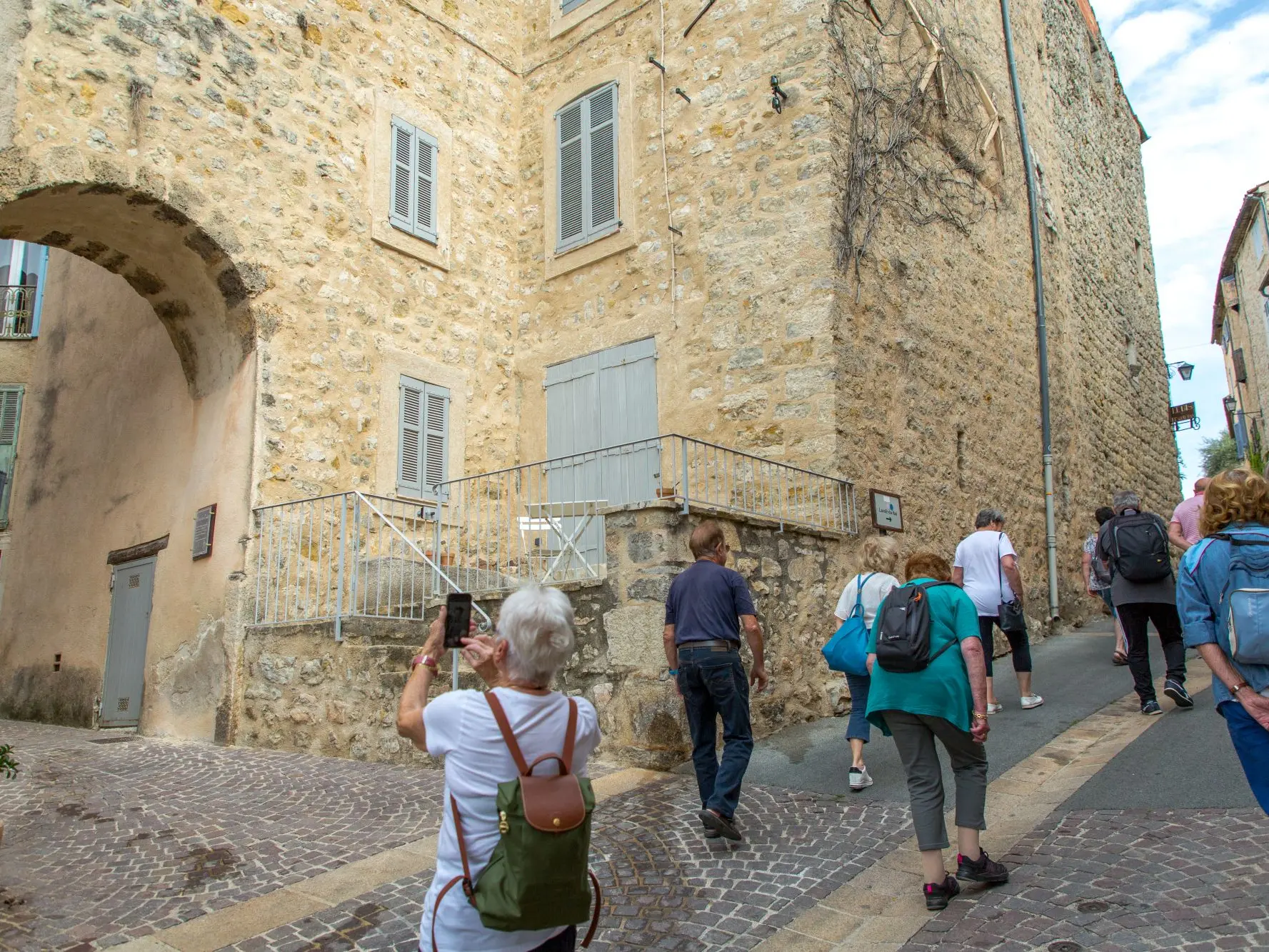
In the heart of the hilltop village of Fayence, the ramparts tell a story of protection, organisation and daily life in the Middle Ages. These silent witnesses of the past still outline the old village today, recalling a time when Fayence was a fortified settlement.
Among the entrances that once punctuated these walls, the Coulet Gate holds a discreet yet essential place.
Built from the 13th century onwards, the ramparts of Fayence surrounded the village and protected it from external threats. Made of thick stone walls and pierced with arrow slits, they formed an effective defensive barrier. Access to the village was controlled through several gates, which were closed and guarded at night.
The Coulet Gate, integrated into this system, was one of these secondary entrances, allowing movement between the village and the surrounding plain. Less imposing than the main gates, it nevertheless played an important role in the daily life of the inhabitants.
Today, it blends into the fabric of the old village, alongside visible remains of the ramparts. Although their defensive function has disappeared, these elements retain strong heritage value and offer a valuable insight into the medieval organisation of Fayence.
