



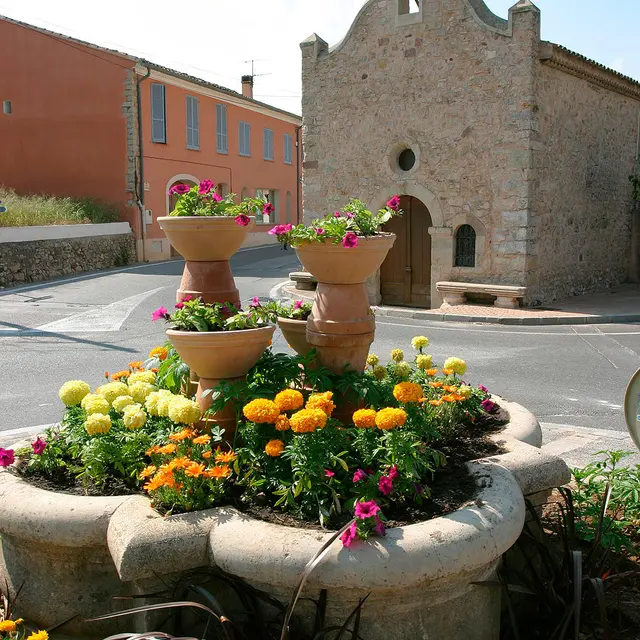
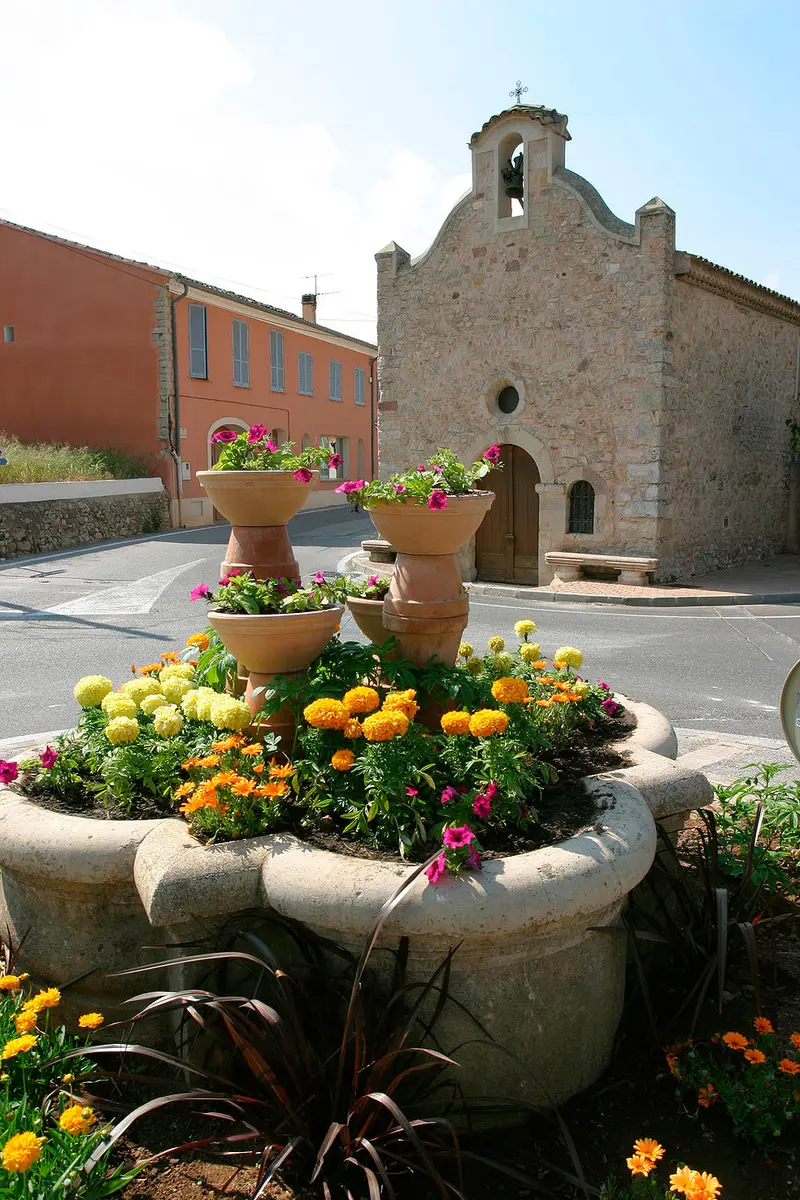
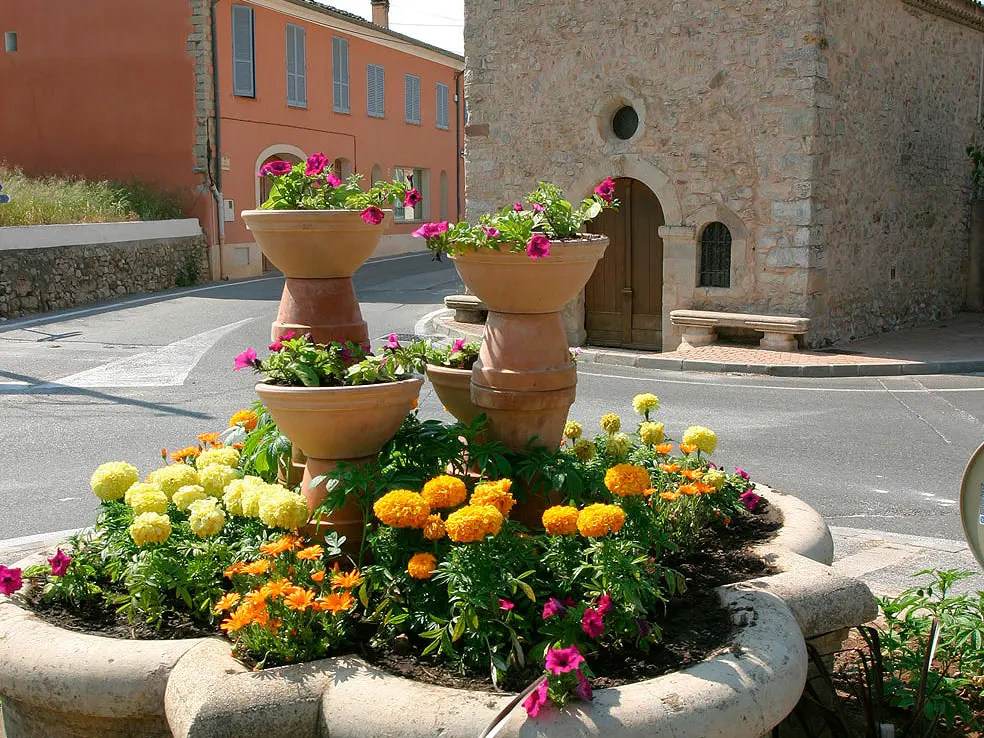
The chapel was probably built during the 15th century, or even at the beginning of the development of the cult of Saint Roch; the building was then located off-centre from the medieval village on the hill.
At the very beginning of the 17th century, work was carried out on the building; finally, in 1665, the chapel was considerably enlarged. This significant increase gave the building its definitive and current appearance, as confirmed by the keystone on the door showing "1665". This was done in response to the plague. On the outer walls, on both sides, a clear break in the wall is visible, showing that the chapel has been rebuilt and transformed. On either side of the doorway, two windows illuminate the nave, and the façade is topped by an oculus and a bell tower dating from the time of the extension. This building is one of the few chapels in Cuers that were preserved from the revolutionary turmoil, which caused the disappearance of many such buildings in the commune. The facades and the roof were restored in 1987. One can see an altarpiece with twisted columns (the only altarpiece in the commune dating back to 1665) with 2 paintings.
