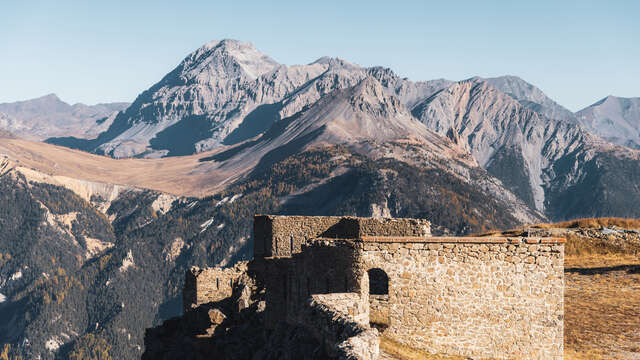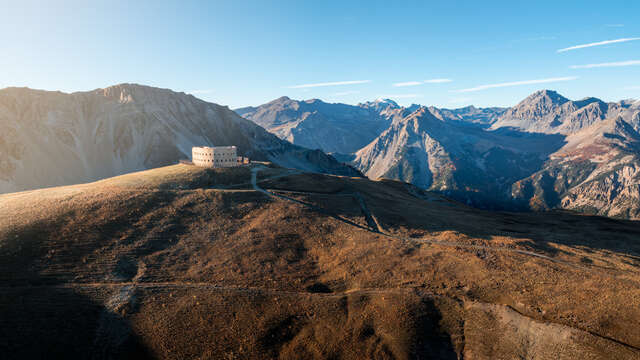



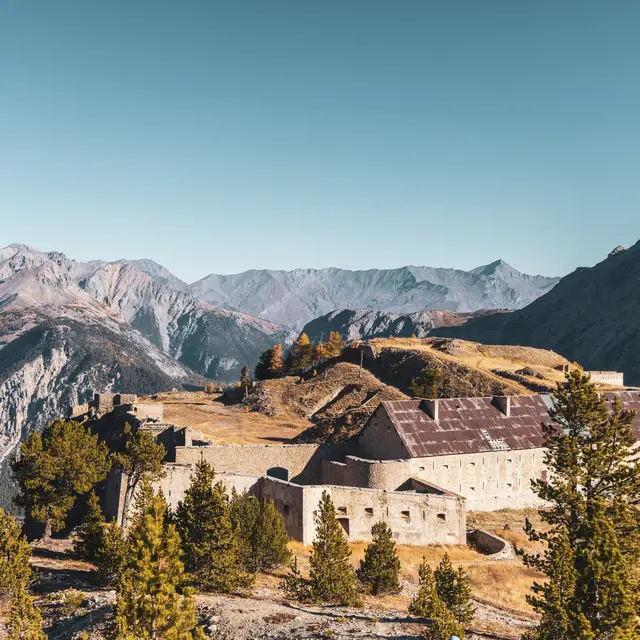
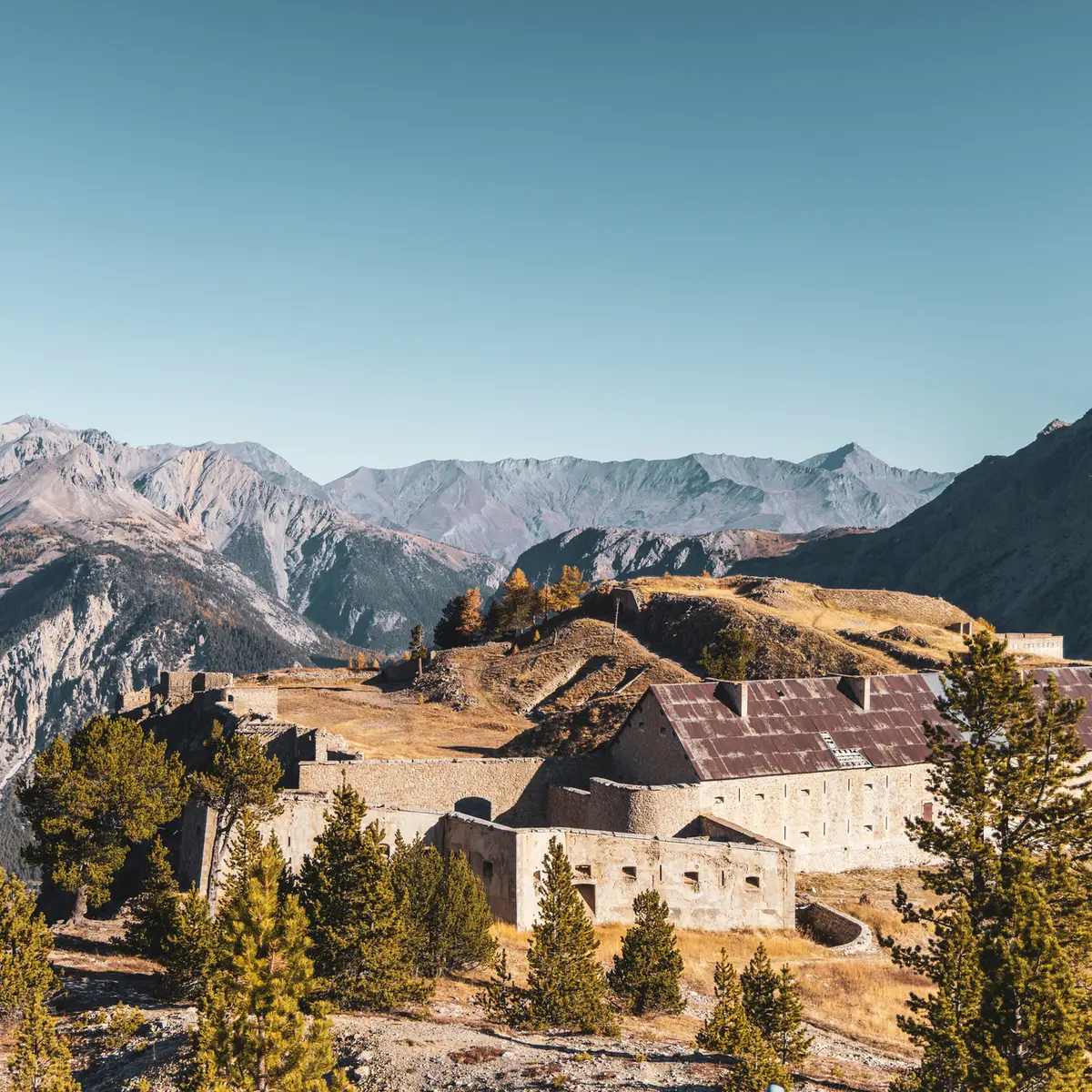


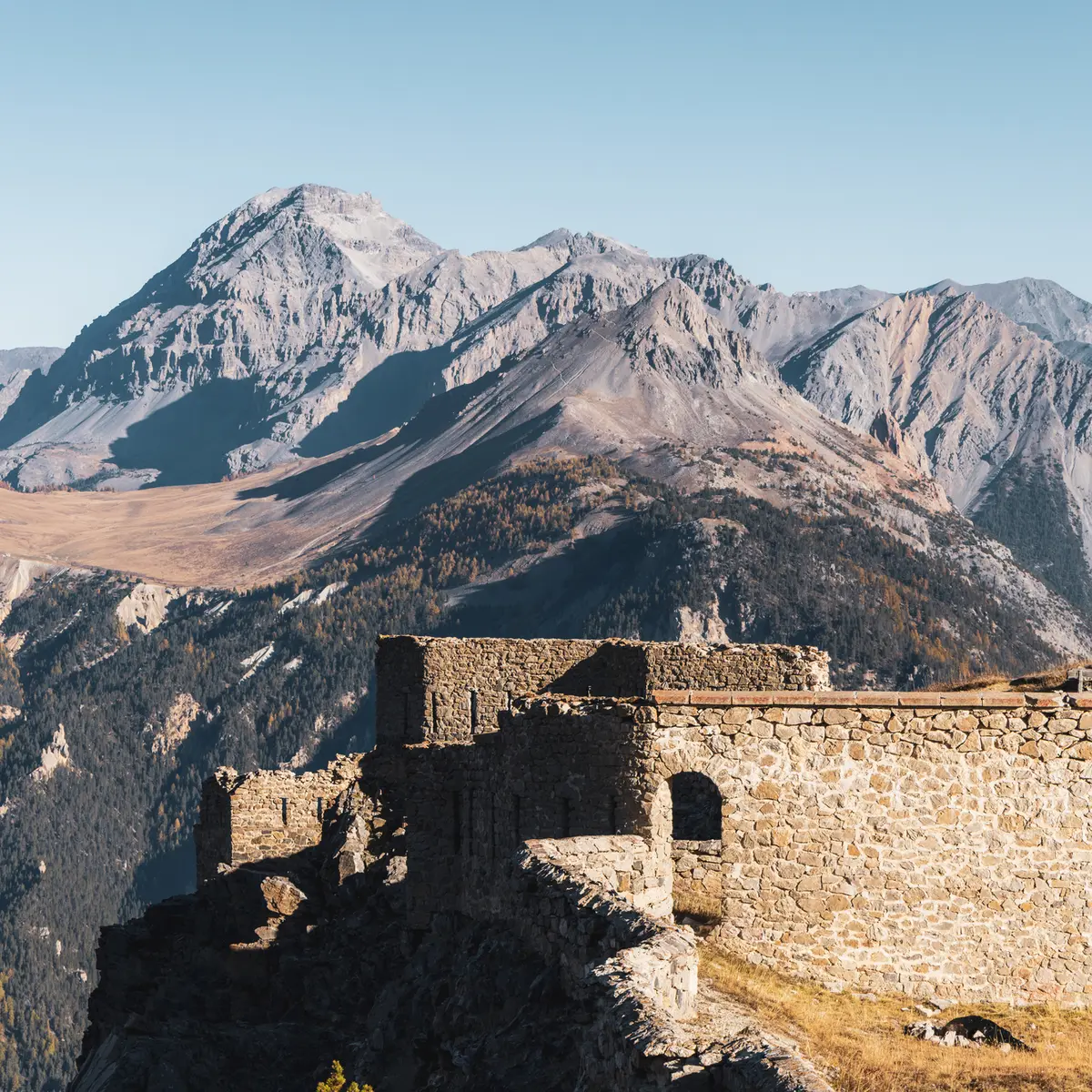
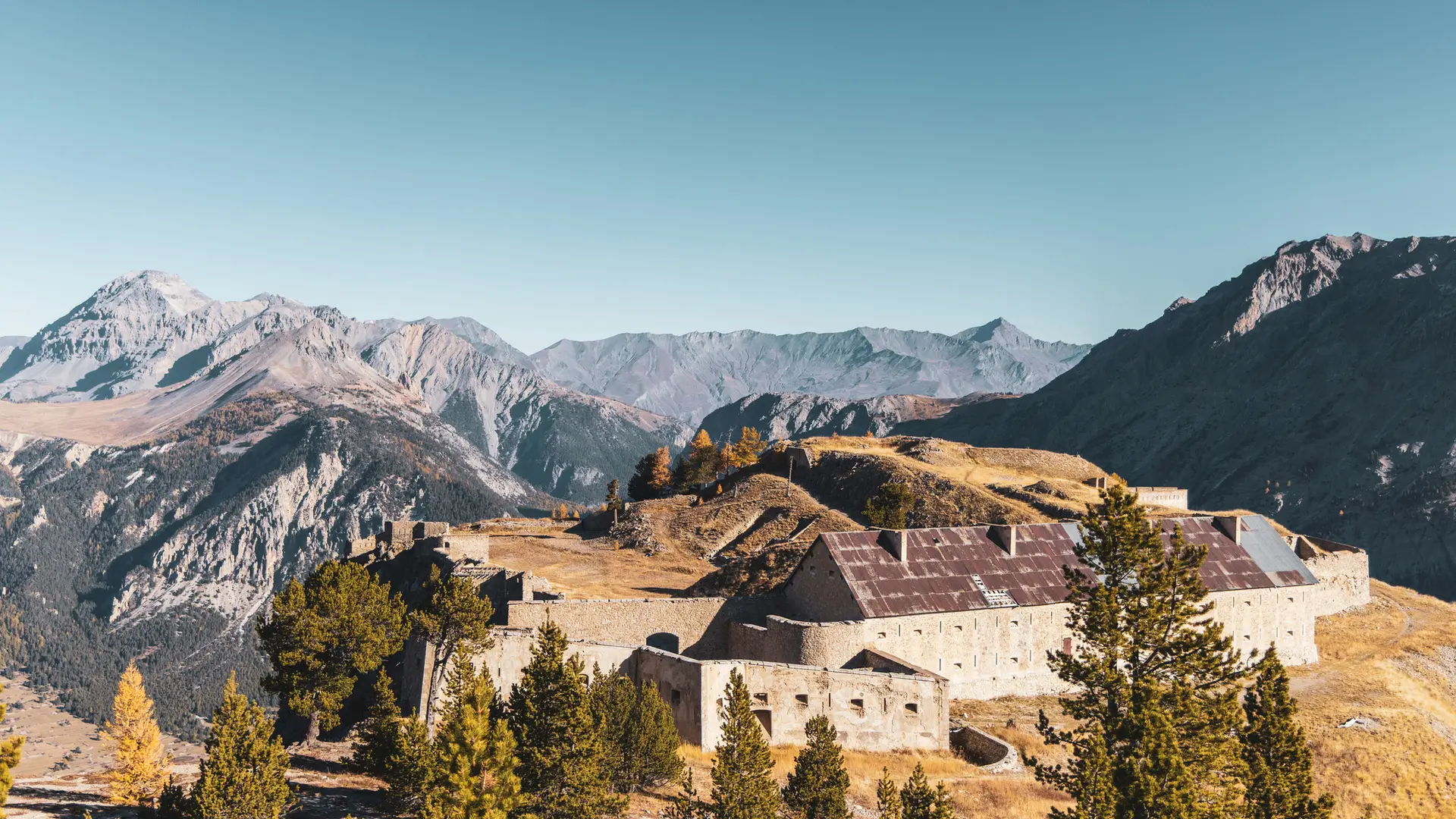
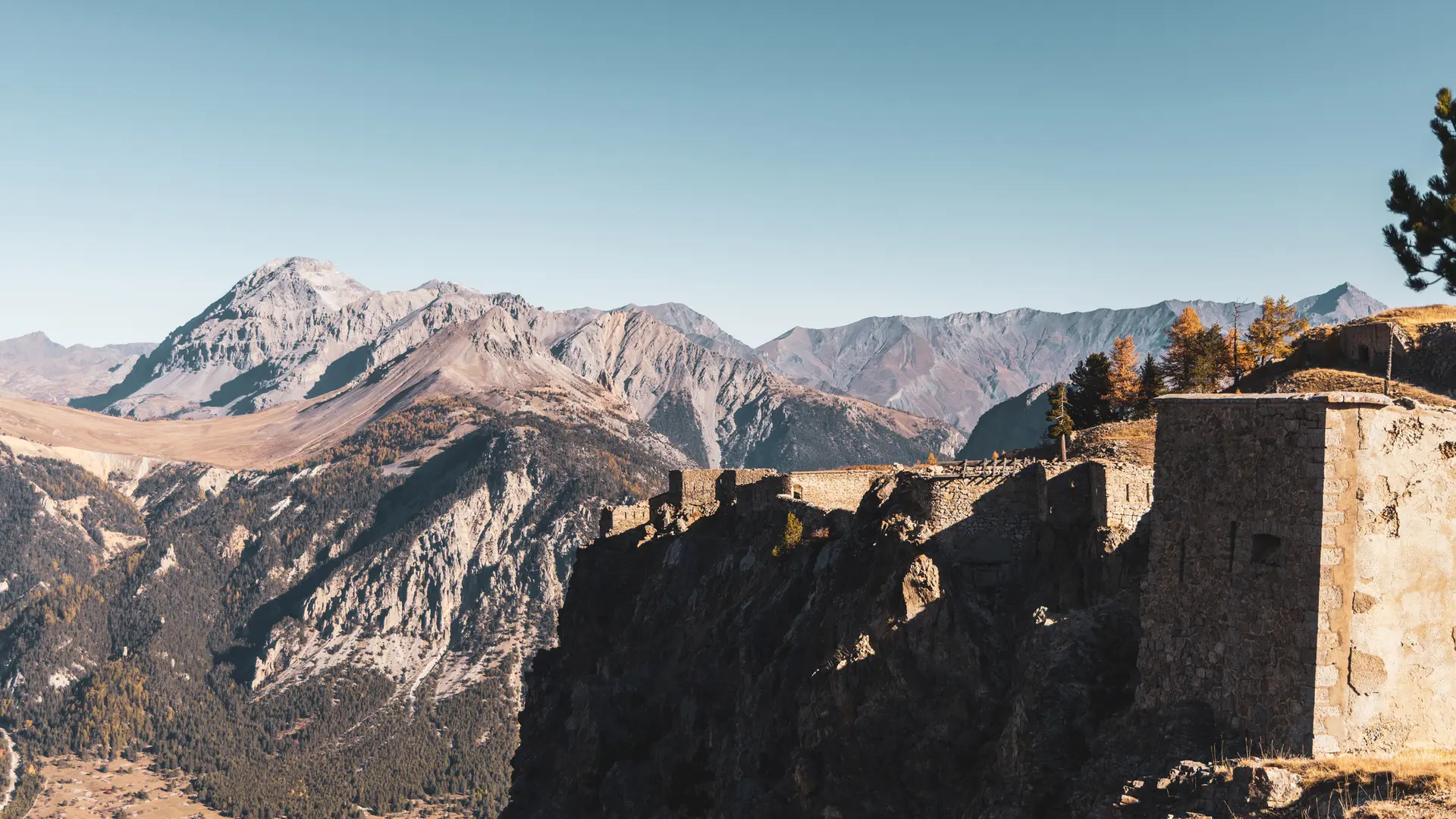

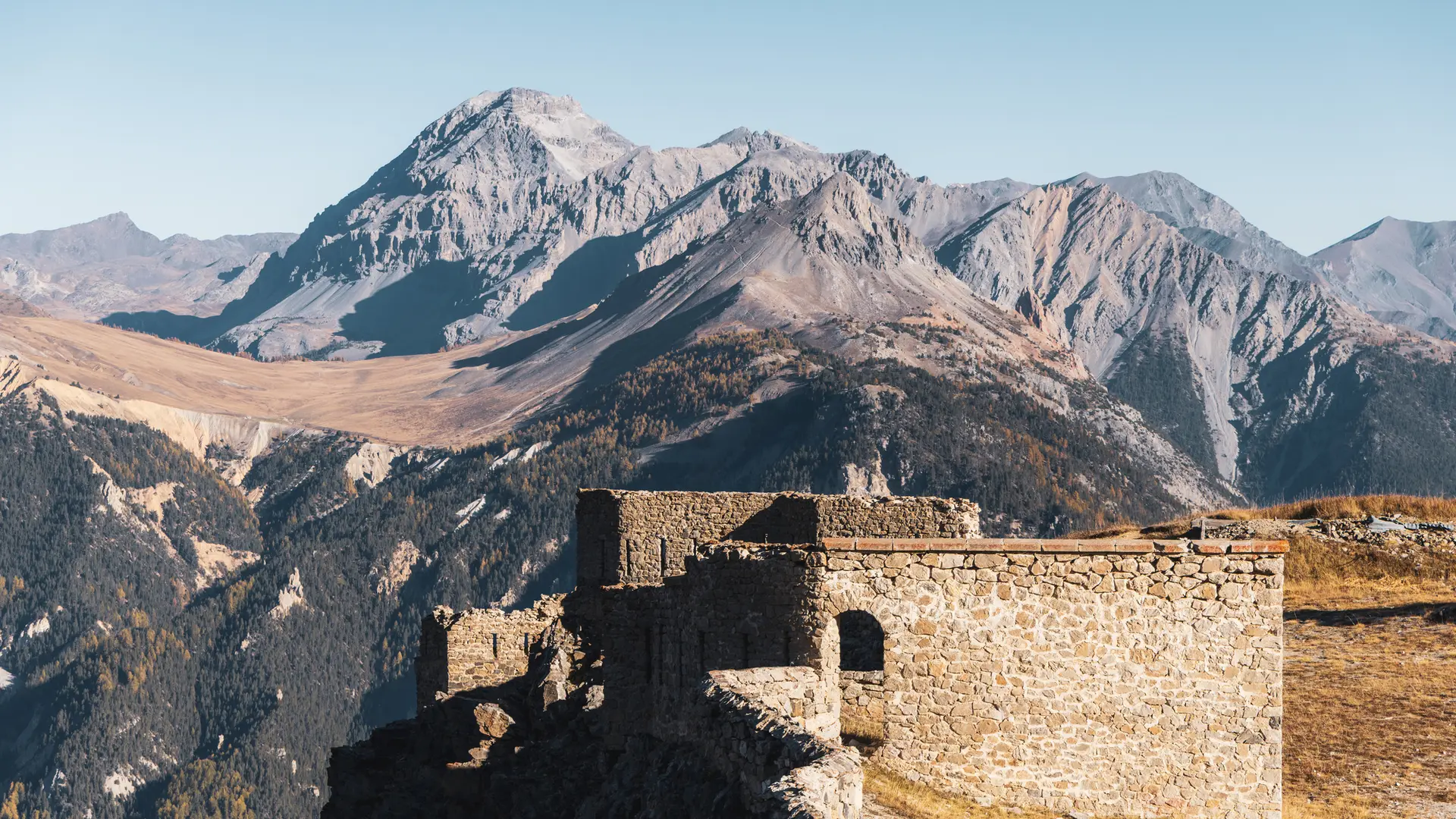
Built in 1882, at an altitude of 2,230 m, this infantry structure was used to guard the border crossings with Italy on the Echelle, Acles and Thûres passes. It was also upgraded to reinforce the continuity of the Maginot Line.
The construction of the Fort de l'Olive began between 1881 and 1882. The complex was modernized between 1890 and 1894, including an animal-drawn cable car that brought supplies to the fort from the village of Plampinet.
Its purpose was to control the outlet of the border passes.
As part of the Maginot Line in the 1930s, and in view of its advanced strategic position to protect these passes, Fort de l'Olive was put back into operation, with the addition of two rock-cut casemates.
Between 1883 and 1894, it was linked to Plampinet by a cable car.
In the period 1900-1914, it was connected to the telegraph network by an optical post linked to Fort de l'Infernet (Briançon), then by underground cable to Fort du Château (Briançon) via Fort de Lenlon.
This fort was equipped with two 330 and 80 m3 cisterns fed by the Lenlon springs via an 1800 m cast-iron pipe. In 1884, it housed 231 soldiers!
In June 1940, this fortification was hit by some forty 149 mm shells fired by the Italian Chaberton battery, the damage to which can still be seen today.
After the war, Fort de l'Olive was used as a maneuvering range, notably by the Centre national d'aguerrissement en montagne, and was sold by the French government to the commune of Névache in 2011 for a symbolic one euro.
From this fortification you can enjoy a remarkable view of the Thures plateau, the Col de l'Echelle, Les Acles and the Pointe de Pécé.