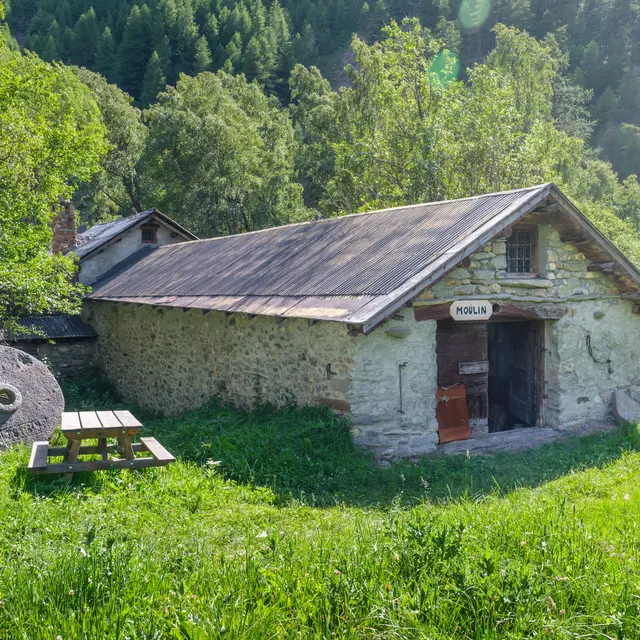
The Villar d'Arène Grain Mill, the last surviving mill of its era, is a long, solid building dating back to the early 18th century. It still retains the systems that enabled it to function in its day.
In those days, the mill ran non-stop from October to December, and the miller had to be on hand day and night for his mill.
In fact, it's not one mill but 3 that you'll discover on your visit. They have all been restored by Maurice Mathonnet and still have the systems that enabled them to operate in their day.
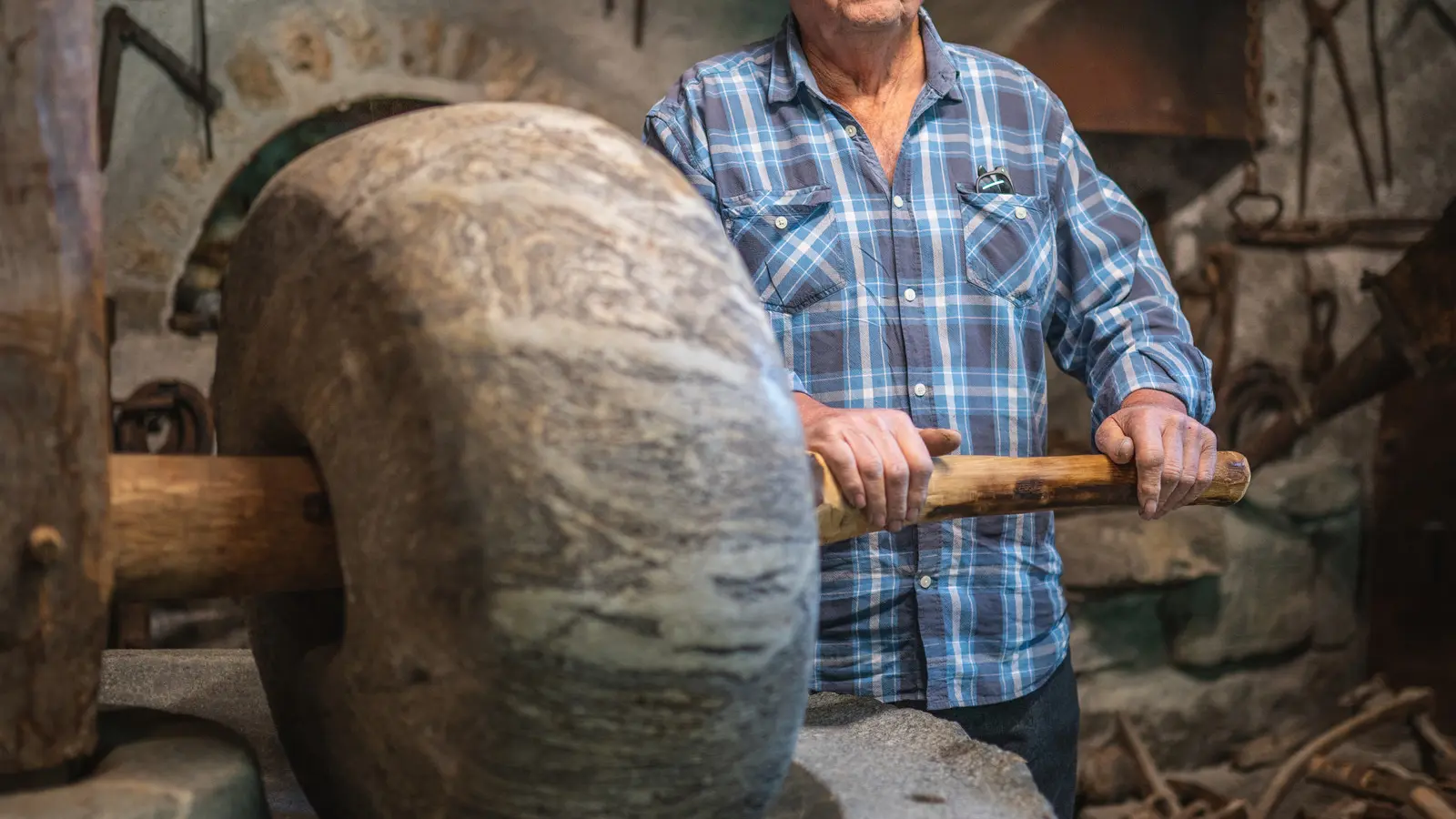
The first two mills were powered by the tumultuous waters of the Romanche, and the last one is a blood mill, meaning that the mill is powered by a person or an animal. In this case, it was a human being who turned the millstone to crush the grain.
The mill is also home to a host of period artifacts, making it a veritable ecomuseum of Faranchine life. You'll learn how cheese and dairy products were processed, what a typical miller wore and how the machines were operated. Did you know that Villar d'Arène produced hemp in those days? Hemp was collected in the village, then sent to Briançon to be woven into sturdy garments and flour sacks.
How do you plan your visit? Jean-Pierre takes Faranchine values and traditions to heart, and shares everything he knows about the creation of the mills, how they were put into operation, and the different tools and objects that were used in the past. We discover a timeless building, where the history of mountain villages is rich in memories and anecdotes. To find out more, you'll have to go and see for yourself.