



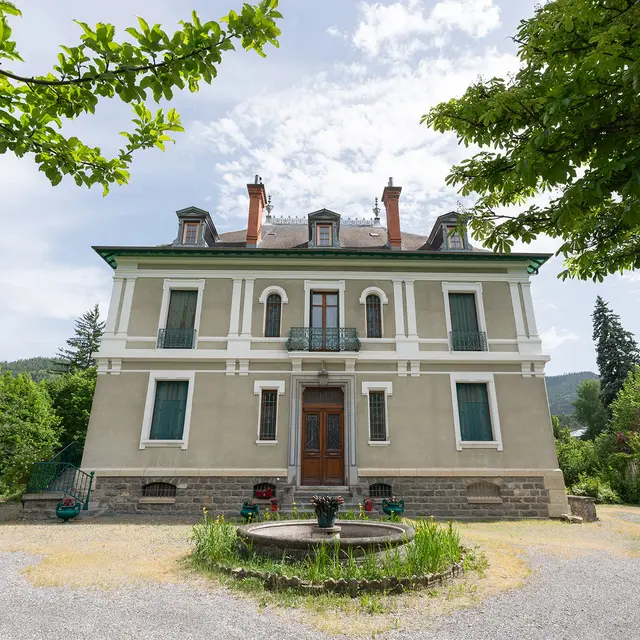
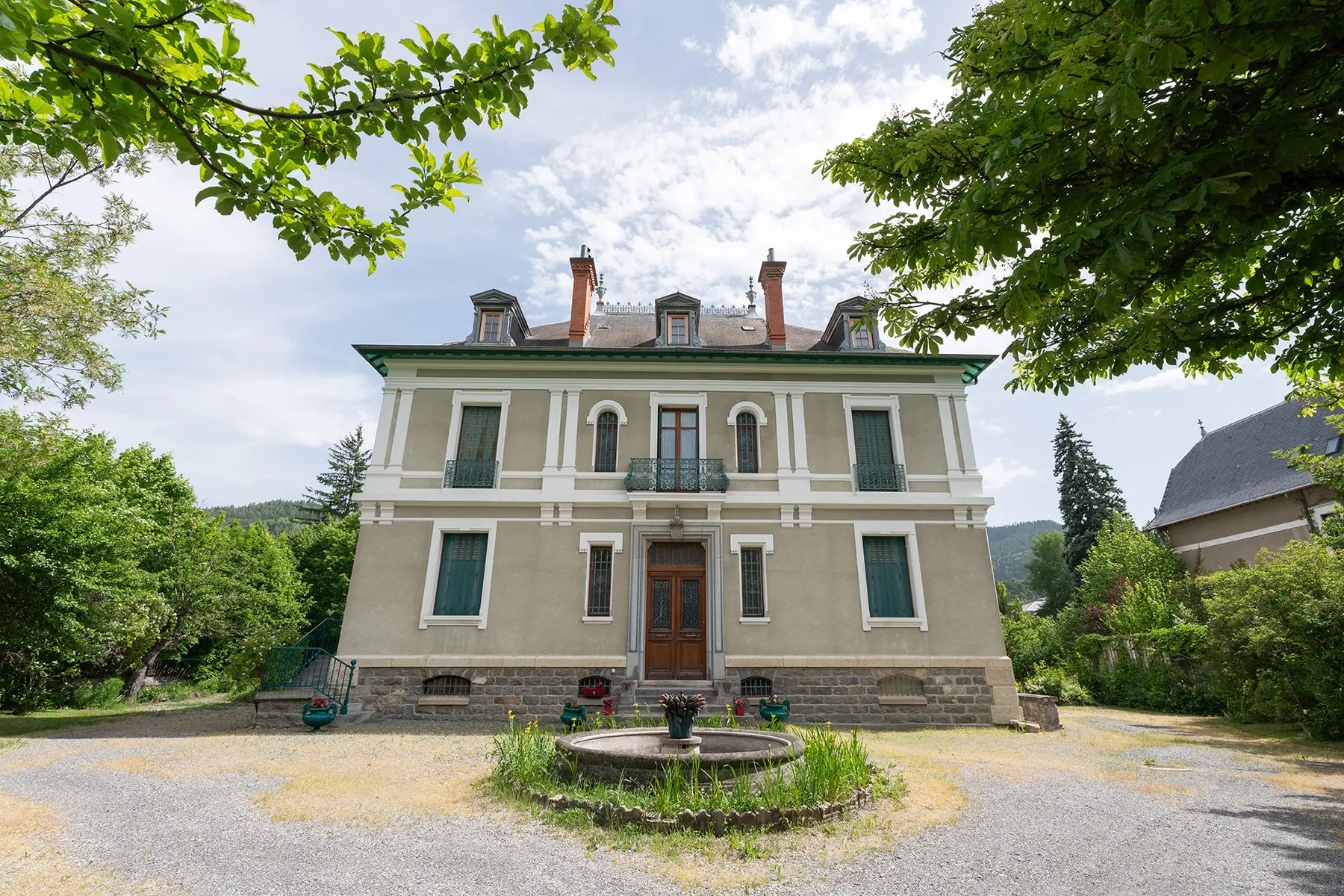
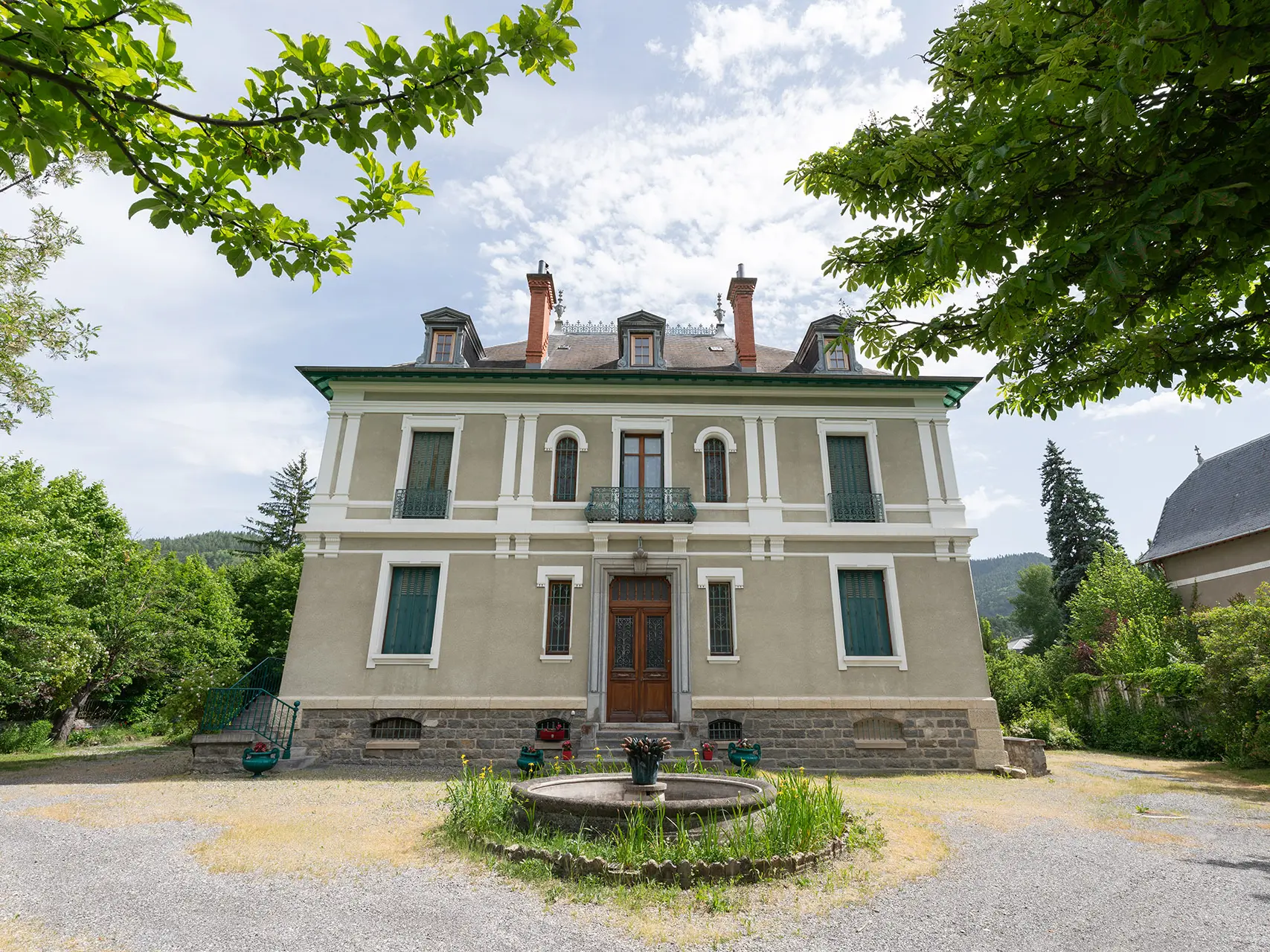
Built in 1905 for Léon Faudon, founder of the El Gran Oriental store in Mexico City, Villa Le Chastel occupies a special place in architect Francis Girard's work in Ubaye.
The classic design of the façades reveals a distinctly Italianate character. The villa takes on the appearance of a ‘palazzo’, in contrast to the picturesque silhouette of its neighbour, Villa André.
Its regular rectangular plan, a return to the parallelepiped block and a certain classicism, brings this construction closer to the very first villas, one of which, Villa La Sapinière, located on the other side of the road, may well have exerted a certain influence.
Renouncing any volumetric effect, a discreet play of twin Doric pilasters emphasises the regularity and symmetrical organisation of the façades. The emphasis is placed, on both the north and south sides, on the central bay with its rhythmic portal and pseudo-serliana with balcony.
The Italianate style continues inside with abundant painted decoration by Italian artists who remain to be identified.
Opening onto the south façade, onto a fruit garden laid out symmetrically on either side of a central axis and abundantly planted with flowers (the villa was formerly known as Villa Les Fleurs), the large loggia lounge, located between the small lounge and the dining room, is the villa's living room and contains most of the interior decoration.
The decorative theme chosen for the painted ceiling is azure blue, with a group of swallows flying freely in the centre, framed by a trompe-l'oeil latticework. At the ends, the four identical spandrels feature a distinct floral motif. The whole is executed in light, highly appealing tones.
The door frames opening onto the living room and dining room respectively also feature painted decoration: a frieze combining cornucopias, flowers and cartouches.
The entrance to the vestibule, marked by a double glass door, features a paste-on-glass decoration combining foliage and floral motifs.
The floor of the vestibule and the large living room-loggia is covered with a rich pavement of varied and colourful earthenware tiles, which contribute greatly to the decorative effect of the whole.