



Discovery tour: Calvaries and Oratories.
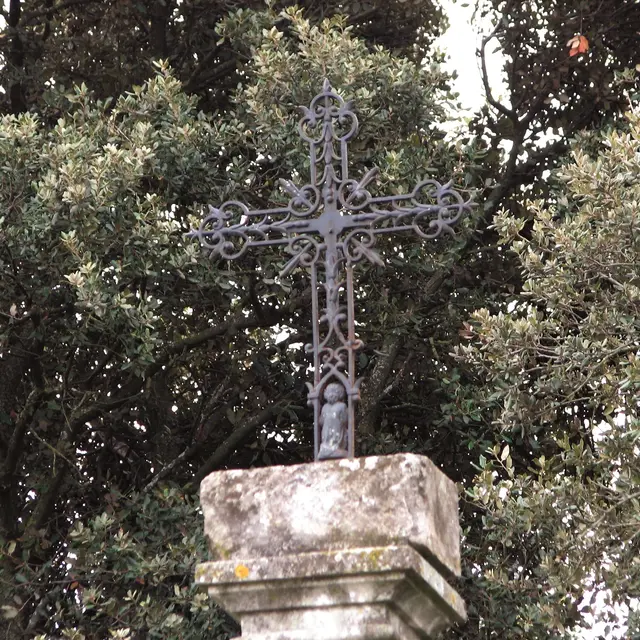
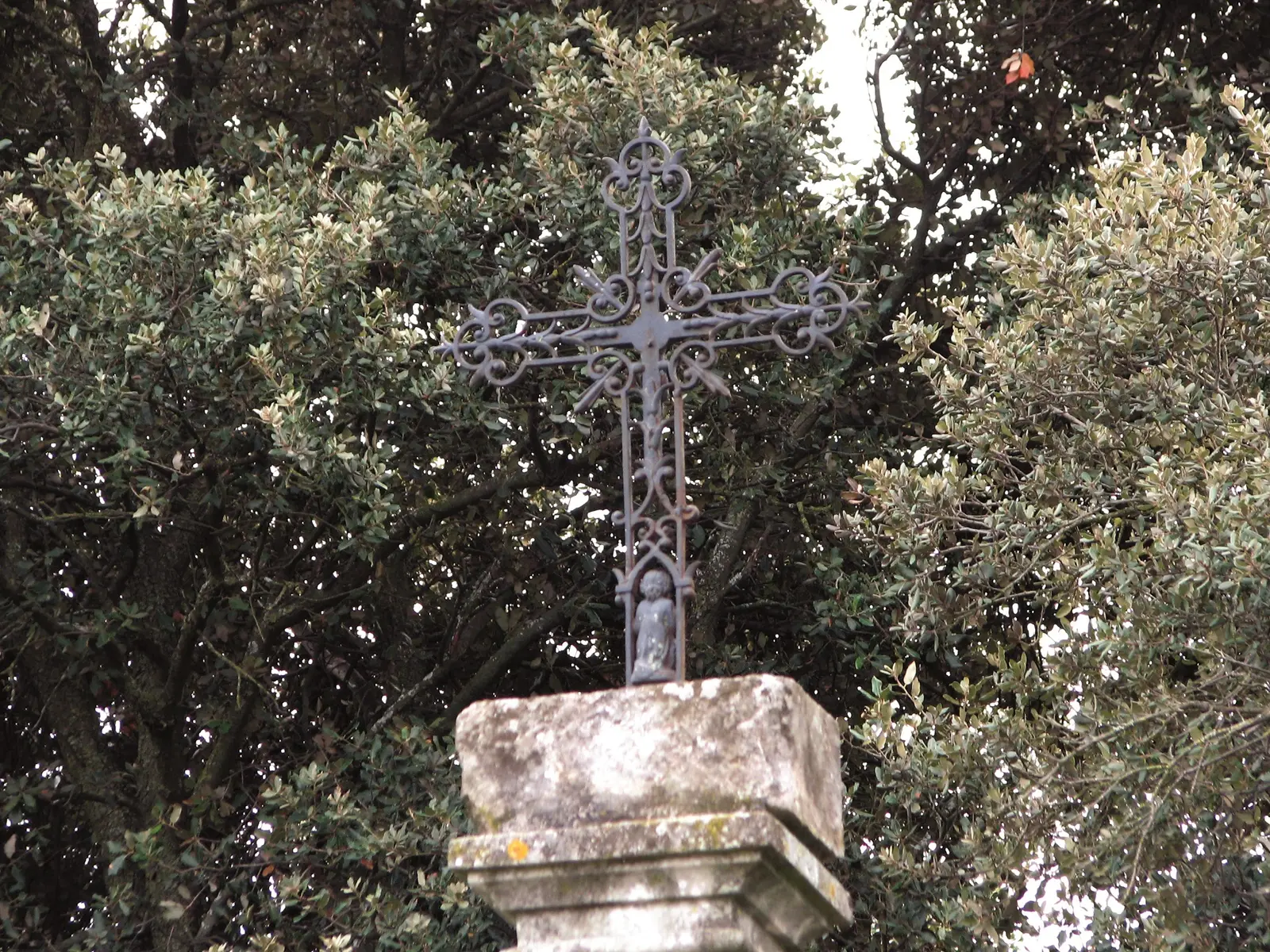
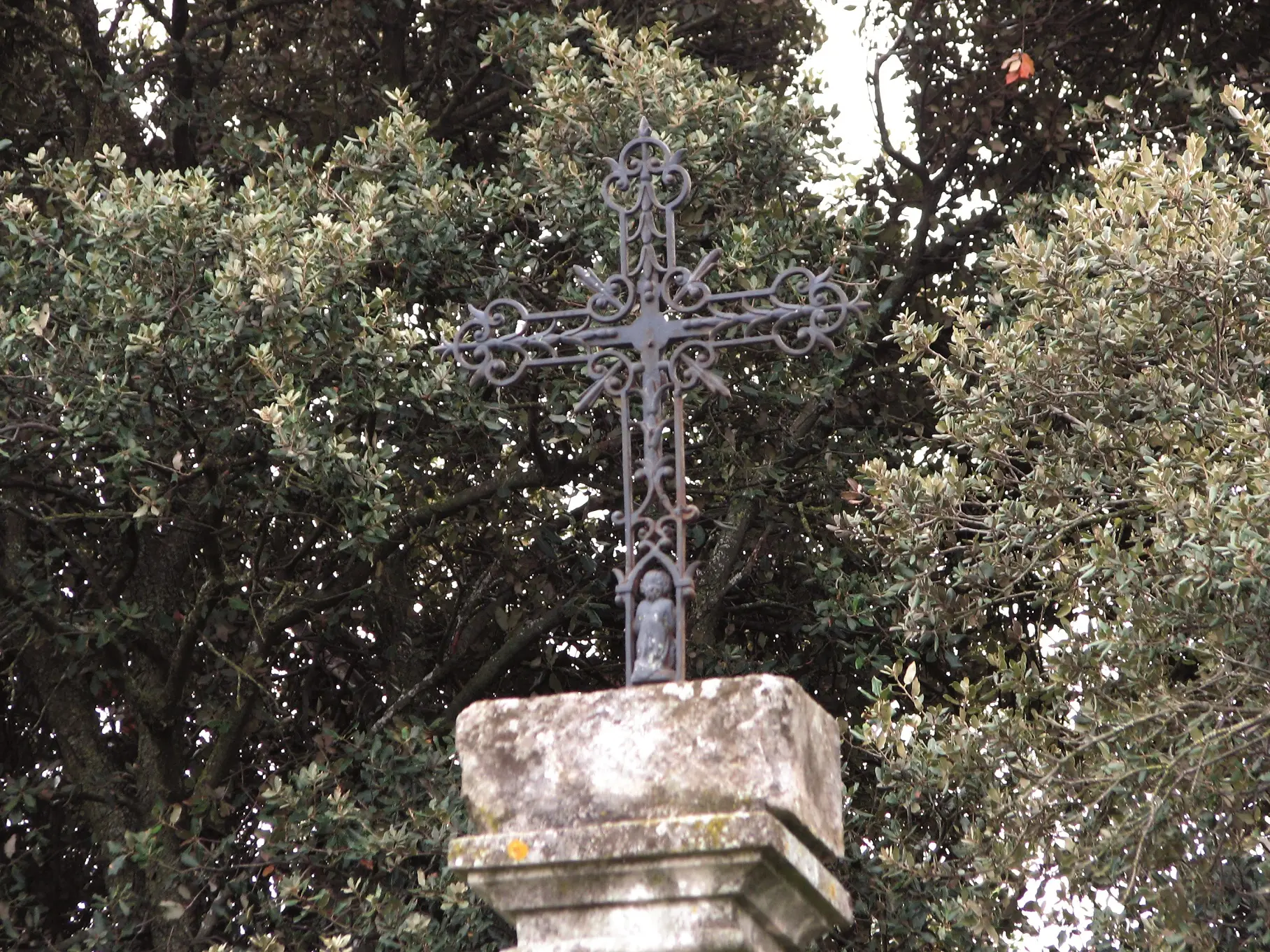
Duration of the visit: 2 h 00, some on foot and the other in car. Pedestrian route with slopes and stairs by sector. This itinerary invites the hiker to contemplation along often panoramic paths of the East of Alpilles end.Georges Coste Avenue then turn right rue de la Fontaine which leads to the door of the Durance. The Durance door cross dominates the fountain which is located on this site. Turn back to freedom square. On the terrace near the Town Hall, at the base of the Church, the cross of the courtyard of the Church of the assumption is unworked cast iron. It overcomes a stone altar where, formerly, in certain circumstances, the town priest officiated. It replaced an old wooden cross, supporting a very large Christ. In the middle of the last century, this Christ, transformed in lying, was laid in the Church, beneath the altar of the chapel of the sacred heart. At the top of the façade of the parish church is placed the cross of Missions on a serious base 'Mission of 1902', when it was holy.Leaving the square, along the rectory by the route of the oratories. A niche in the corner of the wall of the gate of the Hortet which leads to the ancient village of La Savoie, once housed a statue of Saint-Antoine. It was the Oratory of Saint-Antoine. Replace the path of the oratories. On the five oratories which, formerly, along through the hillside trail connecting the city to Notre-Dame de Beauregard, three braved the bites of the time, resisted the attacks of the Baron des Adrets and the ravages of the revolutions. Heavily mutilated, the characters are still visible, but it is difficult to identify with certainty what they represent. The two missing oratories are probably the second and fifth of the series. The second, the Visitation, which there is more no trace, was following the Oratory of Annunciation. The fifth and last was near the rocks a few hundred steps from the chapel. He kept the solid mass from its base currently supporting a steel cross that replaces the old building. The Oratory of the Annunciation is attached to the retaining of an orchard of olive trees wall. Built before 1515, it's massive construction, stone, its roof is formed of a slightly curved slab topped with a metal cross. The low base supports a large niche at the bottom of which a very mutilated sculpture depicts the Virgin and the Ange. In 1515 he withstood torrential rain that ran down the Hill to the rampart causing collapse where the oratory emerges intact after excavation. The oratory to the glory of Jesus and Mary always presents the same elegance of architecture Renaissance. It consists of a pedestal narrower than the niche that it supports and the whole edifice is backed on a wall. The base is adorned with sculptures: at the centre a coat of arms bearing an inscription to the low one shell and above, under the slab supporting the niche a head, an allegorical motif symbolizing the Sun and an acanthus leaf. The niche is framed by two pillars. The right one is very crafted. Inside of the niche, a bas-relief represents four people beheaded by the years. Two beautiful are angels animate the pediment top. Under the Arch of the niche, there is the inscription: Hoc opus fieri Amedeus Roverely fecerunt and Urgone Anno Domini aleata 1516, which means Amédée Rovereli and Alet, his wife, Orgon, have been raising this monument the year of our Lord 1516. Since July 22, 1935, this monument is included in the supplementary inventory of Historic Monuments. Louis Espérandieu, artist painter born in Orgon (1787-1857) is the author of a painting "Scene of Rogation" before this oratory. This canvas carried out in 1835 faithfully reproduces the female costumes for the last century. The third oratory on this picturesque ascent is the Oratory of the Massacre of the Innocents and the flight into Egypt. He wears under the arch, an engraved inscription that allows to know the word: Come Herod Inocens SIBS for Jesus will die martyrdom. It consists of a large niche arches framed by two overcome fluted pilasters with capitals, based low above the ground. The pediment, with roof, bears in its Center a figure of Christ. Two bas-reliefs occupy the bottom of the niche. The top, the most important may evoke, by its composition, the Massacre of the Innocents and the lower the flight into Egypt. Beauregard, enter in the walled enclosure where was erected in 1903 the cross of the grey penitents of Avignon after being blessed in the Church of the Carmelites of Avignon a week earlier. Taken in an oak of 10 meters, it was exhibited first in the chapel of Beauregard, Sunday, August 23, 1903 there were 6000 people on the Hill. The high pedestal of 2 ft 80 is in stone quarries Jury Véran de Ménerbes. Four marble slabs, made by the sculptor Galinier etched of Latin inscriptions, a poetry in french, another in the golden age of the félibrige language mistralian. In April 2009 the cross which hovered dangerously by mistral time was replaced the same. Retracing his steps and along the chapel Notre-Dame de Beauregard. To the North stands the cross of the Durance above the Valley of the Durance and the cliff of the old port. It is visible from far away villagers and travelers.Go back down the road to Beauregard. At the entrance to the cemetery of the pine forest is located a wooden cross. Formerly located at the beginning of the street under the Fort, this cross was moved during the rehabilitation of this street.At the bottom of the road to Beauregard, back right up to the arena and then go down the path of areas. The corner of faubourg Sainte - Anne and the rise of paradise is sealed on a stone base a fashioned cross, the cross of the Faubourg Sainte-Anne. Pass gate Sainte-Anne, Trinquedinard Street and turn right to the Conilliere Street. The cross instead of the Conilliere is the most remarkable of the village. She was raised on a massive stone base in the memory of the dead of the plague of 1721.Cross the D7n, turn right to join with the path to the Pielettes and then the path of Magdalen chapel Saint-Roch. On this path is a graceful monument of the 17th century, backed by a dry stone wall. This is the Oratory of the Madeleine. Raised in three markets, it is built of Ashlar and consists of a large niche semicircular, framed by pilasters with Ionic capitals, in which one sees a polychrome relief depicting Christ after his Resurrection in Madeleine. On the basis of the building there, in a nice cartridge, coat of arms which cannot distinguish the engravings. The top cartridge bears the inscription Noli me tangere, do not touch me and the vintage 1663.Join the path of the Mine by the Saint-Roch trail. At the foot of the Chapel, the Saint-Roch Chapel cross borders the path. It was compiled in 1803 to bear witness to the religious revival that succeeded the revolution. A little further away, a crafted wrought iron cross is located on the edge of the path of the Mine. The hiking route stops here. What follows is located on road of Eygalières private premises and is described as represented heritage interest.The cross of the now defunct Perdigale marked one of the stations of the procession of the rogations to the gears or Engranauds, so cereal crops are abundant. Mas Breguier cross lies on the route of Eygalieres in private property. Finally, the Notre-Dame du Chêne oratory, also called Saint-Michel, hides in Oaks, near the Valdition estate, on a hill bordering the road which leads to Mollégès. He was high in 1870 by the Dacla family, remembering the healing miraculous Anaïs Montanier, which occurred on September 1, 1858 after swallowing a sheet torn to the oak of the appearance of August 30, 1953. Built in stone, its solid base that rests on a wide base of both markets, is surmounted by a niche willowy containing a statue of the Virgin. The roof supports a cross ornate iron forged. Four terminals interconnected by channels play all. Two lampposts in cast iron and two columns supporting each ornamental vase framed building. Streetlights have disappeared and there is more than one column.
Accessible for disabled