- Briançon, Cité Vauban Briançon, star of the valleys
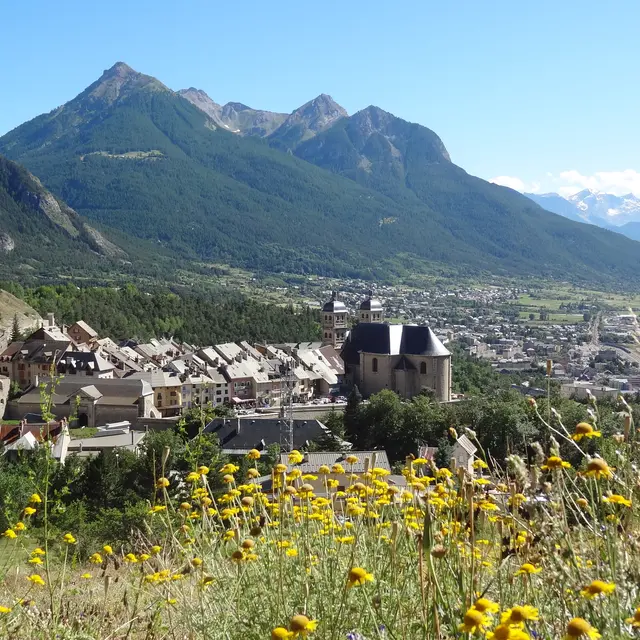
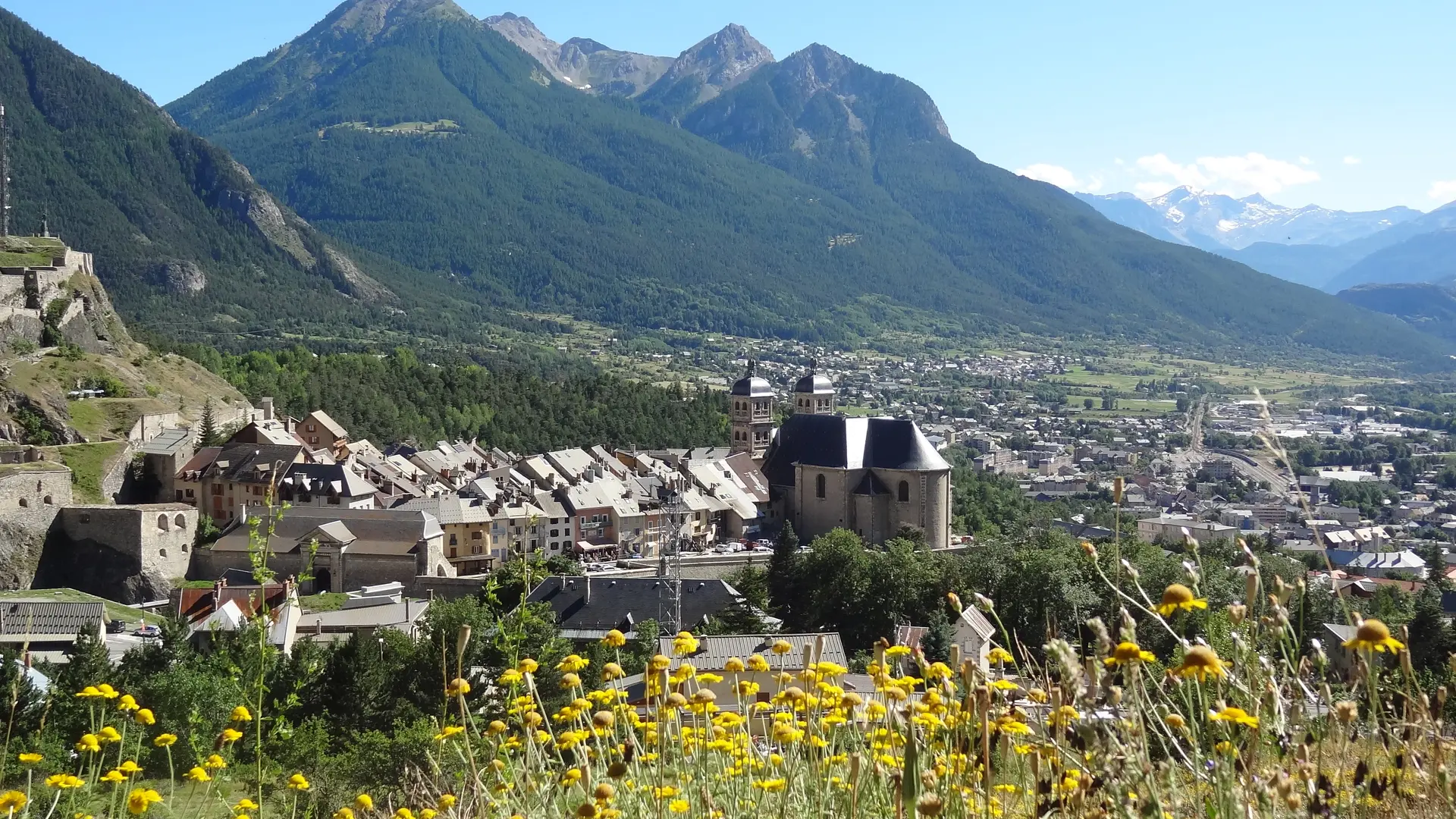
Located at the convergence of five valleys - Haute-Durance, Guisane, Clarée, Ayes and Cerveyrette - the town of Briançon occupies a remarkable geographical position.
- Collegiate church of Notre-Dame-et-Saint-Nicolas: The Collegiate church of Notre-Dame-et-Saint-Nicolas dominates the ramparts of Briançon. Its history is strongly linked to the Catholic policy of Louis XIV and therefore to the important military presence in the town in the 17th and 18th centuries.
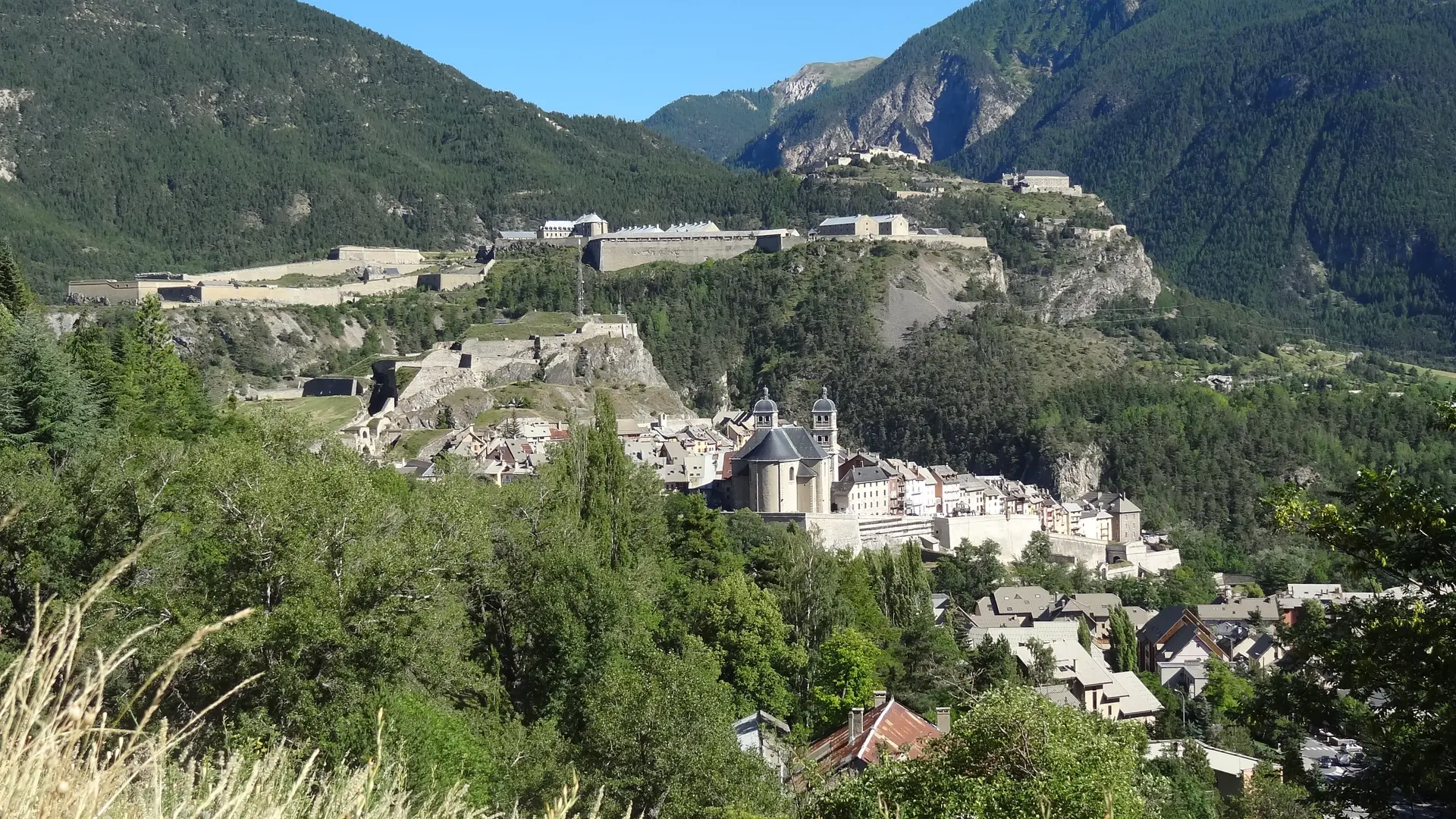
- Fort des têtes
Pivot of Briançon's defensive system, this fort replaced from 1721 onwards the entrenched camp on the Trois Têtes plateau, considered so important by Vauban for the town's defence. The fort des Têtes, or more precisely the fort des Trois Têtes, was built from July 1721 on the plateau of the same name.
Its construction followed Vauban's plans in 1700 to build an entrenched camp to prevent enemies from taking up positions above the town of Briançon.
The final works began after the end of the War of the Spanish Succession and the Treaty of Utrecht in 1713, which modified the border with the Duchy of Savoy. They lasted until 1734.
- Gates of Briançon
The gates of the towns were the object of particular care in the defence of the fortified towns. It was necessary to be able to come and go in times of peace while controlling the accesses and to be able to completely femer them in case of enemy attack.
Porte de Pignerol
Ancient gate of the town summit or of Piedmont, it closes the top of the town. It is preceded by a half-moon with a guardhouse named "d'Artagnan" which once housed the soldiers who were responsible for guarding it. Following Vauban's principles and in order to show the grandeur of the kingdom, it offers the enemy a majestic bossed decoration in the classical style composed of two pilasters and a triangular pediment.
Porte d'Embrun (Embrun Gate)
The former gate at the foot of the town, it gives access to the lower part of the town. Like that of Pignerol, it is preceded by a half-moon with a guardhouse called "Saint-Mars" which formerly housed the soldiers who were responsible for guarding it. Two successive drawbridges improve its defence.
Porte de la Durance
Once protected by a small moat and a drawbridge, it closed the town on the Durance front. It provides access to the path leading up to the Fort des Trois Têtes. Built of ashlar, it is decorated with a set of pilasters and crenellations.
These three gates are part of the fortified complex of Briançon inscribed on the UNESCO World Heritage List as Vauban's Fortifications.
The other two gates :
The Méanne Gate
In the Middle Ages, this gate allowed the visitor to cross the defensive wall formed by the houses. It gives access to the street of the same name which leads to the middle of the town. It was restored in the 20th century during the restoration of the house it adjoins.
Porte Dauphine
Opened at the beginning of the 20th century to make access to the old town possible for cars, it reproduces the classic model of fortified town gates with a false drawbridge and ashlar decoration.
It is responsible for the conservation, administration, animation and development of the heritage of the town, a Town of Art and History and a member of the Network of Major Vauban Sites inscribed on UNESCO's World Heritage List.
Asfeld Bridge
A true work of art, combining technical and aesthetic prowess, this bridge was built to link the upper town with the forts located on the left bank of the Durance.
Located in the rue du Pont d'Asfeld, this former chapel was built at the dawn of the 17th century to house the services of the Briançon Black Penitents brotherhood.
Located in the Vauban town, the Recollets Convent is made of rubble stone masonry covered with yellow ochre plaster
Status of France: Erected at the top of the site of the old castle, it is the work of the sculptor Antoine Bourdelle. Executed between 1923 and 1926, it was inaugurated in 1933.
- Maison du Parc national des Ecrins
The Maison du Parc national des Écrins is a place of welcome and information on the National Park, the natural heritage of the Briançonnais and the Écrins massif.
- Vauban's well
The well is located on the Place d'Armes, in the heart of the historic town. Vauban, passing through Briançon in 1692, had it dug in order to have a water reserve in case of a siege by an enemy army. It is 42 metres deep.
- Maison du Temple/Office de Tourisme
Built in 1574, it bears the name of Temple like the square on which it is built, itself an extension of the rue du Temple in which the Templar order had a house in the Middle Ages. Its polychrome decoration, preserved despite the fires, alternating curved and triangular pediments in the Italian Renaissance style, makes it one of the most valuable in Briançon.
- Former military hospital
Today the town hall and the community of communes of the Briançonnais. As early as 1768, the Army began to use the rooms of the Cordeliers convent to house sick soldiers. When in the 19th century the desire to modernise military installations was felt, it was decided to demolish the convent buildings in order to establish a more modern military hospital. It was inaugurated in 1831, based on a project by the engineer captain Barthélemy Gallice, known as Gallice-Bey.
The idea of developing the Schappe park came from Mr Delphin, commander of the engineers, for the Briançon square.
Read more