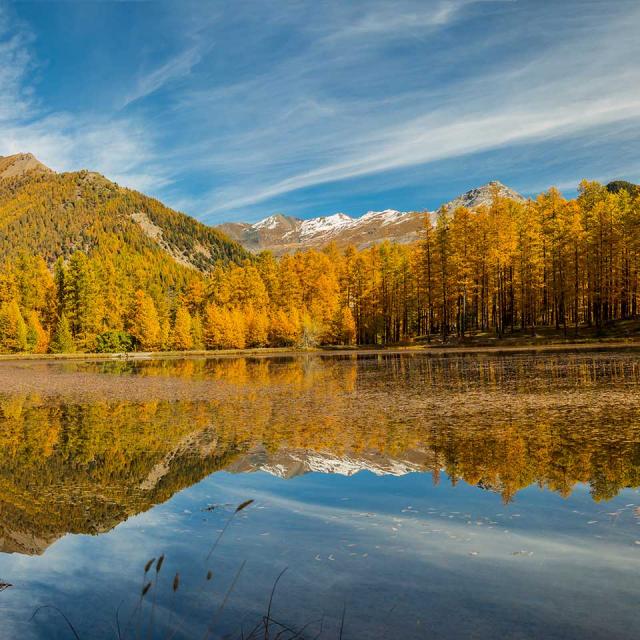
Autumn panorama and larch trees at Lake Roue in Arvieux in QueyrasLake Roue in Arvieux in the Queyras Regional Nature Park in the Hautes-Alpes
©Lake Roue in Arvieux in the Queyras Regional Nature Park in the Hautes-Alpes |TouN

Fir tree or larch?

Meet the king of the forests of the French Southern Alps

If the fir tree is the epitome of the Christmas tree, in the Sud, the star of the Alpine forest is without a doubt the larch tree. These two cousins with their striking likenesses are actually very different in many ways. Come and find out how to tell the difference, where you can find some beautiful larch trees and how their wood is used in the tradition of the Queyras.

So what is the difference between the larch and the fir tree?

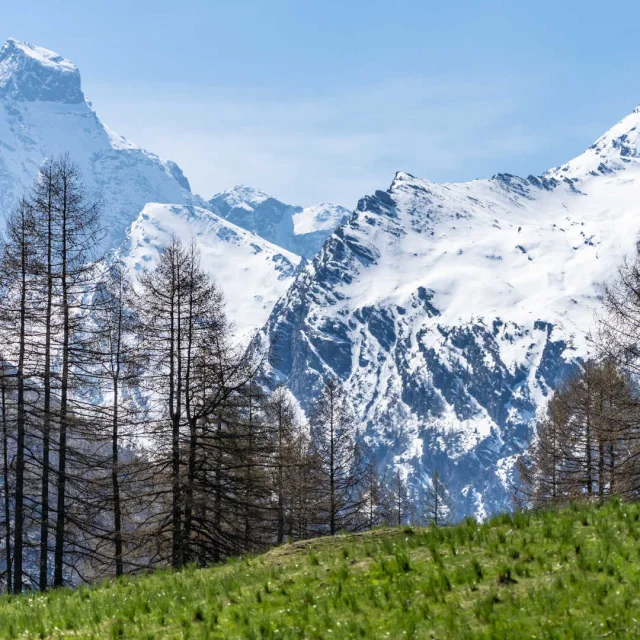
The fir tree and the larch are both emblematic trees of mountain landscapes, and are sometimes mistaken for each other. They are actually both conifers and from the same family of Pinaceae. But even though they are cousins and look vaguely alike, they are different in many ways. The larch has settled for the most part in the French Southern Alps, and is the only conifer to lose its needles in winter. During this period, it is easy to see the difference: if it is completely bare, it has to be a larch! But other clues will help you to see which is which: contrary to the fir tree whose needles are flat and implanted one at a time along the branch, the larch’s needles are soft and in tufts on small twigs. And as all self-respecting conifers, fir trees and larches produce cones, but the larch’s cones are smaller and stay longer on the tree. Last of all, as true mountain-dwellers who like to stay cool while they make the most of the sun, larches can grow up to an altitude of 2,400 metres, while their cousin prefers to stay much lower at a maximum of 1,600 metres.So there you are!
Activities to be done in larch forests

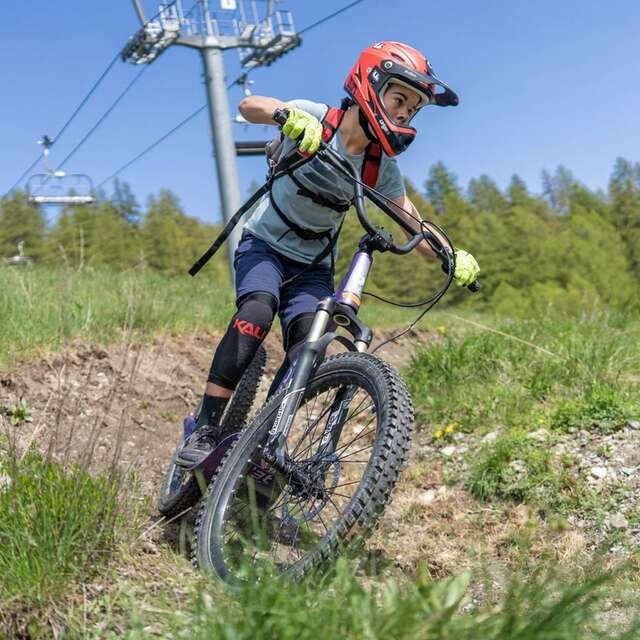
To go from theory to practice and have fun recognising larch trees, we suggest you put on your snowshoes or skis to go and meet them on the snow-covered slopes of Risoul, Ceillac, Serre Chevalier or Saint-Léger-les-Mélèzes. Outside the winter season, the larch trees await you, bedecked in their beautiful needles and can be seen during a hike or a mountain bike outing. Among the real musts, the hike around the Lac de Roue is sublime: entirely lined with a forest of larches, the lake has a unique panorama, whatever the season. In the Queyras Natural Regional Park, in Bramousse, a hamlet in the commune of Guillestre, a hiking trail guides you through the larch forest to take you to the notorious remarkable larch tree, a hundred-year-old tree with an imposing trunk. But for an alternative approach to this emblem of the French Southern Alps, be tempted by a gentle forest bath in the middle of the larches. A sensory, restful experience for a beautiful moment of connection with nature.

How larch wood is used

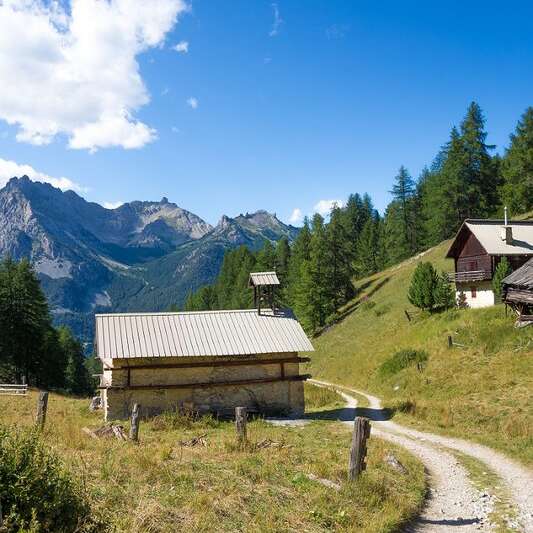
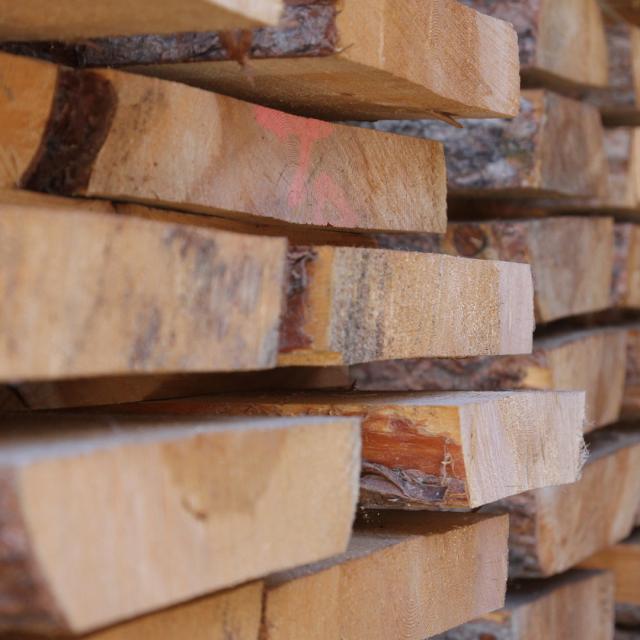
Famous for its rot-resistant and very solid wood, the larch is sometimes nicknamed “the mountain oak”, with the longest-lasting wood of all the conifers. Ideal for building work, it is used to form the traditional  “fuste” of the chalets in the Queyras, which consists of stacking and crossing hewn trunks. This very solid artisanal technique provides natural insulation and a beautiful rustic aesthetic. Larch wood is also used to make the structures of the traditional fountains in the Queyras, which you can see in Saint-Véran. They were once used as common water points for the inhabitants and the herds, with a round part known as a “tino” which was used as a drinking trough for the animals and a rectangular part known as the “batchas” which was used as a washhouse. And lastly, even if the Swiss stone pine is used to make the furniture and toys which are typical of the Qyeras savoir-faire, the larch is also used for these creations. Discover these objects with your own eyes in the shops of the artisans of the Queyras!