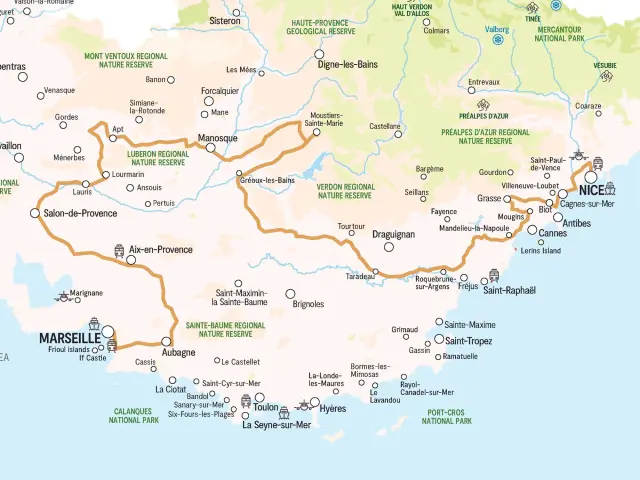
 Carte Tour 35
Length: 8 days, 7 nights
Total distance covered: 482 km
Main access points:
- Marseille airport
- Aix-en-Provence TGV train station
- Nice airport
- Nice-Ville train station
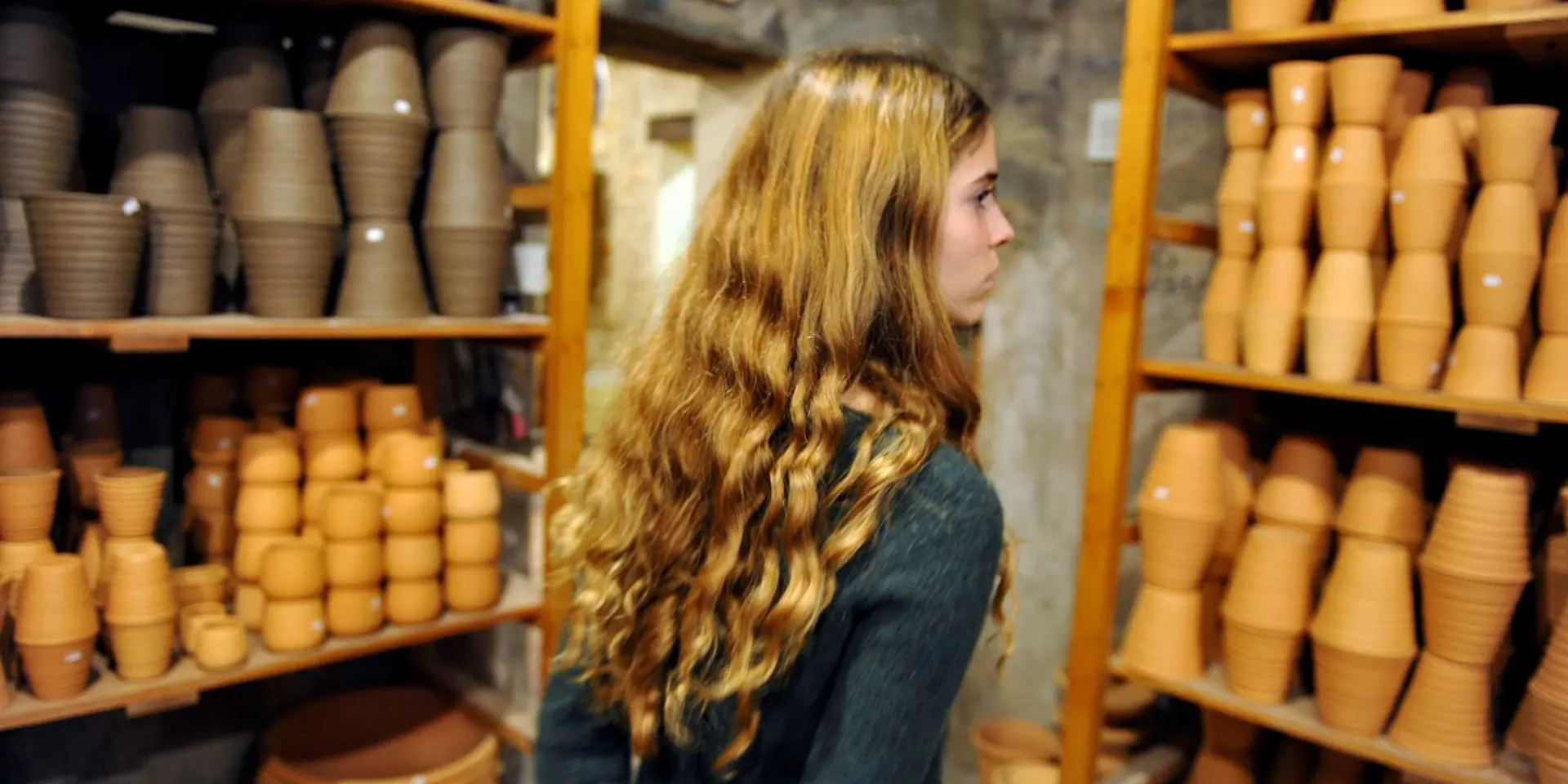 Handcrafted ceramics at the Poterie Ravel workshopCarte Tour 35
Length: 8 days, 7 nights
Total distance covered: 482 km
Main access points:
You will love
A stone’s throw from the Vieux-Port in the cosmopolitan quarter of Noailles lies Maison Empereur, a local insider’s address that has become an institution over time. Founded in 1827, France’s oldest hardware store is a genuine Aladdin’s cave, filled with thousands of household, culinary and cutlery items. After strolling through the charming streets of Le Panier, the city’s oldest quarter, it’s time to nibble a navette – delicious biscuits delicately flavoured with orange blossom – and discover the secrets of our iconic Pastis at Maison Yellow. Château Borély is a remarkable Provençal bastide home to the Museum of Decorative Arts, Earthenware, and Fashion, showcasing ceramics, furniture, glassware and objets d’art from the 18th century to present day.
Night in Marseille
Distance covered on Day 1: 0 km
Must-sees:
Marcel Pagnol’s beloved home town of Aubagne is a hub of arts & crafts, in particular pottery and earthenware – a tradition dating back over 2,000 years… Illustrious establishments such as the Poterie Ravel and Poterie Barbotine continue to skilfully uphold this ancient know-how, crafting beautifully-decorated pots, jars, plates and dishes in a vast array of colours. Aubagne is also the cradle of the Santon: these little clay figurines are used to adorn Provence’s traditional Christmas crib scenes. Maison Ferroni is a renowned local distillery where you can enjoy sampling an alluring range of rums, gin and whiskies with a strong regional identity – in moderation of course! Salon-de-Provence is also a master of the art of ancient skills including the quintessential Savon de Marseille soap – you can learn all about it at the Marius Fabre, Rampal Latour and Moulin à Grain soap factories. Last stop: Château de l’Empéri, an ambassador of Salon-de-Provence’s rich heritage, boasting typical Provençal architecture.
Night in Salon-de-Provence
Distance covered on Day 2: 90 km
Must-sees:
Clinging to a rocky outcrop overlooking the river Durance, the sublime village of Lauris in the Luberon Regional Nature Reserve, swathed in fountains, cobbled streets and sun-soaked scenery, is the epitome of authentic Provence. Unique in Europe, its Jardin Municipal Conservatoire des Plantes Tinctoriales – a proud holder of the “Remarkable Gardens” label – set at the foot of the castle, is dedicated to plants used to extract dyes for painting, textiles, cosmetics and food. Pastels, indigo, cosmos and madder bear witness to the traditional trades that have forged the village’s history. The garden tour, on the theme of “Plant Dyes and Ecology”, also aptly tackles modern-day challenges.
Night in Roussillon
Distance covered on Day 3: 60 km
Must-sees:
One of “France’s Most Beautiful Villages”, the village of Roussillon basks amid lavender fields, cherry orchards and olive groves. The astonishing palette of yellows, oranges and reds adorning its façades make it a place apart in the Luberon. And this exquisite show is no accident: Roussillon is actually built on the world’s largest ochre deposit. Ôkhra, the village’s ochre ecomuseum, invites visitors to delve into the world of ochre production with a tour of the old factory, now restored. The Bruoux Mines in Gargas are another must-do: these underground galleries, dug out between 1880 and 1950, offer another fascinating plunge into the area’s ochre mining traditions. The village is also home to the Lustrerie Mathieu museum and workshops founded in 1948. This fabulous chandelier maker is a holder of the “Living Heritage” label.
Night in Apt
Distance covered on Day 4: 14.5 km
Must-sees:
Set between the mounts of Vaucluse and the Luberon, Apt is a vibrant town redolent with genteel Provençal lifestyle. Its remarkable craft skills including candied fruit and earthenware date back centuries. But the village has also produced lavender essential oil for many generations. The family-run Distillerie des Agnels exalts Provence’s “blue gold” with a passion, through an exciting line-up of aromatherapy workshops. In the Verdon Regional Nature Reserve, at the gateway to the spectacular Verdon Canyon, the village of Moustiers-Sainte-Marie has been producing exquisite earthenware since the 17th century. Its Musée de la Faïence, dedicated to the village’s world-renowned expertise, showcases a tempting array of unique pieces. You can also enjoy a tour of the Manufacture Lallier to learn all there is to know about traditional pottery making.
Night in Gréoux-les-Bains
Distance covered on Day 5: 125 km
Must-sees:
France’s third-largest spa town, heralded for the healing and beneficial properties of its waters, Gréoux-les-Bains in the Manosque area was once described by Jean Giono as “the romantic oasis of the Verdon”. And true enough, its cobbled lanes, 12th-century Templar castle, lavender fields and intense blue Esparron lake certainly form an enchanting setting. Further south in Salernes, in the lush green landscapes of Provence Verte, the Terra Rossa ceramics centre showcases an impressive array of over 7,000 tiles, displayed by period and production area, and traces the history of French decorative ceramics since medieval times. Last but not least, Château de Saint-Martin in Taradeau – a charming winegrowing village in the Var area – offers an alluring choice of elegant and refined wines you can taste on site, while the nearby Liquoristerie de Provence is a master of the art of reviving and resurrecting traditional regional liquors to create new classics.
Night in Grasse
Distance covered on Day 6: 146 km
Must-sees:
The cradle and world capital of perfumery, harbouring know-how listed as UNESCO Intangible Cultural Heritage in 2018, Grasse is home to three historic perfumery houses: Fragonard, Molinard, and Galimard. Their factories, all open to the public, unveil the time-honoured art of crafting delicate fragrances, from distillation through to maceration. In the medieval hilltop village of Biot, surrounded by hills swathed in mimosa and olive trees, the Verrerie de Biot has been flying the flag of another iconic Côte d’Azur craft since 1956. Here, molten glass is blown to create unique glasses, carafes and candle holders in colours inspired by Mediterranean landscapes – perfect for creating a joyful, elegant and sunny summer table décor.
Night in Nice
Distance covered on Day 7: 46.5 km
Must-sees:
On the Côte d’Azur, flowers aren’t just grown to create wonderful perfumes and floral arrangements: talented confectioners such as the Confiserie Florian crystallize roses and violets from the Grasse area to capture their aromatic power. Founded in 1921, the confectionery itself is located in Loup gorge, but you’ll find a fabulous shop on Port Lympia in the historic quarter of Nice offering a tempting array of candied fruits, chocolate bars and homemade tangerine, lemon, quince and bergamot jams. Their biscuits, fragrant teas, fruit jellies and colourful Calisson candies are simply irresistible too. Opt for a tour to delve into the manufacturing secrets of these renowned sweet treats.
Must-sees:
Other destinations to explore on the same theme: Arles, l’Isle-sur-la-Sorgue, Forcalquier, Valensole
Depending on the demands of your custurmers, please contact from the list below the professional best suited to respond.
Mondoramas Voyages (Groups)
[email protected]
+33 (0)442 360 374
mondorama.com