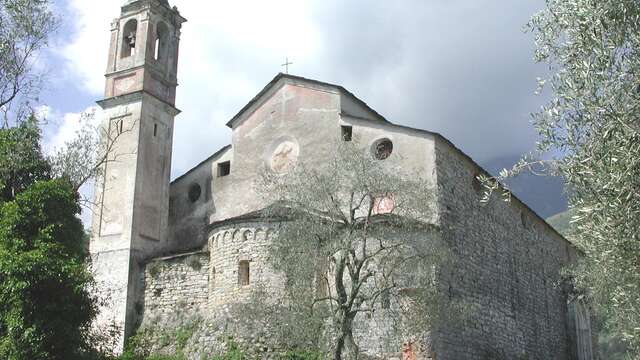




The lute will be presented here for the first time in surprising variations in this almost entirely improvised programme. A moment of musical meditation to the gentle sound of this intimate instrument in these magnificent chapels rarely opened...
Towards the end of the 15th century, the lute became the instrument of choice at the European courts. Considered as the lyre of Orpheus by the humanists, it enchanted the courtiers with its sounds and harmony.
People like Leonardo da Vinci sought new sounds by inventing new instruments.
This period of high humanistic and cultural development was marked by great discoveries and experiments in many fields, including music.
The first music written for this instrument dates from this avant-garde passage of the century and, in 1507, the first printed book of instrumental music was published in Venice. Lute players such as Marco Dall'Aquila, Giovan Maria Giudeo, Joan Ambrosio Dalza and above all the "cantori al liuto" such as Bartolomeo Tromboncino and Marchetto Cara were sought after by the most important courts, such as that of the Este in Ferrara, the Gonzagas in Mantua and the Medicis in Florence. But the authors of the first works for lute were above all great improvisers, inventing extemporaneously polyphonic pieces (ricercari), various dances, such as the piva, the bassadanza and the calata, and verses in ottava rima.
People like Leonardo da Vinci sought new sounds by inventing new instruments.
This period of high humanistic and cultural development was marked by great discoveries and experiments in many fields, including music.
The first music written for this instrument dates from this avant-garde passage of the century and, in 1507, the first printed book of instrumental music was published in Venice. Lute players such as Marco Dall'Aquila, Giovan Maria Giudeo, Joan Ambrosio Dalza and above all the "cantori al liuto" such as Bartolomeo Tromboncino and Marchetto Cara were sought after by the most important courts, such as that of the Este in Ferrara, the Gonzagas in Mantua and the Medicis in Florence. But the authors of the first works for lute were above all great improvisers, inventing extemporaneously polyphonic pieces (ricercari), various dances, such as the piva, the bassadanza and the calata, and verses in ottava rima.