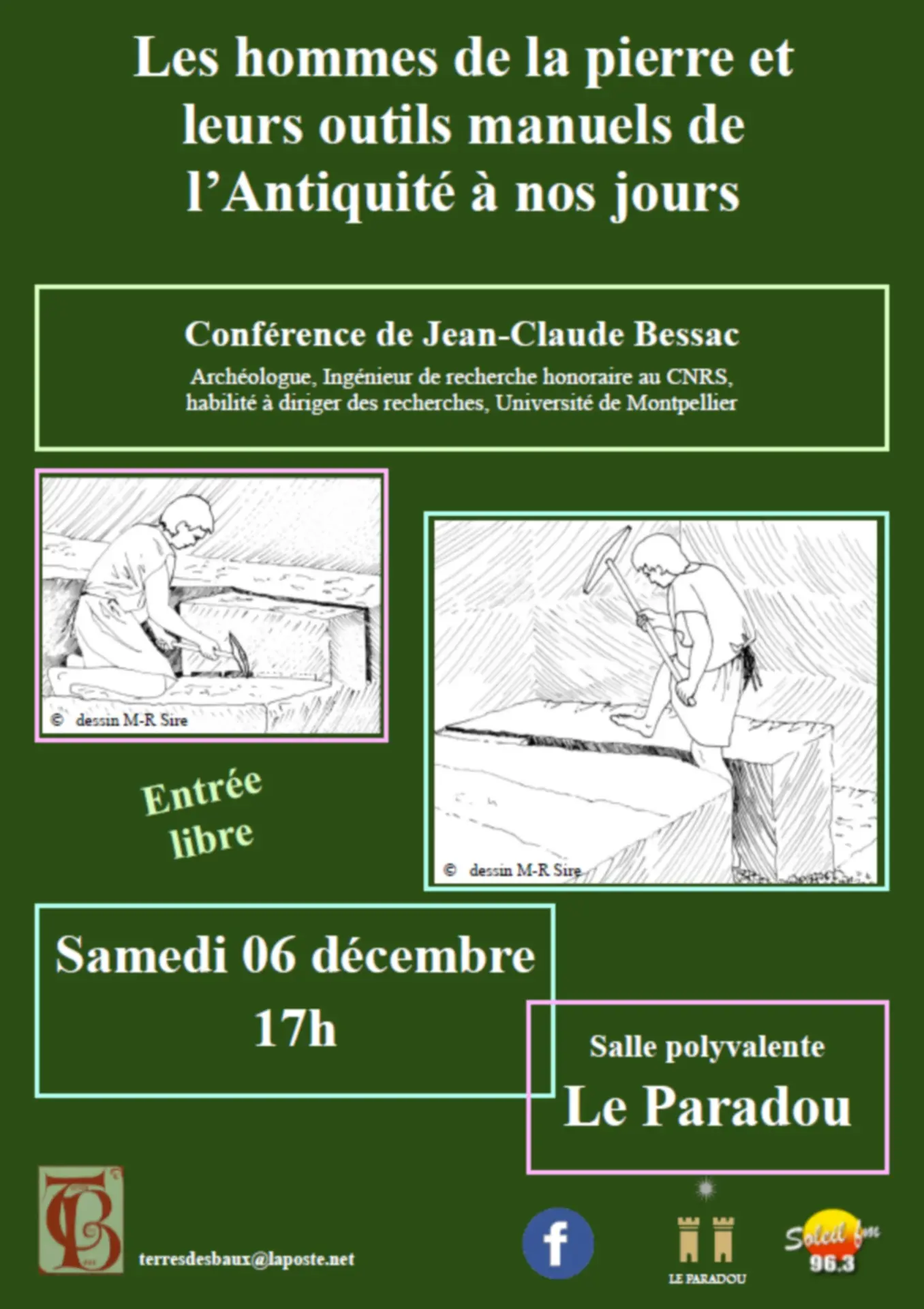
It will be given by Jean-Claude Bessac, archaeologist, honorary research engineer at the CNRS, authorised to supervise research, University of Montpellier.
Presentation:
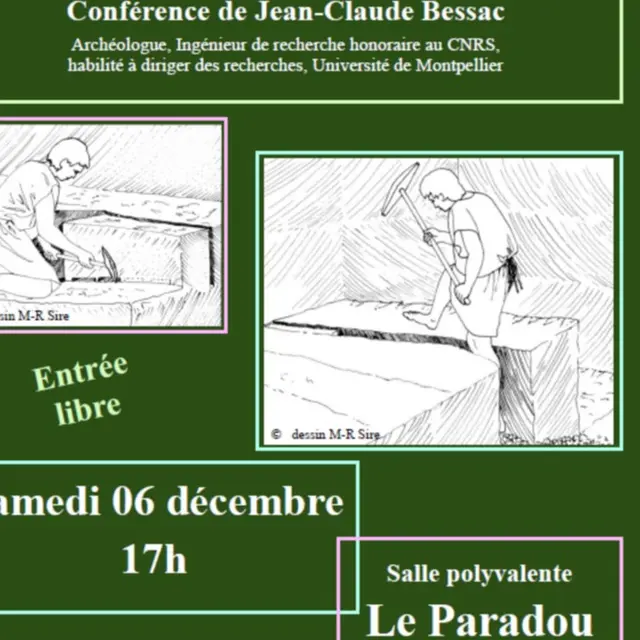
"We are all familiar with prestigious monuments such as the Maison Carrée commissioned by Emperor Augustus or the Palace of Versailles associated with King Louis XIV, but the true craftsmen behind these works and their techniques are slowly fading into oblivion. The mechanisation of stonework and now its digitisation, not to mention AI, are profoundly dehumanising this activity while significantly altering our perception of these ancient works. Yet it was skilled craftsmen who produced them, from the quarry to the final monument, which was often carefully decorated.
Over the centuries, stoneworking tools have been specially forged for this work. For both stonemasons and quarrymen, they were often custom-made at the request of each craftsman to adapt them to the specific requirements of their orders, their personal habits and even their physical characteristics; this is why tools cannot be shared. The same tool can produce very different marks depending on the desired result, the position of the craftsman and the nature and hardness of the stone. In the absence of archaeological discoveries or detailed descriptions of these tools, which is most often the case, only the marks they leave on the stone can tell us about their use and shape.
Often mistakenly considered to be rough or hard labourers, traditional quarry workers must also have a very broad knowledge of various types of rock and acquire precise techniques and movements that have nothing in common with mining work. These preconceived ideas mean that this speciality, its tools, movements and rules of the trade are the least known.
Regardless of the period under consideration, written sources on these stone workers and their tools are extremely rare and often distorted by witnesses who were not part of these working populations. We must therefore resort to archaeological and ethnographic approaches to rediscover this heritage, which has now been completely neglected, and perhaps save it from oblivion. This is the goal of our research.
Read more