



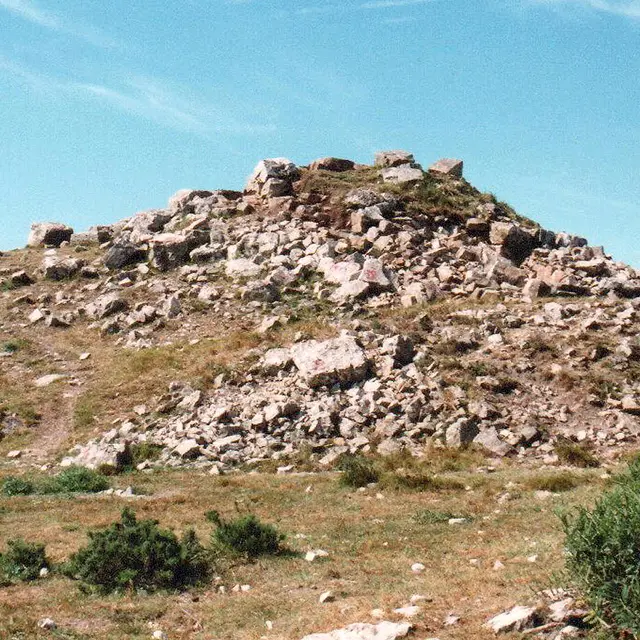
The Cime de la Plastra site is a religious complex that dates back to the 5th century BC, at the beginning of the Second Iron Age.
Within a vast enclosure measuring 190 m by 80 m, various structures form the religious heart of the site, including a main monument at the top that has been transformed several times over the centuries. The first construction elements (upper platform, enclosure, moat), dated to the late-Republican period, at the end of the 2nd century BC, were built for a local population and for major regional pilgrimages. The Augustan period, up until the change of era, was equipped with a votive cremation area, a hollow altar for collecting animal ashes and a forge. After being relatively abandoned during the first two decades of our era, the site became a military cult centre during the Tibetan period, until it was finally abandoned in the 4th century AD. è., it became a military cult centre, as confirmed by the artefacts unearthed.
