


When writing the Scientific and Cultural Project, the museum's teams took the time to reflect on what makes up its unique identity, the strengths and weaknesses of its collections, and the prospects for the years to come.
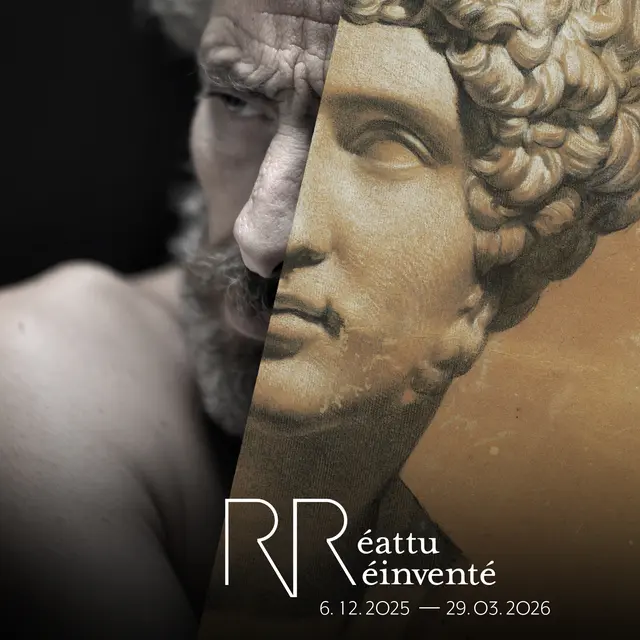
Strategic questions then arose: what framework should be adopted for the permanent exhibition? What direction should we take for future acquisitions and restorations? What topics should be addressed in future exhibitions? And, above all, what role should the museum play in Arles' increasingly rich and diverse cultural and artistic ecosystem? With its experimental approach, the museum is now reinventing itself in the form of a special exhibition featuring almost 100 artists and 300 works, reaffirming its status as the art museum of the city of Arles, sensitive to its heritage while remaining open to the most varied forms of artistic creation.
The new itinerary no longer follows a chronological trajectory from ancient to contemporary art, but rather a thematic logic, nourished by the dialogue between eras and fully embracing the diversity of the collections, artistic genres and imaginations. Throughout the rooms, 5 themes unfold in succession: History, Portraiture, the Body, Landscape and Image. In a constant back-and-forth movement, the ancient art collection, representative of an academic tradition that privileges History as its subject, takes on new meanings through contact with the photographic, video and sound art collections, while the contemporary art collection, made up of works by artists who have helped challenge this academicism to promote new ways of representing and creating, reweaves sometimes unsuspected links with the works of the past.
Last but not least, guest artists such as Christine Crozat, Jean-Pierre Formica, Katerina Jebb and Julie Rousse take over emblematic areas of the museum with installations, photographs and sound works that echo the collections... like the nymph Echo, infatuated with Narcissus in Jacques Réattu's last great painting, which will be restored just 200 years after its creation and unveiled to the public for the first time since the Second World War.
The new itinerary no longer follows a chronological trajectory from ancient to contemporary art, but rather a thematic logic, nourished by the dialogue between eras and fully embracing the diversity of the collections, artistic genres and imaginations. Throughout the rooms, 5 themes unfold in succession: History, Portraiture, the Body, Landscape and Image. In a constant back-and-forth movement, the ancient art collection, representative of an academic tradition that privileges History as its subject, takes on new meanings through contact with the photographic, video and sound art collections, while the contemporary art collection, made up of works by artists who have helped challenge this academicism to promote new ways of representing and creating, reweaves sometimes unsuspected links with the works of the past.
Last but not least, guest artists such as Christine Crozat, Jean-Pierre Formica, Katerina Jebb and Julie Rousse take over emblematic areas of the museum with installations, photographs and sound works that echo the collections... like the nymph Echo, infatuated with Narcissus in Jacques Réattu's last great painting, which will be restored just 200 years after its creation and unveiled to the public for the first time since the Second World War.