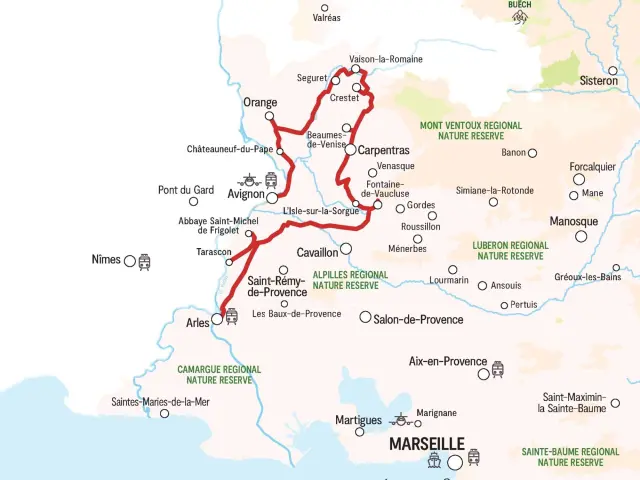
Carte Tour 18
Length: 6 days, 5 nights
Total distance covered: 204 km
Main access points:
- Marseille airport
- Avignon TGV train station
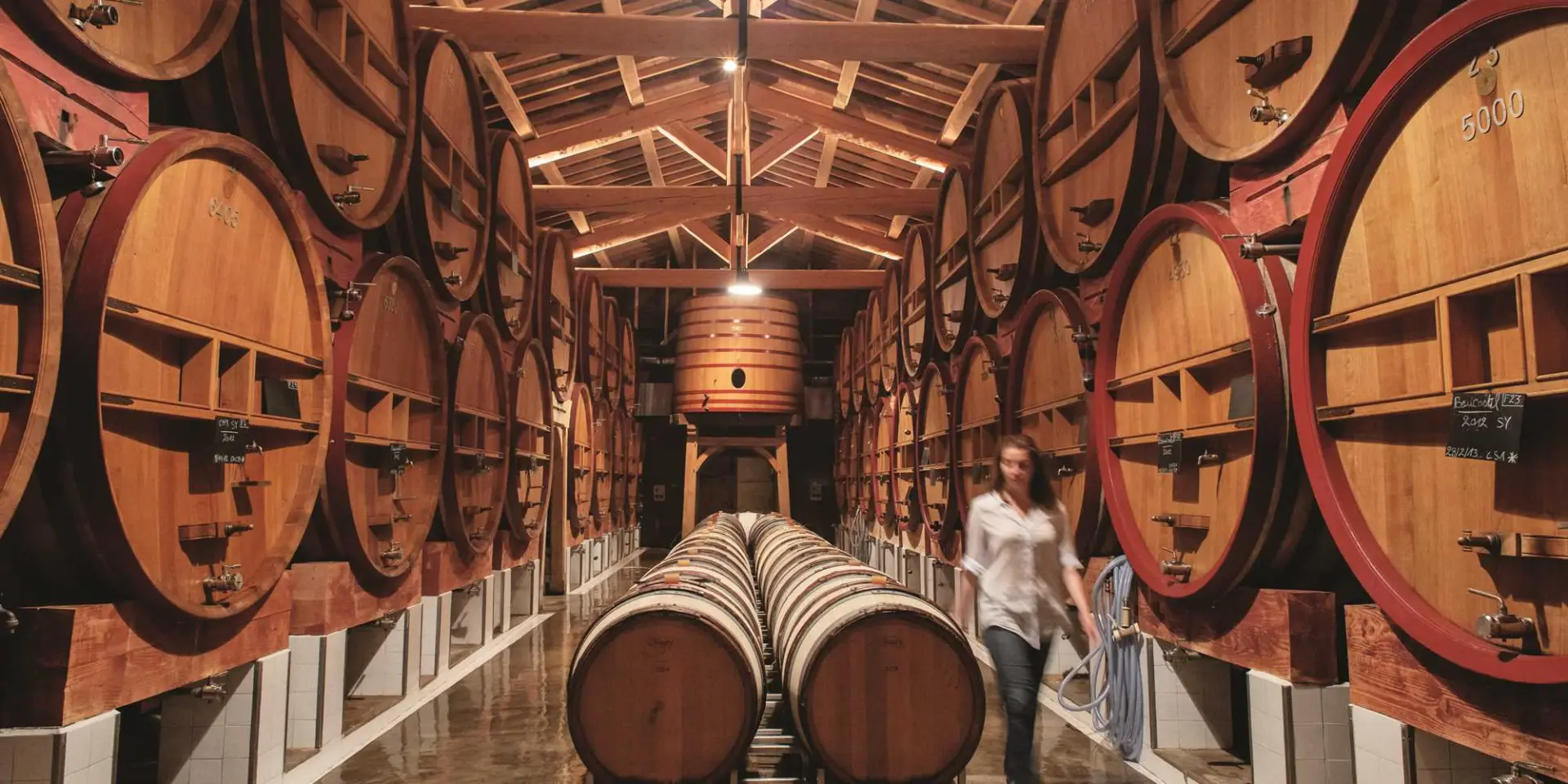
chai viticole
|
Carte Tour 18
Length: 6 days, 5 nights
Total distance covered: 204 km
Main access points:
You will love
A 14th century papal city and genuine open-air museum, Avignon boasts a rich historic heritage. The Pont Saint-Bénézet – the famous Pont d’Avignon – is a prime example. And of course, there’s the majestic Popes’ Palace, the medieval period’s largest Gothic building, now a UNESCO World Heritage site. Just a few metres from this architectural gem, Le Carré du Palais, a local institution and must-do for foodies, invites you on a tasting experience in the wonderful world of Côtes du Rhône and Rhône Valley AOC wines. A wine cellar-come-wine school-come-wine bar-come-restaurant, this fantastic venue serves the finest regional produce, including trout from Isle-sur-la-Sorgue and truffles from Mont Ventoux. After your gourmet extravaganza, head to the Bains Pommer: these Belle Époque public baths, designed in typical Art Deco style, tell the story of bathing practises over the previous century.
Night in Avignon
Distance covered on Day 1: 0 km
Must-sees:
Perched on a hilltop surrounded by vineyards, the medieval village of Châteauneuf-du-Pape, lined with picturesque lanes and outstanding historical heritage, oozes authentic charm. Enjoy admiring the Château des Papes, the summer residence of the Popes of Avignon in the 14th century, and Church of Notre-Dame de l’Assomption, built in the 12th century. But Châteauneuf-du-Pape is, of course, especially famed for its prestigious, world-famous vineyards, producing powerful, full-bodied reds. Many of the local wine estates and cellars welcome wine lovers with open arms, promising a genuine feast for the senses. Among them you’ll find Vinadea, a hub of Châteauneuf-du-Pape AOC wines showcasing the many and varied styles the appellation has to offer.
Night in Châteauneuf-du-Pape
Distance covered on Day 2: 18 km
Must-sees:
Founded in 35 BC by Roman army veterans under the name Arausio, the vibrant Provençal town of Orange is home to a remarkable Roman Theatre and Triumphal Arch, both UNESCO World Heritage sites. The former, built in the 1st century AD during the reign of Augustus, is exceptionally well-preserved. True to its original vocation it continues to host premier events including the Chorégies d’Orange, an international opera and classical music festival established in 1869. Located at the northern entrance to the town, the Triumphal Arch measures an impressive 19 metres in length and 20 metres in height. The remains of the old temples on the hill, city wall and aqueduct complete this exceptional ensemble.
Night in Vaison-la-Romaine
Distance covered on Day 3: 38 km
In Vaison-la-Romaine, the remains of the ancient Roman city of Vasio Vocontiorum, spread between the sites of Puymin and La Villasse, promise a moving immersion in everyday life in Roman times. Stroll through what was once home to thermal baths, shops and luxurious homes with gardens – domus – where mosaics and sculpted décors can still be admired. From the ancient theatre perched atop Puymin Hill, still a venue for concerts and shows, the panoramic vistas over the town are simply magnificent. Next, from the hilltop medieval village of Crestet, you will glimpse the mysterious silhouette of the Dentelles de Montmirail in the background: a fascinating mountain range sculpted into lacy shapes by erosion. Last on the list, Beaumes-de-Venise is the perfect place to taste the famous local Muscatel, a naturally sweet white wine with deliciously fruity notes
Night in Fontaine-de-Vaucluse
Distance covered on Day 4: 49 km
Must-sees:
The town of Fontaine-de-Vaucluse grew up around the spectacular source of the Sorgue River – Europe’s largest resurgence. A true geological wonder, this natural site has shaped the village’s history since medieval times. Waterwheels, a paper mill – still in operation – and the gardens of Petrarch all tell the story of the age-old ties forged between people and this emerald-green river. Nestled on the banks of the Rhône, Tarascon’s unmistakeable medieval castle, a blend of Gothic and Renaissance styles, gazes out over the river. The town also harbours the Musée Souléaido, dedicated to Provence’s rich textile history. Nearby, Saint-Michel de Frigolet Abbey, a haven of peace in a verdant setting, still home to a religious community, invites stillness and contemplation.
Night in Arles
Distance covered on Day 5: 62 km
Must-sees:
The capital of Camargue, boasting a remarkable historical legacy of Roman and Christian monuments now UNESCO World Heritage sites, the city of Arles is also a hub of arts and culture. Located just outside the city, Montmajour Abbey is one of Provence’s foremost religious heritage monuments. Founded in the 10th century on a rocky islet once surrounded by marshes, it comprises a Benedictine abbey, defensive tower, cloister and chapel of Saint Peter, carved directly into the rock. A genuine immersion in medieval monastic life, this site also invites visitors to marvel at breathtaking views over the plain of Arles.
Distance covered on Day 5: 37 km
Must-sees:
Other destinations to explore on the same theme: Carpentras, l’Isle-sur-la-Sorgue
Depending on the demands of your custurmers, please contact from the list below the professional best suited to respond.
Mondoramas Voyages (Groups)
[email protected]
+33 (0)442 360 374
mondorama.com
Vidivino – Azur Wine Tours (FIT)
[email protected]
+33 (0)6 12 124 212
www.azurwinetours.com