


Description
The hike begins at 10 a.m. at the Musée de la Fleur and follows a trail to the Moulin de Palisson. You can have a picnic there (return on your own). Bring water and wear sturdy shoes.
The tour begins at the Flower and Olive Tree Museum (air-conditioned), with its “Jardin des Heures.”
The history of flowers in Ollioules is long and rich, with expertise passed down from generation to generation. The city has chosen to highlight the period it knows best, spanning from the mid-19th century to the present day. To tell this story, the city has created a museum showcasing objects, machines, photographs, and documents—all passionately researched and preserved by the town with the expertise of the Ollioules Heritage Research Group and Chemins du Patrimoine, two associations that have been working for several decades to preserve small-scale rural heritage.
Creating a museum involves not only exhibiting, but also preserving, restoring, and, above all, raising awareness of the techniques used and the patient efforts of farmers to produce that fleeting marvel: the flower. The goal is to showcase what this intense, collective activity was like and to help visitors better understand this aspect of local heritage in an enjoyable and enriching way. This project reflects a deep attachment to the agricultural landscape in which the local population has its roots. It was spearheaded by elected officials and volunteers such as Annick Buisson-Etienne, Didier Martina-Fieschi, Guy Philippeaux, Raoul Decugis, and Daniel Patrie.
Ollioules, the land of flowers, has also long been a land of olive trees and olive oil. The museum dedicates a section to olive oil extraction techniques, linked to the Ollioules immortelle, which once bloomed at the foot of the olive trees and contributed to the town’s prosperity.
A flower-filled public garden, the Jardin des Heures, has been created next to the museum, on the banks of the Reppe. The “Heures” (Hours) evoke the prayers that marked the rhythm of religious life when the museum space was still the chapel of the Observantine convent. Once times of prayer, these are now moments for peaceful strolls, sheltered from the hustle and bustle of city life.
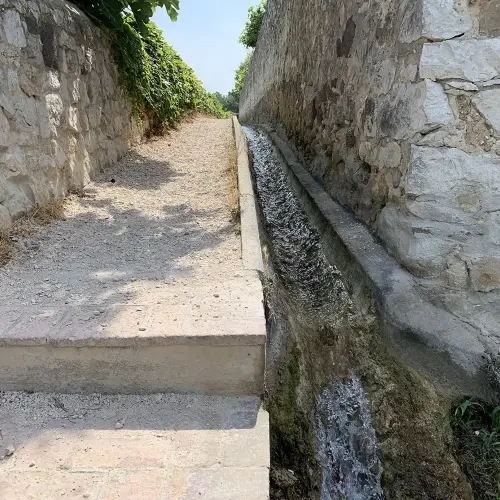
The tour continues toward the Canal des Arrosants, which leads to the Moulin de Palisson. On the path that runs alongside part of the canal, set out on a refreshing stroll along the water, combining a leisurely walk with the discovery of local heritage. Learn about the mechanisms and inventions that channel, distribute, span, and harness the mechanical power of water: bridges, waterwheels, noria wheels, and mills.