Tourism in Marseille

Marseille, the oldest city of France, overflows with cultural, architectural and artistic treasures to discover. It is a tourist destination particularly appreciated by the French and foreigners. Between tradition and modernity, the city of Marseille is waiting for you. From the Vieux Port (Old Port) to the Calanques (rocky inlets) by way of the Panier district and the Corniche facing the sea, you will certainly be amazed by the beauty of the cosmopolitan city. Beyond the game of Pétanque and its football club Olympique de Marseille (OM), Marseille reveals itself behind its emblematic monuments such as the Château d’If, Les Docks, the Palais de la Bourse, the Fort Saint Jean fortification, Notre-Dame de la Garde, the Palais Longchamp, the Marseille Cathedral of la Major to name just a few.

As the Mediterranean capital, Marseille has a fascinating heritage, a lively culture and Provençal specialities. An ideal base for exploring Provence and the calanques.

Key points to remember :

Must-sees

    • MUCEM (Museum of European and Mediterranean Civilisation)
    • Vieille Charité (museums, cinema, bookshop)
    • Musée d’Histoire de Marseille, Musée Cantini, Musée Grobet-Labadié…
    • Old Port, Panier district, Notre-Dame de la Garde
    • Beaches, creeks, Prado market

Culture, traditions & know-how

    • Traditional markets, Marseilles specialities: bouillabaisse, pieds-paquets, panisses, etc.
    • Marseille soap, local craftsmen, Mediterranean products
    • Events : festivals, exhibitions, galleries, street art

Access and mobility

    • Marseille Saint-Charles station (TGV), Marseille-Provence airport, seaport
    • Tram, metro, bus, bicycles, calanques/boat connections
European Capital of Culture in 2013, Marseille aims to be a destination of choice for art and culture enthusiasts. Still in 2013, Marseille inaugurated the MuCEM, a museum dedicated to the Mediterranean civilizations of the 21st century. It is today one of the most visited museums. In the historic center of the city, you can also go to La Vieille Charité. There, you will find many cultural structures: the Mediterranean archaeology museum, the African, Oceanic and Native American art museum (MAAOA), but also a cinema, a bookshop…

While exploring the city, alone or with a guide, immerse yourself in the local culture and discover the traditions of Marseille. Relax on the terrace of a restaurant, under the southern sun, to taste Marseille’s cuisine. Let yourself be tempted by the bouillabaisse, a fish specialty, or by the pieds paquets, the panisses, etc. If you were to bring back only one souvenir of Marseille, no doubt you would choose the famous soap. Particularly effective and renowned, it can be used to clean skin, hair, clothes, floors, walls… Ideally located, the Bouches-du-Rhône prefecture, in the Provence-Alpes-Côte d’Azur region, is a starting point for various tourist destinations accessible by train, plane and boat.

Notre-Dame de la Garde

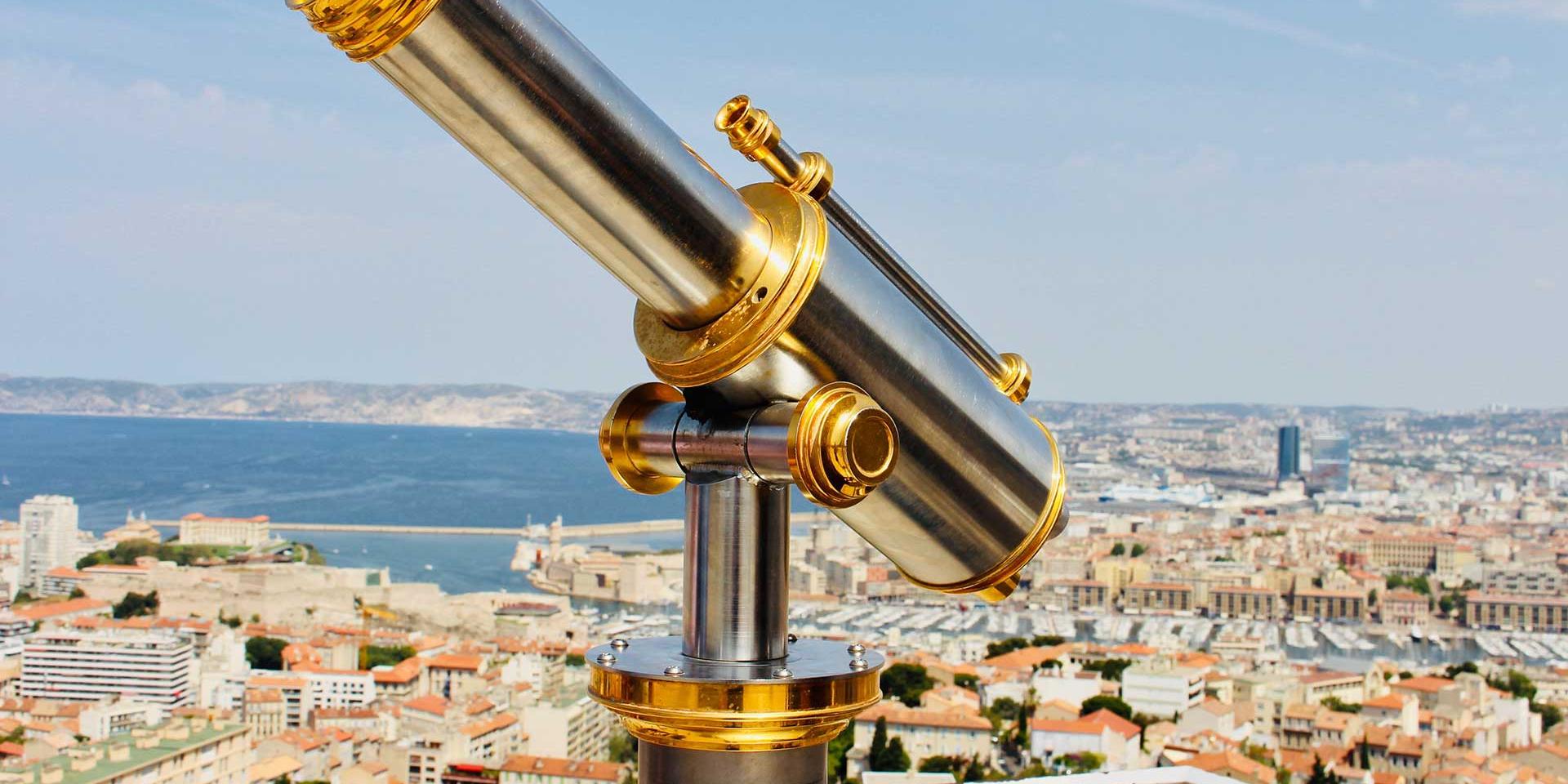
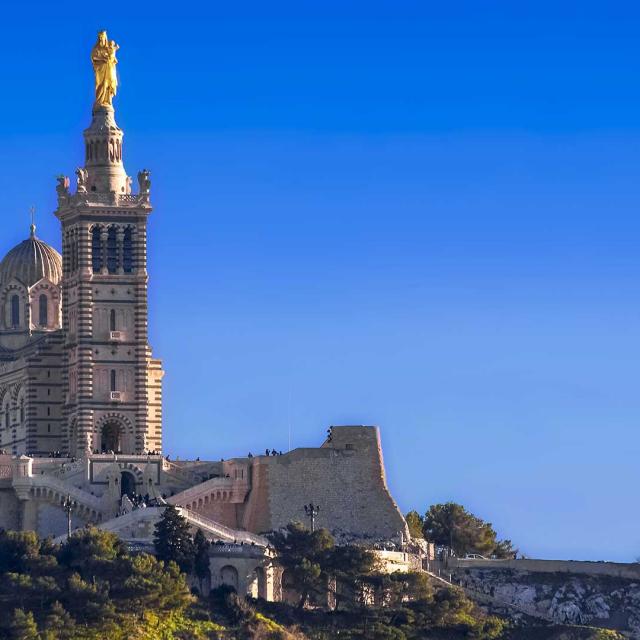
Notre-Dame de la Garde, more commonly called « Bonne Mère » by the people of Marseille, watches over the sailors and fishermen. Overlooking the city from the top of its hill, it offers a remarkable view. The basilica is an old observation post, and François I built a fort there to defend the city. It was only after a few years that it would become a true place of pilgrimage when Eugène de Mazenod (Bishop of Marseille) commissioned the great basilica. A true symbol of Marseille, the Basilica Notre-Dame de la Garde is visible throughout the city. The site is the most visited monument of the city and has been listed since 1917.

The Palais Longchamp

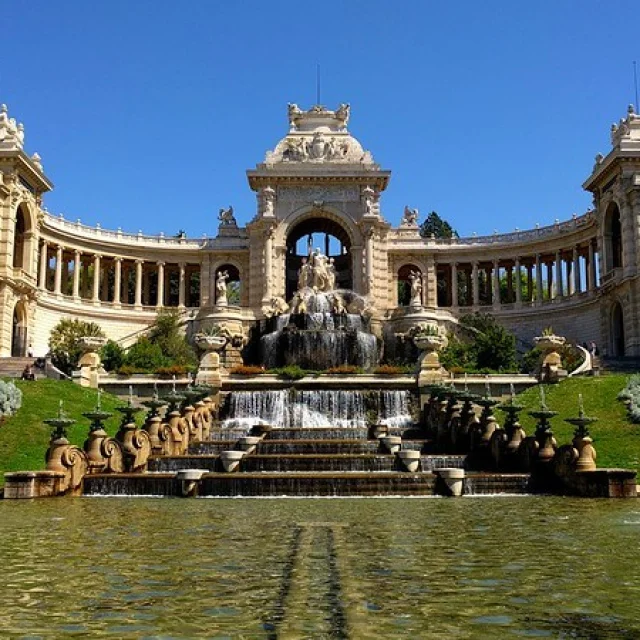
Located in the 4th arrondissement of Marseille, the Palais Longchamp is a water tower made up of a garden and two museums. The building was built by the architect Henry Espérandieu, who also designed the Notre-Dame de la Garde basilica, to store drinking water coming from the Durance River. Several artists participated in the beautification of the park with the creation of sculptures and a fountain. A visit to the Palais Longchamp is an opportunity to discover the Musée des Beaux-Arts (Museum of fine arts), the oldest museum in Marseille, which preserves paintings and drawings dating from the 16th to the 19th century. You can also stop at the Natural History Museum of Marseille, which has cabinets of curiosities dating from the 18th century.

The Calanques National Park

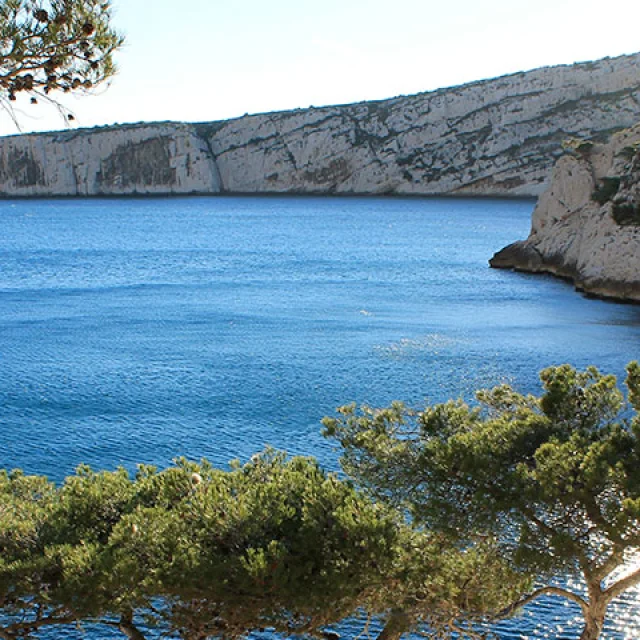
The Calanques National Park is known throughout the world for its breathtaking scenery. Surrounded by cliffs, sea, fauna and flora, nature lovers will never get tired of it. Hiking, diving, canoeing and kayaking… On land, on the sea or underwater, different activities allow you to discover the Calanques. Once deserved, the rocky inlets reveal themselves to you with idyllic coves such as Port Pin, En-Vau, Sugiton, Morgiou or Sormiou.

La Canebière

La Canebière, the famous high street of the old quarter, connects the Old Port of Marseille to the Église Saint-Vincent-de-Paul church (Les Réformés). It was a true symbol of elegance with its chic hotels, department stores and posh cafés. Performance venues such as theaters were later set up there as well as the santons fair, part of the Christmas tradition. Nearly 1 km long, La Canebière is a lively district where you can find many shops, cafés, restaurants, the old Hôtel Louvre et Paix, the Monument des Mobiles… La Canebière is a parade route when demonstrations that go down to the Town Hall or the Prefecture are held, or when the French National Day and the carnival are celebrated.

Le Panier

A real open-air museum, the mythical and picturesque Panier district can be discovered through its narrow streets. The district resembles a small village in Provence where it is good to live. Colorful facades, street art, shops of craftsmen and designers… a visit to Le Panier is a must during your holidays in Marseille. For a gourmet break, sit on the terrace in Place de Lenche and admire the view of the Old Port.

Practical information

    • Road service: A7-A51 Highways (from Aix or Lyon), A55 Highway (from Aix, Fos, Lyon, Montpellier or Barcelona) and A50 Highway (from Cassis, Toulon, Nice, Genoa)
    • Air access: Marseille Provence Airport
    • Railroad access: Saint-Charles station
    • Sea access: autonomous port

FAQ

All about Marseille
  • What must you do on your first visit to Marseille?

    If you’re visiting Marseille for the first time, you’ll want to take a stroll along the Old Port, explore the colourful streets of the Panier, admire the view from Notre-Dame de la Garde, swim in the calanques, try an authentic bouillabaisse and watch the sun set over the Corniche.

  • What are the must-see museums in Marseille?

    The MUCEM, the Musée d’Histoire de Marseille, the Vieille Charité, the Musée Cantini, the Musée des Beaux-Arts, the Musée Grobet-Labadié, and the Musée de la Mode.

  • Where can you enjoy a real bouillabaisse in Marseille?

    For an authentic bouillabaisse in Marseille, there are three must-try restaurants: Chez Fonfon, nestling in the picturesque Vallon des Auffes, Chez Michel, a historic institution near the Catalans beach, and Le Rhul, a landmark restaurant on the Corniche with uninterrupted sea views.

  • What are the best areas to visit or stay in Marseille?

    The best areas to visit or stay in Marseille are the Old Port, the Panier, Vauban and Notre-Dame de la Garde, Roucas-Blanc and the Corniche, Cours Julien and La Plaine, Estaque, Prado and Pointe Rouge, as well as Endoume and Malmousque.

  • What are the best areas to go out at night in Marseille?

    Marseille is full of lively districts where you can make the most of the nightlife. The Cours Julien and Notre-Dame du Mont are renowned for their bars, restaurants and festive artistic atmosphere, ideal for starting or extending the evening. The Vieux-Port, a true symbol of the city, offers numerous terraces with sea views, perfect for admiring the sunset. For a relaxed, summery atmosphere by the sea, head for Escale Borély or Pointe Rouge: Finally, the Panier district will appeal to lovers of an intimate, bohemian atmosphere, with its small cocktail bars nestling in the heart of the colourful alleyways.

    For more ideas and good addresses, see our dedicated page: Where to go out in Marseille?

  • What walks and hikes can you do in the Marseille area?

    Around Marseille, the most beautiful walks and hikes lead to spectacular landscapes between sea and hills: explore the Calanques of Sormiou, Morgiou and En-Vau, climb to the top of the Marseilleveyre massif for a view of the entire coastline, walk the Sainte-Victoire so dear to Cézanne, discover the Garlaban peaks sung by Pagnol, or follow the coastal path from Cap Canaille to Cassis, one of the most beautiful panoramas in the Mediterranean.

    Among the best walks in Marseille, don’t miss Parc Longchamp with its majestic palace and fountains, Parc Borély with its pine-lined paths leading down to the Prado beaches, and Parc Pastré, a vast green setting between the hills and the sea, ideal for a nature walk at the foot of the Calanques.

  • How can I get around Marseille easily?

    Marseille has a dense network of self-service metro, tram, bus, bicycle and electric scooter services. Maritime shuttles complete the service to the islands and calanques. Numerous park-and-ride facilities allow you to park outside the city centre and use public transport.

  • What events are not to be missed in Marseille?

    Not-to-be-missed events in Marseille include the Fiesta des Suds (music, October), the Festival de Marseille (dance, theatre, summer), Marsatac (electro and urban music), the Delta Festival – a major youth event on the Prado beaches combining music, art and sport (early summer), the Foire de Marseille (autumn), the Voiles du Vieux-Port (regattas), the Marseille Jazz des Cinq Continents – an international jazz festival in the heart of the city.l combining music, art and sport (early summer), the Foire de Marseille (autumn), the Voiles du Vieux-Port (regattas), the Marseille Jazz des Cinq Continents – an international jazz festival held in some of the city’s most emblematic venues (July).

  • Where can I buy authentic Marseille soap?

    Choose brands with a quality label to guarantee the origin of the product. You’ll find authentic soap at genuine soap factories that still make Marseille soap in the traditional way, including Savonnerie Le Sérail, Savonnerie du Midi, Savonnerie du Fer-à-Cheval (all three in Marseille) and Savonnerie Marius Fabre in Salon-de-Provence.

  • How to visit the Frioul islands and the Château d'If?

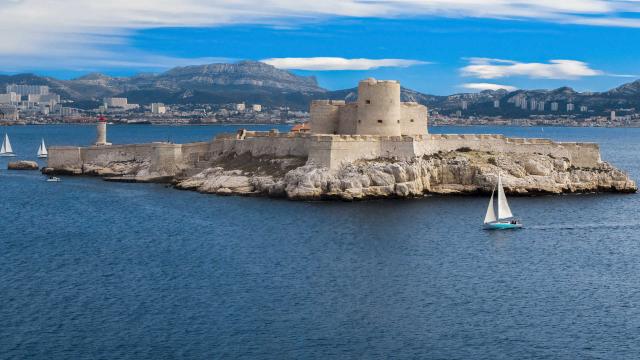
    To visit the islands of Frioul and the Château d’If, you need to take a shuttle bus that leaves from the Vieux-Port. It leaves several times a day. The crossing takes around 20 to 30 minutes. It is advisable to book in advance in high season. You can visit the Château d’If all year round, weather permitting.

  • What's the best time of year to visit Marseille?

    Spring (March-June) and early autumn (September-October) are ideal: pleasant climate, fewer crowds and the sea is still warm.

    In summer (July-August), the city is very lively, but it’s very hot and the sites are very busy. Winter is calmer with mild weather, perfect for discovering the culture and gastronomy.